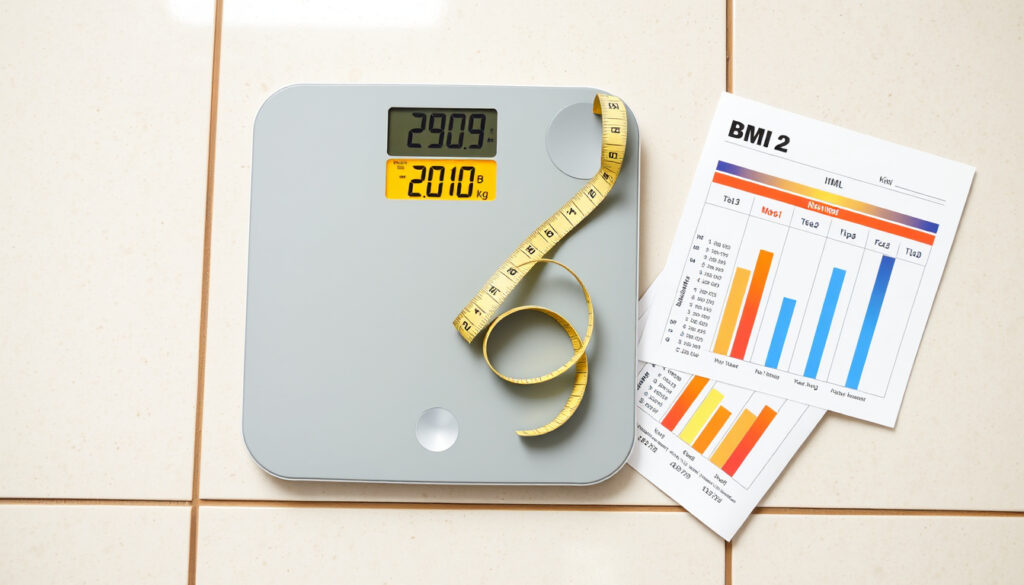
200 Pounds in kg: Exact Conversion, Stone Equivalent, BMI
You’ve probably typed “200 pounds in kg” into a search box and gotten 90.7 back so fast that the number barely lingered. What the search box won’t tell you is how that same 90.7 kg behaves on a BMI chart, in stone units, or across different heights — the conversion is one multiplication, but what the number means about weight, health, and perception is a longer conversation.
200 lb to kg: 90.718 kg ·
200 lb to stones: 14 st 4 lb ·
80 kg to lbs: 176.37 lb ·
Average US male weight: 197.9 lb (89.8 kg) ·
10 stone to kg: 63.5 kg
Quick snapshot
- 200 lb equals exactly 90.718474 kg under the international avoirdupois pound standard (NIST (National Institute of Standards and Technology))
- 80 kg equals exactly 176.36981 lb using the same factor in reverse (MeasurementsCalculator.com (conversion reference))
- Whether 200 lb reads as “heavy” without accounting for height and body composition (CDC (Centers for Disease Control and Prevention))
- 1959: the international pound was fixed at exactly 0.45359237 kg, which makes 200 lb = 90.718474 kg (Britannica (pound unit of weight))
- Check the BMI against height: 200 lb at 5’9″ gives 29.5 — overweight under CDC adult categories (CDC (Centers for Disease Control and Prevention))
- Use exact kg values for precise work; 90.7 kg is fine for casual weight talk (RapidTables (pound-to-kilogram converter))
Ten reference conversions, one pattern: every value runs through the same 0.45359237 factor, and the stone values add a second step — divide by 14.
| Measurement | Value |
|---|---|
| 200 lb in kilograms (exact) | 90.718474 kg |
| 200 lb rounded to 2 decimals | 90.72 kg (CalculateWhatever weight converter) |
| 200 lb to the nearest kilogram | 91 kg (Symbolab conversion calculator) |
| 200 lb in stones | 14 st 4 lb (14.2857 stones) |
| 80 kg in pounds | 176.37 lb |
| 12 stone in kilograms | 76.2 kg |
| 10 stone in kilograms | 63.5 kg |
| 70 kg in stones | 11.02 stones |
| Average U.S. adult male weight | 197.9 lb (89.8 kg) |
| 14 st 4 lb in kilograms | 90.7 kg |
What those rows show: the differences between 90.718474, 90.72, and 91 kg are rounding choices, not measurement disagreements.
How many kg is 200 pounds?
Start with the number everyone actually searches for: 200 lb is 90.718474 kg. The arithmetic is a single multiplication, and the only real choice is how many decimals you keep.
Using the exact conversion formula
- Formula: kilograms = pounds × 0.45359237
- Worked example: 200 lb × 0.45359237 = 90.718474 kg
- Rounded factor: 200 × 0.4536 = 90.72 kg
The factor comes from the international avoirdupois pound defined by NIST (National Institute of Standards and Technology) in its Guide to the SI: one pound is exactly 0.45359237 kilograms. Multiply 200 by that factor and you get 90.718474 kg — the same result RapidTables (pound-to-kilogram converter) returns.
That exact value is a mass, not a “weight” in the physics sense. NIST’s guide is careful about the distinction: pounds and kilograms measure mass, even though everyday scales and conversations treat them as weight.
Divide 200 by 2.2 and you get 90.9 kg; multiply by the exact factor and you get 90.718474 kg. The 0.2 kg gap is invisible on a bathroom scale — but it’s the difference between an estimate and a conversion.
Quick approximation methods
- Divide pounds by 2.2: 200 ÷ 2.2 ≈ 90.9 kg (MeasurementsCalculator.com conversion reference)
- Use 0.4536 as a rounded multiplier: 200 × 0.4536 = 90.72 kg
- Converter rounding varies: CalculateWhatever (weight converter) shows 90.72 kg; Symbolab (conversion calculator) rounds to 91 kg
The estimate lands within 0.2 kg of the exact value — a gap smaller than half a pound. That’s close enough for casual talk, and far enough from precise that the exact factor should win when numbers go into a record.
None of those answers is wrong — 90.7, 90.72, and 91 kg all describe the same weight — so match the precision to the context instead of hunting for one official number.
The implication: rounding is a tool, not a compromise — the exact conversion stays stable regardless of how many decimals you display.
What is 200lb in stones and pounds?
The stone is the unit that trips up anyone raised on pounds or kilos. It survives in British and Irish weight talk, and 200 lb has a clean answer in it: 14 stone 4 lb.
How to convert pounds to stones
- 1 stone = 14 lb
- 200 ÷ 14 = 14.2857 stones
- Remainder: 0.2857 × 14 = 4 lb → 14 st 4 lb
The working: fourteen stones cover 196 lb (14 × 14 = 196), which leaves exactly 4 lb on top. That’s where “14 stone 4” comes from — the format you’ll see on UK and Irish scales.
The decimal form — 14.2857 stones — is what a calculator shows when it outputs stones as a single number. It’s the same value, just without the st/lb split.
Once you know 14 lb makes one stone, 200 lb becomes the easiest conversion in the imperial system: 14 full stones, plus a leftover 4 lb.
What this means: 200 lb sits exactly 4 lb past a whole-stone milestone, which is why the st/lb version is so easy to remember.
Is 200 lbs heavy for a man?
Two adults can both weigh 200 lb and get completely different answers to that question. Height decides the BMI reading, and the CDC classification follows.
Average male weight comparisons
- 200 lb at 5’9″: BMI 29.5 — overweight, one point below obesity (CDC (Centers for Disease Control and Prevention))
- 200 lb at 6’4″: BMI 24.3 — healthy weight
- Average U.S. adult male weight: 197.9 lb (89.8 kg)
The average U.S. adult male sits at 197.9 lb (89.8 kg), which puts 200 lb barely above the male baseline at all — a difference of 2.1 lb, or just under a kilogram. In other words, most American men are already within a few pounds of 200 lb; the real question is where that weight lands on the BMI curve.
Five heights, one weight, one pattern: 200 lb crosses from obesity to healthy without losing a single pound.
| Height | BMI at 200 lb | CDC category |
|---|---|---|
| 5’6″ | 32.3 | Obesity (Class 1) |
| 5’9″ | 29.5 | Overweight |
| 6’0″ | 27.1 | Overweight |
| 6’2″ | 25.7 | Overweight |
| 6’4″ | 24.3 | Healthy weight |
These readings come from the CDC’s BMI formula — 703 × weight in pounds ÷ height in inches squared — applied to the adult categories linked above. At 200 lb, a 5’6″ adult enters Class 1 obesity (BMI 32.3), while a 6’4″ adult lands in the healthy band (24.3) — an eight-point swing driven entirely by height.
The same 90.7 kg moves the CDC label from Class 1 obesity at 5’6″ to healthy at 6’4″ — height changes the verdict far more than the weight itself does.
Why this matters: “Is 200 lb heavy?” is unanswerable without height. The number doing the work is the BMI — 29.5 at 5’9″ — not the raw 200 lb.
Is 80 kg heavy for a girl?
- 80 kg = 176.37 lb
- At 5’6″: BMI 28.5 — overweight
- At 5’10”: BMI 25.3 — overweight
- At 6’0″: BMI 23.9 — healthy weight
The same adult BMI categories noted above apply to everyone aged 20 and older, and they don’t change by gender. At 80 kg, a 5’10” adult sits just inside the overweight band (25.3), while a 6’0″ adult reads as healthy (23.9).
BMI also can’t see muscle mass, so two very different bodies at 80 kg — one athletic, one not — can share the exact same score. “Heavy for a girl” is really a height-and-build question dressed up as a weight question. So the honest answer: 80 kg is a borderline weight in BMI terms — a few inches of height flips the classification, and muscle mass never shows up in the score at all.
The pattern: without height, the weight is just a number; with height, it becomes a clinical classification.
What is 80 kg as pounds?
Metric users asking “what is 80 kg in pounds?” usually want the mirror image of the headline conversion. The answer is 176.37 lb.
What is 12 stone in kg?
- 12 stone = 168 lb
- 168 lb × 0.45359237 = 76.2 kg
Twelve stone shows up constantly as a target weight in UK fitness conversations, and 76.2 kg is its metric twin. The chain is simple: stones × 14 = pounds, then pounds × 0.45359237 = kilograms.
What kg am I if I’m 10 stone?
- 10 stone = 140 lb
- 140 lb × 0.45359237 = 63.5 kg
Ten stone is the round number British weight talk loves. On a metric scale it’s 63.5 kg — or 63.5029318 kg if you keep every decimal from the multiplication.
What is 70kg as stones?
- 70 kg = 154.32 lb
- 154.32 ÷ 14 = 11.02 stones (11 st 0.3 lb)
70 kg is a common starting weight on European fitness programs, and in stones it lands just past the 11-stone mark: 11.02 stones, or 11 stone and a fraction of a pound.
The pattern: every one of these answers runs through the same two divisions — kg to lb via ÷0.45359237, then lb to stones via ÷14.
What is 87 kg in stone and pounds?
Anyone who tracks weight in kilos but thinks in stones asks this one weekly. 87 kg converts to 13 st 10 lb.
How heavy is 82 kg in stones?
- 82 kg = 180.78 lb
- 180.78 ÷ 14 = 12.91 stones
- Remainder: 0.91 × 14 = 12.7 lb → 12 st 12.7 lb
Rounded for a normal scale, 82 kg is 12 stone 13 lb — the 12.7 lb remainder rounds up. That’s the reading a st/lb display will show.
What weight is 63kg in stones?
- 63 kg = 138.89 lb
- 138.89 ÷ 14 = 9.92 stones
- Remainder: 0.92 × 14 = 12.9 lb → 9 st 13 lb
63 kg is a frequent milestone in weight-loss plans, and its st/lb reading is 9 stone 13 lb — one pound short of the 10-stone mark.
What is 14 stone 4 in kg?
- 14 st 4 lb = 196 lb + 4 lb = 200 lb
- 200 lb × 0.45359237 = 90.718474 kg → 90.7 kg
This is the same 200 lb from the top of the article. If a UK scale tells you 14 st 4 and a metric chart asks for kilograms, 90.7 kg is the number to use.
The pattern: these are all the same three-step operation in disguise — kg to lb by ÷0.45359237, then lb to stones by ÷14. Master it once and every stone-and-pound question answers itself.
How to Convert Pounds to Kilograms in Four Steps
The full method takes less than a minute and works for any weight, not just 200 lb.
- Write down the weight in pounds. For the running example: 200 lb.
- Multiply by 0.45359237. This is the exact international factor from the NIST definition above. 200 × 0.45359237 = 90.718474 kg.
- Round to your purpose. 90.7 kg for conversation, 90.72 kg for two-decimal records, 91 kg for a whole-number metric target.
- Double-check with ÷2.2. 200 ÷ 2.2 ≈ 90.9 kg. If your exact result sits within about 0.2 kg of that, the conversion is sound.
To reverse the conversion, divide kilograms by 0.45359237 to recover pounds. MeasurementsCalculator.com (conversion reference) walks through both directions.
The trade-off: exact multiplication buys precision, and the ÷2.2 shortcut buys speed. On 200 lb the difference is only 0.2 kg, so the shortcut is fine until a record or a calculation needs the exact value.
What’s Confirmed and What’s Unclear
Some numbers on this page are locked in; others depend on context, rounding, and who’s asking.
Confirmed facts
- 200 lb = 90.718474 kg, using the exact NIST international factor. (Symbolab (conversion calculator))
- 80 kg = 176.36981 lb, using the same factor in reverse. (RapidTables (kilogram-to-pound converter))
- 200 lb at 5’9″ produces a BMI of 29.5 — overweight under CDC adult categories. (CDC (Centers for Disease Control and Prevention))
What’s unclear
- Whether 200 lb counts as “heavy” without height and body composition.
- Which rounding convention fits your case: 90.7, 90.72, or 91 kg.
- Whether the ÷2.2 estimate is precise enough for anything beyond casual conversation.
- Whether pounds should be called “weight” when the international standard defines them as mass.
BMI is a screening measure, not a diagnosis. The CDC’s guidance stresses that classification depends on height; the BMI table above is a starting point, not a verdict.
The distinction between what is known and what is contextual is the article’s main contribution.
What the Standards Say
Two institutions define nearly everything on this page — one for the pound, one for how we classify body weight.
“One international avoirdupois pound is exactly 0.45359237 kilograms.”
NIST — National Institute of Standards and Technology, Guide to the SI
“At a fixed weight of 200 pounds, BMI classification depends on the person’s height.”
CDC — Centers for Disease Control and Prevention, BMI FAQ
“Adult BMI from 25 to below 30 is classified as overweight.”
CDC — Centers for Disease Control and Prevention, Adult BMI Categories
Neither standard will tell you whether 200 lb is “heavy.” That’s the point: the math is fixed, the categories are fixed, and the interpretation is yours.
The Takeaway
The conversion is a fact: 200 lb is 90.718474 kg, or 14 stone 4 lb. The interpretation is where the work happens — the same weight reads as overweight at 5’9″, healthy at 6’4″, and the “heavy” label tracks height and build more than the number on the scale. For anyone checking this conversion at 200 lb, the choice is clear: read the 90.7 kg alongside your height and the BMI table — or let a bare number do the judging.
Related reading: Convert kg to pounds
Frequently asked questions
How do I convert pounds to kilograms quickly?
Multiply pounds by 0.45359237 for the exact result, or divide by 2.2 for a fast estimate. On 200 lb, that’s 90.718474 kg exactly versus about 90.9 kg by the shortcut (MeasurementsCalculator.com conversion reference).
Why is a stone used as a unit of weight?
The stone is a British imperial unit equal to 14 pounds, still common in the UK and Ireland for body weight. That’s why 200 lb is often written as 14 st 4 lb there.
Is there a difference between 200 lb and 200 lbs?
No — both are abbreviations for the same pound. “lb” is the standard abbreviation and “lbs” is the common plural form; the weight and the conversion are identical.
How much is 200 pounds in grams?
200 lb × 453.59237 = 90,718.474 grams. The kilogram version is the same number divided by 1,000: 90.718474 kg.
What is the average weight of an American man?
The average U.S. adult male weight is about 197.9 lb (89.8 kg) — just below the 200 lb figure at the top of this page.
How do I calculate my BMI if I weigh 200 lbs?
Use the CDC formula: BMI = 703 × weight in pounds ÷ height in inches squared. At 5’9″ (69 inches), that’s 703 × 200 ÷ 4,761 = 29.5 — the overweight range.
What is 210 pounds in kg?
210 × 0.45359237 = 95.2543977 kg, usually rounded to 95.25 kg.
Related reading
- Convert kg to pounds — the mirror-image conversion, using the same factor in the other direction.
- How Much Is an Ounce? Grams, ml, and Gold Price Guide — another mass-unit guide covering ounces, grams, and millilitres.
These related guides offer complementary conversion routines and unit comparisons.
More related posts
 L&P Bottle Change: Brown Bottles Go Clear in April 2026
 Mitre 10 MEGA Papanui Products & Shopping Guide
 Bigg Boss 19 Contestants: Full List, Winner, Eliminations
 Man City vs Dortmund: Head-to-Head, History, and Key Facts
 89 USD to NZD: Convert 89 US Dollars to New Zealand Dollars
 bath and beyond nz
 Mother’s Day Gift Ideas: 15 Unique Presents for Every Mom
 EB Games Closing Down: NZ Shutdown & 2026 Store Closures