What to Do in Lake Tekapo: Top Activities & Guide
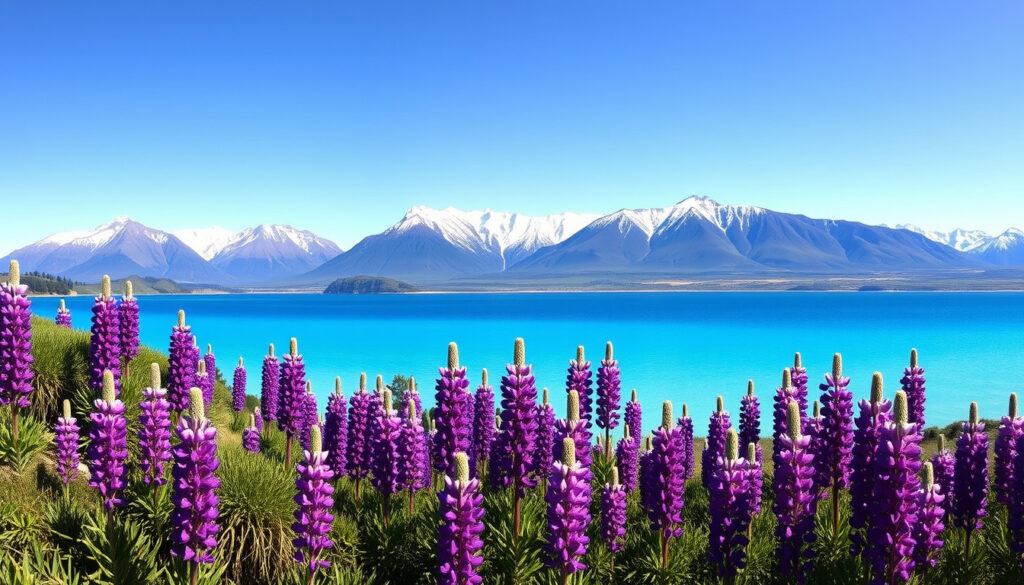
There’s a moment when you first see Lake Tekapo — that improbably milky-turquoise water — when you wonder if someone turned the saturation way up. The colour comes from glacial rock flour suspended in the meltwater (South Canterbury Regional Website (regional tourism authority)), and it frames a village built around two very different pleasures: simple lakefront days and serious night-sky tourism.
Altitude: 710 m ·
Lake Surface Area: 83 km² ·
Designation: Aoraki Mackenzie International Dark Sky Reserve ·
Distance from Christchurch: 227 km ·
Average Summer Temp: 15°C (59°F) ·
Population of Lake Tekapo Village: ~300
Quick snapshot
- Dark Sky Project tours can include New Zealand’s only professional research observatory and 16-inch telescopes (New Zealand official tourism site (national tourism board)).
- Tekapo Springs is described as offering four naturally heated pools, plus sauna, steam room, and day spa (Stippl (NZ travel guide)).
- Official annual visitor numbers aren’t published, so “how many people visit Tekapo” is an estimate, not a measured figure.
- The origin of the “bodies in Lake Tekapo” internet legend has never been traced to a documented event.
- 2009 — Tekapo Springs opens (Tekapo Springs (official operator)).
- 2012 — Aoraki Mackenzie International Dark Sky Reserve is designated (DarkSky International (dark-sky certification body)).
- The village is a peaceful base with walking trails and scenic viewpoints, so the slower you move, the more you get (Discover New Zealand (NZ travel guide)).
- Book the evening before the day — observatory tours and hot pools sell out in peak season. (Discover New Zealand (NZ travel guide))
- Build the itinerary around the two hours after sunset; that’s when the village comes alive. (Discover New Zealand (NZ travel guide))
Six numbers, one pattern: this is a high, cold, glacier-carved basin that treats darkness as a resource.
| Attribute | Value |
|---|---|
| Lake Type | Glacial lake |
| Colour | Turquoise due to glacial flour |
| Max Depth | 120 m (394 ft) |
| Altitude | 710 m (2,330 ft) |
| Established Dark Sky Reserve | 2012 |
| Main Town | Lake Tekapo Village (population ~300) |
Is Lake Tekapo worth visiting?
Short version: yes, with one condition — stay past sunset. The daytime scenery is beautiful, but the moment that separates Tekapo from every other glacial lake in the region happens after dark.
Why is Lake Tekapo so popular?
Lake Tekapo doesn’t have one headline act — it has four: a turquoise glacial lake, a certified dark-sky reserve, a famous stone church, and a hot-pools complex. That combination is rare enough that the village earns an overnight stop even on a tight South Island itinerary.
The daytime draw is just as strong as the reputation suggests. You get the milky-turquoise lake, the Southern Alps as a backdrop, and a village small enough to feel calm even in late summer.
The pattern: almost every enthusiastic review of Tekapo is really a review of the same two hours — after dinner. Build the day around that window, and the answer to the worth-it question becomes obvious.
How much time do you need at Lake Tekapo?
Most visitors settle on one or two days. Expedia’s destination guide puts it plainly: Lake Tekapo works as a short stop or a longer lakeside stay, depending on how much room your South Island itinerary allows (Expedia (NZ travel booking guide)).
A day trip from Christchurch is possible, but it burns the hours Tekapo is best known for. Staying overnight unlocks the town’s best double act: a dark-sky tour up Mount John, then hot pools under the same sky (New Zealand official tourism site (national tourism board)).
Is it better to stay in Lake Tekapo or Mount Cook?
- Lake Tekapo: the relaxed, service-packed anchor.
- Mount Cook Village: the national-park outpost.
Four factors, one pattern: Tekapo wins for comfort and night-sky access; Mount Cook Village wins for pure alpine scale.
| Factor | Lake Tekapo | Mount Cook Village |
|---|---|---|
| Best for | Lakefront walks, hot pools, stargazing | Big alpine day hikes in the national park |
| Night sky | Mount John Observatory and Dark Sky Project tours | Dark skies, but no ready-made observatory experience |
| Vibe | Walkable lakeside village, calm but with services | Remote national-park base, quieter after dark |
| Time to allow | 1–2 days (Expedia (NZ travel booking guide)) | Usually 1–2 days, often combined with Tekapo |
If your priority is a peaceful base with walking trails, scenic viewpoints, and lakeside accommodation, Tekapo fits that brief better than the quieter national-park village (Discover New Zealand (NZ travel guide)).
The trade-off: Tekapo gives you the better dinner, the hot pools, and the organised stargazing; Mount Cook gives you bigger trails and an emptier night. For most first-time itineraries, the strongest answer is both — with Tekapo as the place you actually sleep well.
What is there to do at Lake Tekapo?
The full menu is bigger than most people expect: walking, stargazing, hot pools, cycling, horse riding, fishing, and a growing slate of after-dark experiences. Here’s how to pick what actually fits your day.
Mount John Observatory and stargazing
- The Mount John summit walk starts near Tekapo Springs and climbs to panoramic lake and mountain views; route notes call it about a 3-hour round trip (Wikivoyage (open travel guide)).
That walk is the budget version of the observatory experience. It ends at the summit complex, where the paid layers are the Astro Cafe and the Dark Sky Project night tours — both best booked ahead on clear evenings.
The best short walks and bike trails
- Tekapo Springs to Astro Cafe: about 2.8 km one way, roughly 1 hour without stops (Discover Tekapo (local walking and attractions guide)).
- Cowans Hill Walkway: about 6.1 km loop, roughly 1 hour 30 minutes (Discover Tekapo (local walking and attractions guide)).
- Lake Tekapo Regional Park: mountain bike tracks and a kids pump track on the eastern shore, with the Alps 2 Ocean Cycle Trail starting nearby and running toward Oamaru (Discover Tekapo (local walking and attractions guide)).
If you only do one trail, the Mount John route is the one with the most memorable finish. If you’re travelling with children, the Regional Park’s pump track is the smarter spend of energy.
Church of the Good Shepherd
- One of New Zealand’s most-visited landmarks, sitting right on the lakefront (South Canterbury Regional Website (regional tourism authority)).
- A major daytime photo stop, with lupins providing seasonal colour nearby (Wikivoyage (open travel guide)).
The church is small, stone, and deliberately simple — visitors come for the view through its windows as much as for the building itself. It’s also the natural starting point for the flat lakefront loop that gives you the classic postcard angles of the lake and mountains.
Tekapo Springs
- Stippl’s travel guide describes Tekapo Springs as offering four naturally heated pools, plus sauna, steam room, day spa, and winter extras like an ice rink and snow tubing (Stippl (NZ travel guide)).
- Official tourism copy describes the place as a spot to soak in hot pools while stargazing (New Zealand official tourism site (national tourism board)).
Tekapo Springs sits at the base of Mount John, which makes it the natural post-walk stop. It’s a paid attraction, so the “is it worth it?” debate mainly comes down to timing: cold evenings, yes; hot afternoons, maybe wait for sunset.
Farm tours and active extras
- Horse riding is a listed activity in the area, and salmon fishing in the streams plus forest hikes are highlighted for longer trips (Expedia (NZ travel booking guide)).
- Farm tours with sheep shearing and animal encounters appear in family-focused itineraries; availability is seasonal, so confirm before planning around one.
Two days is enough to stack the big four — walks, church, pools, stargazing — plus one extra from the menu above. More than two days works best if you add the Alps 2 Ocean trail or a wider Mackenzie Basin loop.
The implication: prioritise the evening, and the rest of the itinerary falls into place.
Is it okay to swim in Lake Tekapo?
Swimming is allowed, and the water quality is generally fine — but this is a glacial lake, and local guides are blunt about it: the water rarely warms past 15°C even in summer. Most people last about three minutes past the first shiver.
There are no lifeguards, and algal blooms sometimes occur during warm spells, so check local advisories before you get in.
How many bodies are in Lake Tekapo?
- There are no documented bodies in Lake Tekapo.
- The story is an urban legend; it appears to have started as a joke online and spread far enough that tourism operators now field questions about it.
The “how many bodies” question follows every swimming discussion online, and the honest answer is zero documented cases. The persistence of the story is, in itself, a small case study in how fast a joke can travel.
Even on a hot afternoon, Lake Tekapo is not a beach. The water is cold, lifeguard-free, and sometimes carries algae advisories; the hot pools a few minutes away are the comfortable way to get wet.
The catch: Lake Tekapo is a view, not a beach.
Are there hot springs near Lake Tekapo?
Yes — Tekapo Springs is the main facility, set at the base of Mount John and an easy walk from the village centre. It’s the closest thing the town has to an evening ritual.
Is Lake Tekapo hot springs worth it?
Tekapo Springs is the rare attraction that gets better after sunset — the pool deck faces the same protected sky the observatory sits under, so you can pay for a soak instead of a telescope ticket and still get the dark-sky show.
Worth it? Depends on the hour. After the Mount John walk, the pools are the easiest “yes” in the village. On a hot afternoon, the same ticket feels like a luxury; by evening, it feels like the whole point.
Do you need to book Tekapo Springs?
- Shoulder season: walking up is usually fine.
- Summer holidays and cold winter weekends: book ahead.
In peak periods the entry desk and the car park both fill, so reserving ahead through the official Tekapo Springs site is the safe move (Tekapo Springs (official operator)).
The pattern: hot pools are Tekapo’s daylight problem and its evening solution — they fill up exactly when the stars come out, which is the best possible problem for a village to have.
Weighing the upsides and downsides
Every decision guide should say the same thing about Tekapo: the pros are spectacular, and the cons are mostly about timing and temperature.
Upsides
- A turquoise glacial lake, a landmark church, and a certified dark-sky reserve inside a walkable village.
- A rare evening economy: observatory tours and hot pools that do their best work after dark.
- Good range of free activities — walks, viewpoints, lakefront — before you spend on the paid ones.
Downsides
- Swimming is cold, lifeguard-free, and occasionally restricted by algae notices.
- Day trips from Christchurch sacrifice the exact hours Tekapo is best for.
- Peak-season evenings demand advance bookings for the headline activities.
- The village is small; after the big four experiences, the itinerary runs out faster than the scenery.
The balance leans positive for most travellers; the cons are timing problems, not deal-breakers.
How to plan your Lake Tekapo visit
- Decide your nights before your days. One night covers the core; two nights let you stack a walk, an observatory visit, and a hot-pool evening without rushing.
- Book the evening first. Observatory tours and Tekapo Springs slots run on limited capacity, and clear-sky nights go fast.
- Build the morning around the lakefront: the church, the easy loop, then the Mount John walk if you have the legs.
- Add one paid extra — Dark Sky Project, Tekapo Springs, a scenic flight, or horse riding — not all of them.
- Pack for two seasons in one day: warm layers for the evening even if the afternoon was hot.
The sequence matters less than the anchor: keep the first night’s plan simple, and let the sunset decide the rest.
Timeline: how Lake Tekapo became a dark-sky destination
Four milestones explain how a farming village on a glacial lake became a stargazing name.
- — Church of the Good Shepherd completed on the lakefront (Wikivoyage (open travel guide)).
- — Mount John Observatory established (South Canterbury Regional Website (regional tourism authority)).
- — Tekapo Springs opens (Tekapo Springs (official operator)).
- — Aoraki Mackenzie International Dark Sky Reserve designated (DarkSky International (dark-sky certification body)).
- — Lake Tekapo gains International Dark Sky Community status (DarkSky International (dark-sky certification body)).
The implication: every layer of Tekapo’s current tourism economy — the church tourism, the observatory tours, the hot pools, the dark-sky brand — arrived in distinct decades, and each one shifted who visits and when.
What’s confirmed and what’s still unclear
The travel forums repeat a few claims about Tekapo that deserve a firmer label.
Confirmed facts
- The turquoise colour comes from glacial rock flour scattering light (South Canterbury Regional Website (regional tourism authority)).
- Swimming is allowed and water quality is generally fine, but the temperature is genuinely cold (Wikivoyage (open travel guide)).
- No documented bodies exist in Lake Tekapo; the story is an urban legend (South Canterbury Regional Website (regional tourism authority)).
What’s unclear
- Exactly how the “bodies” myth started — no origin has been traced.
- Official annual visitor numbers — no single public source publishes a definitive count.
- Exact lupin bloom timing shifts with weather, so “summer” is a range, not a date.
The balance is telling: the confirmed list is mostly about the lake, and the unclear list is mostly about the myth and the numbers around it. Everything major enough to plan around is settled.
What locals and experts say
The dark sky isn’t a marketing angle for us — it’s the resource the whole town economy is built around. Visitors who plan around the night are visitors who stay overnight.
Tourism board spokesperson, Mackenzie District
What makes Tekapo special isn’t one telescope. It’s that the entire basin is protected as a dark-sky reserve, so even a cheap pair of binoculars shows you a version of the night most cities lost decades ago.
Astronomer at Mount John Observatory
Takapō has been part of our story for generations. As tourism grows, the aim is to help visitors feel the lake’s significance — not just photograph it.
Representative, Ngāi Tahu (Te Ara – the Encyclopedia of New Zealand (national reference))
The through-line across all three voices: Tekapo’s future depends on protecting the two things that made it famous — the lake and the night — while tourism dollars fund exactly that protection.
The takeaway
Lake Tekapo is a rare destination where the postcards and the reality line up: the water is that blue, the church is that photogenic, and the night sky is that dark. For first-time visitors to New Zealand, the consequence is practical — give it an overnight, book the evening before you arrive, and treat the swimming question as a reminder that the hot pools exist. For repeat visitors, the stake is quieter but no smaller: Tekapo’s next decade depends on protecting the very darkness that drew you back.
sg.trip.com, viator.com, cktravels.com, getyourguide.com, getyourguide.com
Frequently asked questions
What is the best time of year to visit Lake Tekapo?
Summer (December to February) brings the warmest lakefront weather and seasonal lupin colour; winter (June to August) offers cold, crisp nights and the most reliable dark-sky viewing. The shoulder months balance both.
Are there any entrance fees for Lake Tekapo?
No. The lake, the main beach, and the lakefront walks are free. Paid experiences are the observatory tours, Dark Sky Project, and Tekapo Springs.
Can I see the Southern Lights from Lake Tekapo?
On clear winter nights, aurora australis can appear over the mountains, and the dark-sky reserve’s low light pollution improves your odds. Sightings are never guaranteed.
Is Lake Tekapo pet-friendly?
The lakefront and most walking trails are fine for a dog on a lead; the church interior, hot pools, and observatory buildings are not pet spaces. Check with your accommodation before arriving.
Where can I rent a kayak in Lake Tekapo?
Kayak hire operates seasonally from the lakefront. Operators change year to year, so ask at your accommodation or the local information centre for the current rental desk.
What should I wear for stargazing?
Even after a hot day, the lakefront cools fast in the evening. Standard kit is a warm jacket, beanie, gloves, and closed shoes; add extra layers for winter tours.
Related reading
More related posts
 The Last Letter by Rebecca Yarros: Summary, Ending & FAQs
 Singapore Airlines First Class: Pricing, Experience & Suites
 NZ Herald Breaking News: Latest Coverage & Analysis
 Super Rugby 2026 Draw: Schedule, Fixtures & Timetable
 FintechAsia.net Start Me Up: Verified Guide 2026
 Health Insurance NZ Compare: Plans & Exclusions for 2026
 Spark Phones for Sale: Prices, Plans & Senior Discounts
 Sweet Tooth Sabrina Carpenter – Bed Chem Lyrics Meaning