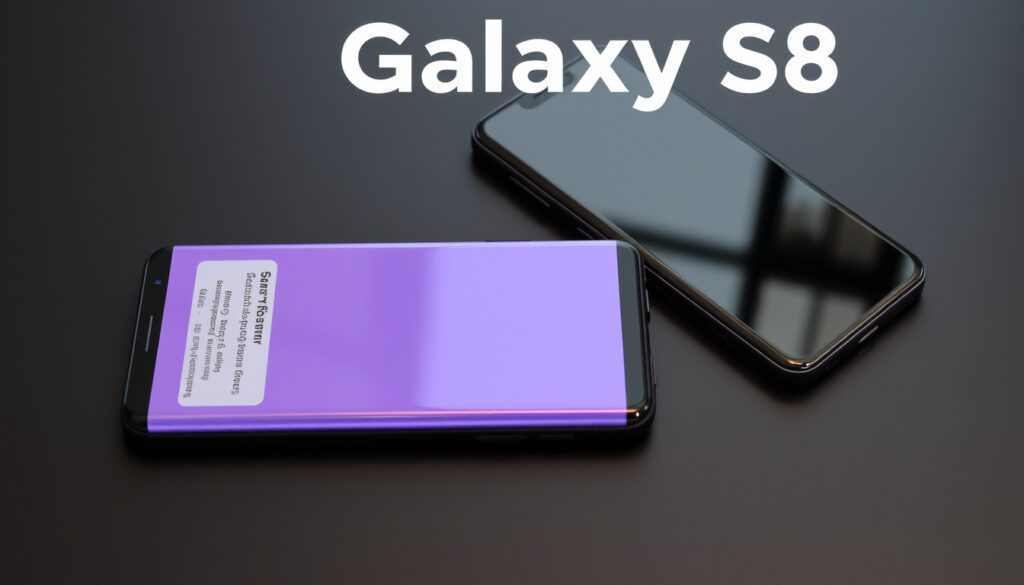
Galaxy S8 to Buy in 2026: Price, Worth & Replacements
A phone that cost $720 at launch can now be picked up for less than a night out in most cities — but that discount comes with a catch. The Galaxy S8’s security patches stopped in April 2021 (Android Central, which covers mobile tech) and its Android version stopped at 9, leaving buyers to decide if it still makes sense as a cheap used buy in 2026, what it’s actually worth, and which modern phones are a better deal for the same money.
Released: 2017 ·
Original price: $720 (US) / €799 (Europe) ·
Used price (good condition): €100–€180 ·
Last security patch: April 2021 ·
Battery: 3000 mAh (S8) / 3500 mAh (S8+) ·
Display: 5.8″ / 6.2″ Super AMOLED
Quick snapshot
- Software support is over — the S8 no longer receives security updates (UpTrade, a device trade-in service)
- Average sale price on Swappa: $69 for the 64GB model, June 2026 (Swappa, a second-hand phone marketplace)
- Real battery health on any specific unit is rarely disclosed
- Which apps will keep working on Android 9 as developers move on
- Long-term reliability depends on how the previous owner treated the phone
- Runs on a Snapdragon 835 or Exynos 8895 chipset with 4 GB of RAM
- Final OS: Android 9, delivered in early 2019 (Android Authority, a major Android news site)
- Final security patch: April 2021 (Android Authority, a major Android news site)
- A 2026 surprise update did not change the security patch level (Android Authority, a major Android news site)
- More banking and payment apps are leaving Android 9 behind
- Used prices will keep drifting down as supply outlasts demand
- Better alternatives at the same price: Galaxy A series, Pixel 7a, refurbished S21
One set of numbers, one conclusion: the S8’s hardware was premium, but its software support ended five years ago.
| Fact | Value |
|---|---|
| Release date | March 2017 |
| Original price | $720 (US) / €799 (Europe) |
| Used price (good condition, 2026) | $40–$80 (US) · €100–€180 (Europe) |
| Final OS | Android 9.0 Pie |
| Final security patch | April 2021 |
| Support status | Ended — no longer on Samsung’s security updates list |
| Battery | 3000 mAh (S8) / 3500 mAh (S8+) |
| Display | 5.8″ Super AMOLED (S8) / 6.2″ (S8+) |
Is the Samsung S8 still worth buying?
The short answer depends on what you need it for. As a backup phone or an offline media player, the S8 still has a role. As a daily driver in 2026, the math is harder to justify.
Performance and software in 2026
The S8 stopped receiving security patches in April 2021. Every vulnerability discovered since then remains unpatched — and that is a long list by 2026.
- Final OS: Android 9.0 Pie — no major update since early 2019.
- Performance: the Snapdragon 835 / Exynos 8895 handles calls, messaging and light browsing, but heavier apps stutter.
- App support: apps increasingly require Android 10 or newer, and the S8 cannot go past Android 9.
The hardware was genuinely excellent in 2017. Nine years later, it sits roughly on par with today’s entry-level phones. The pattern: the S8 is not just old — it is unsupported.
For a buyer in 2026, “still works” is not the same as “safe to rely on.”
Camera and battery life today
- Camera: the 12 MP rear camera produced competitive shots in 2017; today, budget phones match it in daylight and beat it in low light.
- Battery: 3000 mAh (S8) / 3500 mAh (S8+), and capacity drops with age.
- Replacement: a new battery costs roughly €30–€50 and restores most of the original endurance.
The camera is a no-blame area: the S8’s 12 MP shooter is still acceptable for casual daytime photos. Battery life, however, is the bigger gamble, because you can’t tell a unit’s real health from a listing photo.
Budget for a battery replacement — about €30–€50 on top of the purchase price — if you buy an S8 sight unseen.
The battery is the one component on a nine-year-old phone that you can reasonably expect to fail soon; the rest of the hardware tends to hold up well.
Value for money compared to cheap new phones
At €100–€180, a used S8 costs nearly the same as a new budget Galaxy A-series or Moto G — and the new phone is faster, has a fresh battery, and still receives security updates.
Modern budget phones also ship with warranties and several years of OS updates. The S8 counters with a sharper display and a headphone jack, but you trade away security, battery life, and app compatibility to get them.
Why this matters: the S8’s only real price advantage disappears once you add the cost of a battery replacement and the risk of app failures.
How much is a Galaxy S8 worth now?
Price is where the S8 gets interesting: it has lost more than 90% of its launch value, and the remaining floor is low enough that sellers rarely bother with insurance.
Current resale price by condition
- Swappa’s average sale price for the 64GB model: $69 as of June 2026 (Swappa, a second-hand phone marketplace).
- Clean, unlocked 64GB units in good condition: about $40–$80; cracked or locked units can drop to $3–$25 (electronics.alibaba.com, a marketplace buying guide).
- A separate 2026 estimate: $20–$60 depending on condition, storage, and whether the phone is unlocked (ComputerCity, a consumer tech guide).
- European listings tend to run higher, with good-condition units typically asking €100–€180.
The spread is wide because condition varies enormously: a unit with a fresh battery and no burn-in can sell for three times what a battered unit fetches.
Trade-in values from carriers
- Most carriers no longer quote the S8 on trade-in pages; when they do, offers land around $0–$50.
- Trade-in is still a useful discount lever on a new phone — just don’t expect cash value.
Original MSRP and depreciation
- Original launch price (2017): $720 in the US, €799 in Europe.
- Today: $69 average on Swappa — a drop of roughly 90% over nine years.
The S8’s depreciation curve is extreme but normal for Android flagships; what is unusual is how slowly the price moves now.
The implication: the S8 has hit a price floor where it is treated as an expendable gadget — which tells you how the market grades its long-term usefulness.
Is a Galaxy S8 still usable?
Usable, yes — but “usable” and “sensible” are different questions. The S8 handles the basics fine; the problems show up at the edges: banking, updates, and battery life.
Everyday tasks and app support
- Calls, SMS, email, WhatsApp, maps, music, podcasts: all work.
- Heavier apps and multitasking: noticeably slower than current budget phones in the same price range.
- App support: a 2026 buyer guide warns the S8 faces app compatibility issues and banking-app friction because of outdated software support (electronics.alibaba.com, a marketplace buying guide).
Light users who mostly call, text and browse will find the S8 perfectly acceptable. Power users will feel the nine-year-old chipset immediately.
The pattern: the S8 still works, but its usefulness is shrinking as the app ecosystem moves past Android 9.
Battery life and replacement options
A €30–€50 battery replacement can restore the S8’s original endurance — but it cannot restore the security updates Samsung stopped sending in 2021.
- Battery capacity: 3000 mAh (S8) / 3500 mAh (S8+).
- On nine-year-old units, noticeable degradation is the default, not the exception (electronics.alibaba.com, a marketplace buying guide).
- Replacement: widely available at repair shops for €30–€50.
If you buy an S8, plan on replacing the battery within the first year — and factor that cost into the price you are willing to pay. What this means: the purchase price is not the real price. Add €30–€50 for a battery and you are closer to a new budget phone’s territory.
The pattern: the S8’s only real price advantage disappears once you add the cost of a battery replacement and the risk of app failures.
Security risks from lack of updates
UpTrade, a device trade-in service, warns the S8 is not recommended for sensitive tasks because it no longer receives security updates.
The April 2021 patch level means the phone is missing roughly five years of vulnerability fixes. For banking, shopping, or work logins, that is a real exposure, not a theoretical one.
What this means: treat the S8 as an offline or low-sensitivity device — or skip it entirely for daily use.
What should I replace my Galaxy S8 with?
If the S8’s security and battery problems have you shopping, the replacement market is strong at every price level.
Budget replacements under €200
- New Galaxy A-series and Moto G models land at roughly the same price as a good-condition S8 — with current Android, active security patches, and fresh batteries.
- New budget phones arrive with security updates that stretch well into the late 2020s. The S8’s last patch is already five years old.
That is the S8’s real competition: not other 2017 flagships, but 2025 budget phones selling for the same money.
Mid-range options like Galaxy A54 or Pixel 7a
The Pixel 7a and Galaxy A54 are the anti-S8: modern chips, guaranteed updates, and cameras that match what used to be flagship quality.
Google’s Pixel 7a is the pick if software updates matter most; Samsung’s Galaxy A54 keeps the same One UI experience you already know from the S8.
The catch: you pay more — roughly €250–€350 instead of €100–€180 — but you get a phone that will still be supported when the S8 is a decade old.
Flagship alternatives (S21, S22 refurbished)
- Refurbished Galaxy S21 or S22 units regularly appear below €300.
- They keep the compact flagship feel but add active updates, faster chipsets, and better cameras.
The comparison table further down lays out the numbers side by side.
The trade-off: spend €150 on a used S8 and you get a great screen with expired software. Spend €250 on a refurbished S21 and the screen is still great — and the software is still alive.
How long will the Galaxy S8 be supported?
The short answer: it isn’t. Samsung ended software support years ago, and the only update the phone received in 2026 was a surprise that changed almost nothing.
Software update history
- Launched with Android 7.0 Nougat in March 2017.
- Android 8.0 Oreo arrived in late 2017.
- Android 9.0 Pie arrived in early 2019 — the final major OS version.
Samsung kept security patches flowing for four years, then closed the book on the S8 family.
Security patch schedule
- Final security patch: April 2021, when Samsung confirmed the S8’s end-of-life after four years of updates (Android Central, which covers mobile tech).
- In 2026, the S8 and Note 8 received a surprise update — but it did not change the security patch level or the underlying Android version (Android Authority, a major Android news site).
- Samsung’s own documentation still listed the S8 on the April 2021 patch level as of the 2026 report (tech-ish, a mobile tech blog).
Expected end of support
- No further OS updates: guaranteed — Android 9 cannot go higher.
- No further security patches: effectively guaranteed; the surprise update left the phone on 2021-era patches (Gizmochina, a gadget news site).
Don’t expect Samsung to reverse course. A nine-year-old flagship will not re-enter the update queue.
Why this matters: “unsupported” is not a vague future problem. The S8 has already missed five years of security fixes, and every month widens that gap.
Where can I buy a Samsung Galaxy S8 online?
You can still find S8 units in several places, but the buying experience differs a lot — especially when it comes to warranties and return policies.
Trusted refurbished retailers
- Amazon and refurbished specialists like Back Market sell S8 units with a warranty and a return window.
- Marketplaces such as Swappa publish average sale prices per model, which gives you a solid benchmark before you negotiate.
- Expect to pay a small premium over private listings — that is the price of the warranty.
eBay and second-hand market risks
- eBay prices vary; check seller ratings, photos of the actual device, and the return policy before bidding.
- Cracked or locked units sell for as little as $3–$25, but they are not the bargain they look like once you add repair costs.
New old stock availability
- Genuinely new, unopened S8 units are rare; most “new” listings are refurbished or gray-market stock.
- Local classifieds can have the lowest prices, but you get no warranty and no recourse.
The buying advice is simple: buy from a source with a return window, and ask the seller for the battery health percentage and a burn-in check before you pay.
The pattern: the safest S8 purchases are the most expensive, and the cheapest purchases carry the most risk — a trade-off that gets less attractive as the phone’s value keeps falling.
Galaxy S8 vs modern replacements: side-by-side
Four alternatives, one pattern: each one keeps receiving security updates — the exact thing the S8 lost in 2021. Prices reflect the used-market data cited in the price section above.
| Device | Typical price (2026) | Processor | Software support | Security patches | Verdict |
|---|---|---|---|---|---|
| Galaxy S8 (used) | €100–€180 / $40–$80 | Snapdragon 835 / Exynos 8895 | Android 9 (ended) | None since April 2021 | Backup phone only |
| Galaxy A series (new budget) | ~€150–€200 | Modern budget chipset | Current Android | Active | Best value |
| Galaxy A54 (mid-range) | ~€250–€350 | Modern mid-range chipset | Current Android | Active | Balanced choice |
| Google Pixel 7a | ~€300–€350 | Modern mid-range chipset | Long software support | Active | Best support |
| Refurbished Galaxy S21/S22 | Under €300 | Modern flagship chipset | Current Android | Active | Best performance |
The takeaway: the S8 belongs in the same conversation as these phones only on price. On everything else, it is outclassed by every row below it.
Galaxy S8 spec sheet: what you’re actually getting
Eleven specs, one reassurance: the S8’s hardware was genuinely good for 2017 — the software is what failed to keep pace.
| Component | Specification |
|---|---|
| Processor | Snapdragon 835 / Exynos 8895 |
| RAM | 4 GB |
| Storage | 64 GB (expandable up to 256 GB) |
| Display | 5.8″ Super AMOLED (S8), 6.2″ (S8+) |
| Rear camera | 12 MP |
| Battery | 3000 mAh (S8), 3500 mAh (S8+) |
| OS at launch | Android 7.0 Nougat |
| Final OS | Android 9.0 Pie |
| Headphone jack | Yes |
| Water resistance | IP68 |
| 5G / eSIM | No / No |
What this doesn’t show: the software end-date. The spec sheet stops at Android 9, which is exactly the problem.
Upsides and downsides of buying a Galaxy S8 in 2026
Upsides
- Very cheap: $40–$80 in the US, €100–€180 in Europe for good condition
- Beautiful Super AMOLED display, still better than many entry-level LCDs
- Headphone jack, IP68 water resistance, and expandable storage
- Plenty of spare parts and repair guides; battery swaps cost €30–€50
Downsides
- No security patches since April 2021 — a real risk for banking and sensitive apps
- Android 9 is the final OS; many apps are moving to Android 10+
- Battery degradation and possible AMOLED burn-in on nine-year-old units
- Performance lags behind new €150 phones
- No 5G, no eSIM, no guarantee of future repairs
The balance is lopsided for most buyers: the upsides are conveniences, and the downsides are structural.
Galaxy S8 support timeline: 2017–2026
The timeline tells the story in one glance: four years of support, then silence.
- — Galaxy S8 announced and released at $720 / €799. (Android Central, which covers mobile tech)
- — Android 8.0 Oreo update.
- — Android 9.0 Pie update (final major OS).
- — Final security patch issued for the S8 and S8+.
- — No further software support from Samsung.
- — Surprise update for the S8 and Note 8 leaves the April 2021 patch level unchanged. (Android Authority, a major Android news site)
The pattern: Samsung’s four-year support window ended on schedule, and the 2026 update was a blip, not a revival.
What’s confirmed, what’s still unclear
Buying a nine-year-old phone means separating what is known from what only becomes visible after you own it.
Confirmed facts
- Samsung ended software support; the last security patch was April 2021. (Android Central, which covers mobile tech)
- Swappa’s average sale price for the 64GB model was $69 in June 2026 (Swappa, a second-hand phone marketplace).
What’s still unclear
- Battery health on any specific unit — it varies and is often not disclosed.
- Whether specific banking or payment apps will keep working on Android 9.
- Long-term reliability of a nine-year-old mainboard — depends entirely on the previous owner.
- Whether Samsung’s surprise 2026 update will ever be followed by another.
- Whether AMOLED burn-in affects a particular unit.
- The S8 uses the Snapdragon 835 or Exynos 8895 with 4 GB of RAM.
Confidence check: the certainties are about policy and prices; the uncertainties are about the individual device you receive from a seller.
What reviewers and industry sources say
Two perspectives — the manufacturer’s own policy and a major Android outlet’s reporting — frame the S8’s standing in 2026.
Samsung ended software support for the Galaxy S8 and S8+ four years after the series launched.
— Samsung’s update policy, as documented by Android Central, which covers mobile tech
The 2026 surprise update did not change the security patch level or the underlying Android version.
— Android Authority, a major Android news site
The pattern: the outlets that track Samsung’s policy all describe the same device — a flagship that has been retired, with only cosmetic activity since 2021.
The verdict
The Galaxy S8 was a great phone in 2017; in 2026 it is a nostalgia purchase, a backup device, or a trap for someone who doesn’t check the update status. The price looks tempting, but the missing security patches and fading battery make it a weak daily driver at €100–€180. For a European buyer on a tight budget, the choice is clear: put that money toward a current budget phone with active updates, or keep the S8 only as an offline media player and backup.
Frequently asked questions
Does the Galaxy S8 support 5G?
No. The S8 launched in 2017, before 5G networks went mainstream, and it tops out at 4G LTE.
Can I replace the battery on the Galaxy S8?
Yes. Battery replacement is widely available and typically costs around €30–€50, which restores most of the original endurance.
Is the Galaxy S8 waterproof?
It has an IP68 rating, meaning it is dust-tight and can survive submersion in up to 1.5 meters of fresh water for 30 minutes. That rating assumes the seals are still intact after nine years, which is not guaranteed.
Does the Galaxy S8 have a headphone jack?
Yes. The S8 has a 3.5mm headphone jack, one reason it still appeals to people who prefer wired audio.
How does the Galaxy S8 camera compare to modern phones?
Its 12 MP camera was flagship-class in 2017, but modern budget phones match it in daylight and beat it in low light, in part because of better image processing.
Is it safe to use the Galaxy S8 for banking in 2026?
Not recommended. The S8 no longer receives security updates, and banking apps can stop working as they require newer Android versions. Trade-in service UpTrade explicitly warns the S8 is not for sensitive tasks.
What color options were available for the Galaxy S8?
Samsung sold the S8 in Midnight Black, Orchid Gray, Arctic Silver, and Coral Blue; some regions also received Maple Gold and Rose Pink for the S8+.
Can I use a Galaxy S8 with eSIM?
No. The S8 predates eSIM support, so you will need a physical nano-SIM.
The pattern in these answers: the S8’s hardware still holds up, but its software and network support belong to 2017.
More related posts
 Samsung Flip Phone NZ: Prices, Durability, and Buying Guide
 Health Insurance NZ Compare: Plans & Exclusions for 2026
 First Home Buyers Grant NZ – Status, Eligibility and Alternatives
 Utah Jazz vs Pacers Match Player Stats: Box Score & Key Highlights
 What Does Collate Mean When Printing? Examples & Guide
 45 Billion Won to NZD: Live Rate & Comparison in USD, GBP, EUR
 Hawke’s Bay Farmers’ Market: Hours, Location & Guide
 M&S UK: Complete Guide to Shopping, Discounts and Comparisons