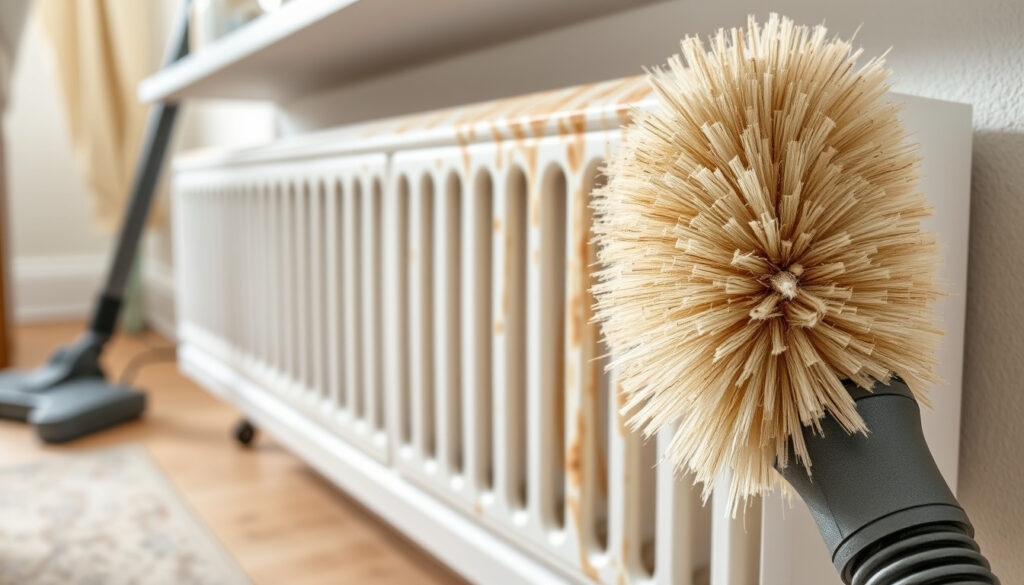
How to Clean Baseboard Heaters: Best Methods & Professional Tips
Anyone who has turned on a baseboard heater in late autumn and smelled burning dust has already felt the problem. That smell is wasted energy—blocked fins and clogged vents mean your heater works harder to push out less heat.
Recommended cleaning method: Soft cloth with warm water and mild detergent ·
Average lifespan of an electric baseboard heater: 20–30 years ·
Most common baseboard heater problem: Dust and lint accumulation
Quick snapshot
- Vacuum with brush attachment is the universal first step (The Spruce (home-improvement publication))
- Power must be shut off at the breaker before cleaning (Cadet Heat (manufacturer guidance))
- Mild detergent and water are safe for painted metal surfaces (Baseboard Heater Covers (home-maintenance resource))
- Whether vinegar can damage anodized aluminum fins (manufacturer-specific)
- Exact percentage of efficiency loss from dust buildup (varies by environment)
- Safety of high-pressure compressed air inside sealed units
- Annual cleaning before heating season is the consistent recommendation across guides (The Spruce (home-improvement publication))
- Allow 30 minutes cooling time for electric units; several hours for hydronic systems (HVAC Laboratory (HVAC maintenance guide))
- Test-run the heater after cleaning to burn off residual dust (DG Floors (home maintenance guide))
- Check for bent fins and straighten with needle-nose pliers if needed (The Spruce (home-improvement publication))
Dust buildup is not just a cleanliness issue—it creates a thermal blanket inside the fins, preventing heat from escaping into the room. For a typical 1,500-watt electric baseboard heater, even a thin layer of lint can reduce heat output enough that the thermostat runs longer cycles, adding to your electric bill without warming the space.
Three facts about cleaning baseboard heaters, one pattern: the most effective methods combine gentle mechanical removal with minimal moisture, and the biggest mistakes all involve water near electrical parts.
| Metric | Value |
|---|---|
| Recommended cleaning frequency | Annually, before heating season |
| Most effective tool for fins | Vacuum with a crevice tool (DoItYourself (DIY guide)) |
| Common cleaning mistake | Using water near electrical components without drying |
| Energy savings from clean heaters | Up to 10% improved efficiency (estimated) (Today’s Homeowner (home-improvement resource)) |
What is the best way to clean baseboard heaters?
Essential tools and materials
- Vacuum cleaner with brush and crevice attachments – the most repeated recommendation across guides (The Spruce (home-improvement publication))
- Microfiber cloth – damp with mild detergent or vinegar solution
- Coil cleaning brush or soft-bristle brush – to loosen packed dust between fins (DG Floors (home maintenance guide))
- Compressed air can or air compressor – optional for stubborn debris in tight gaps
- Needle-nose pliers – for straightening bent fins that block airflow (The Spruce (home-improvement publication))
Step-by-step cleaning process
- Turn off power at the circuit breaker and allow the heater to cool for at least 30 minutes (Cadet Heat (manufacturer guidance); HVAC Laboratory (HVAC maintenance guide)).
- Place a drop cloth or towel under the heater to catch falling dust (Cozy Home Club (home maintenance resource)).
- Remove the cover panel if screws are accessible; wash the cover separately with mild detergent (DoItYourself (DIY guide)).
- Vacuum the interior fins with a brush attachment or crevice tool (The Spruce (home-improvement publication)).
- Use a soft-bristle brush or fin comb to loosen packed dust between fins, then vacuum again (DG Floors (home maintenance guide)).
- Wipe the cover and exterior surfaces with a damp microfiber cloth and mild detergent; avoid drips into electrical parts (Baseboard Heater Covers (home-maintenance resource)).
- If you spot bent fins, straighten them gently with needle-nose pliers (The Spruce (home-improvement publication)).
- Allow all components to dry completely, reassemble, and perform a test run to burn off residual dust (eLocal (home improvement resource); DG Floors (home maintenance guide)).
Never clean a baseboard heater while it is running or still warm. Always de-energize at the breaker—not just the thermostat—to eliminate any risk of electric shock (Cadet Heat (manufacturer guidance)).
How do professionals clean baseboards?
Heavy-duty vacuuming and compressed air
Professional HVAC technicians often start with a high-powered vacuum fitted with a brush or crevice attachment to remove the bulk of dust and lint. For stubborn debris packed deep between the fins, they use compressed air—either from a can or an air compressor—to dislodge particles without touching the delicate metal (DG Floors (home maintenance guide)). The key is to blow from the inside out, directing dust away from electrical components.
Deep cleaning of fins with specialized tools
After vacuuming, professionals may use a coil cleaning brush or a fin comb to loosen any remaining dust that has bonded to the fins. They also check for bent fins—caused by impacts or age—and straighten them with needle-nose pliers to restore full airflow (The Spruce (home-improvement publication)). Some technicians remove the cover for a complete interior clean, inspecting wires and connections for corrosion or loose screws (DoItYourself (DIY guide)).
“Always shut off the power at the breaker before cleaning. Never rely on the thermostat alone.”
— Cadet Heat (manufacturer guidance)
How to clean the inside of a heater?
Accessing the interior safely
To reach the interior, you must first turn off the dedicated circuit breaker and allow the heater to cool. For electric units, 30 minutes is sufficient; for hydronic systems, wait several hours for the hot water pipes to cool (HVAC Laboratory (HVAC maintenance guide)). Remove the cover by unscrewing the retaining screws—most covers lift off or slide upward. Wear safety glasses and a dust mask to avoid inhaling fine particles (HVAC Laboratory (HVAC maintenance guide)).
Cleaning fins and internal components
Once the cover is off, use a vacuum with a crevice tool to remove loose dust from the fins and the base. For packed lint, gently run a soft-bristle brush or a fin comb between the slots. Do not insert metal tools near the electrical wiring—plastic or nylon brushes are safer (Greenway Kitchen (home maintenance guide)). After cleaning, inspect the components for loose connections or signs of corrosion. Reassemble only after the unit is completely dry.
“A vacuum with a brush attachment is the most effective tool for removing dust from fins.”
— The Spruce (home-improvement publication)
For hydronic baseboard heaters, do not attempt to separate the fins from the pipe. Hot water systems require a different approach: let the system cool completely, then vacuum the fins and wipe the pipes with a damp cloth. Never use compressed air on a hot hydronic system—the sudden temperature change can damage the pipes.
What are common baseboard heater problems?
Dust buildup and reduced efficiency
Dust accumulation is the most frequent issue. A layer of lint acts as insulation, trapping heat inside the fins and forcing the heater to run longer to compensate. This can reduce efficiency by up to 10% (Today’s Homeowner (home-improvement resource)).
Rattling and noise issues
Loose screws, brackets, or cover panels can cause rattling when the heater expands and contracts. Tightening all fasteners usually resolves the noise. If the rattling persists, check for bent fins rubbing against the cover.
Insufficient heat output
Clogged fins, a malfunctioning thermostat, or a tripped breaker can all lead to poor heat output. After cleaning, test the heater. If the problem continues, the heating element may need replacement—electric baseboard heaters typically last 20–30 years.
How to clean baseboard heaters with vinegar?
Vinegar solution preparation
Mix equal parts white vinegar and warm water in a spray bottle. Vinegar is a natural degreaser and can help dissolve sticky residue. However, it is not recommended for anodized aluminum fins because the acidity may cause pitting over time—this is manufacturer-specific and still debated (Baseboard Heater Covers (home-maintenance resource)). For painted metal covers, vinegar is safe.
Application and drying
Spray the solution onto a microfiber cloth—never directly onto the heater—and wipe the cover and accessible surfaces. Avoid getting moisture into the electrical housing. Follow up with a dry cloth to remove any residual liquid. Let the unit air-dry completely before restoring power.
The pattern: vinegar is a common alternative to commercial cleaners, but for aluminum fins, mild detergent is the safer choice.
Related on this site
For more home maintenance advice, see our guides on How to Get Rid of Acne Scars: Proven Treatments & Home Remedies and Car Dashboard Symbols and Meanings: Complete Guide (with Pictures).
Frequently Asked Questions
Can I use bleach to clean baseboard heaters?
Bleach is not recommended. It can damage painted surfaces and the corrosive fumes may harm electrical components. Stick to mild detergent or vinegar solutions.
Is it safe to clean baseboard heaters while they are running?
No. Cleaning a hot or active heater risks burns and electric shock. Always turn off the breaker and let the unit cool completely.
How do I clean baseboard heater covers?
Remove the cover if possible and wash it with warm water and mild detergent. Use a soft cloth or sponge; avoid abrasive pads. Dry thoroughly before reattaching.
What is the best vacuum for baseboard heaters?
A standard household vacuum with a brush attachment or crevice tool works well. Shop vacuums with a soft brush are also effective for larger debris.
Do I need to turn off the power before cleaning?
Yes. For electric baseboard heaters, shut off the dedicated circuit breaker. Turning the thermostat off is not enough—the unit may still be live.
How often should I replace baseboard heater elements?
Electric baseboard heaters have a lifespan of 20–30 years. If the heater stops producing heat after cleaning, the element may need replacement. Consult a professional.
Can dust cause a baseboard heater to overheat?
Yes. Thick layers of dust can trap heat and cause the internal components to exceed safe temperatures, potentially tripping the overheat switch or causing a fire hazard.
More related posts
 The Last Letter by Rebecca Yarros: Summary, Ending & FAQs
 Red Magic 10 Pro Review: Specs, Price & Gaming Power
 Animals Starting with U: Complete List and Guide 2025
 How Long Does Panadol Take to Kick In? Onset & Dosage Guide
 45 Billion Won to NZD: Live Rate & Comparison in USD, GBP, EUR
 The Hunger Games 2 – Plot, Cast and Streaming Guide
 Cast of Kung Fu Panda 4: Full Voice Actors and Characters
 GBP to NZD Forecast 2026: Near-Term Rise, Long-Term Drop