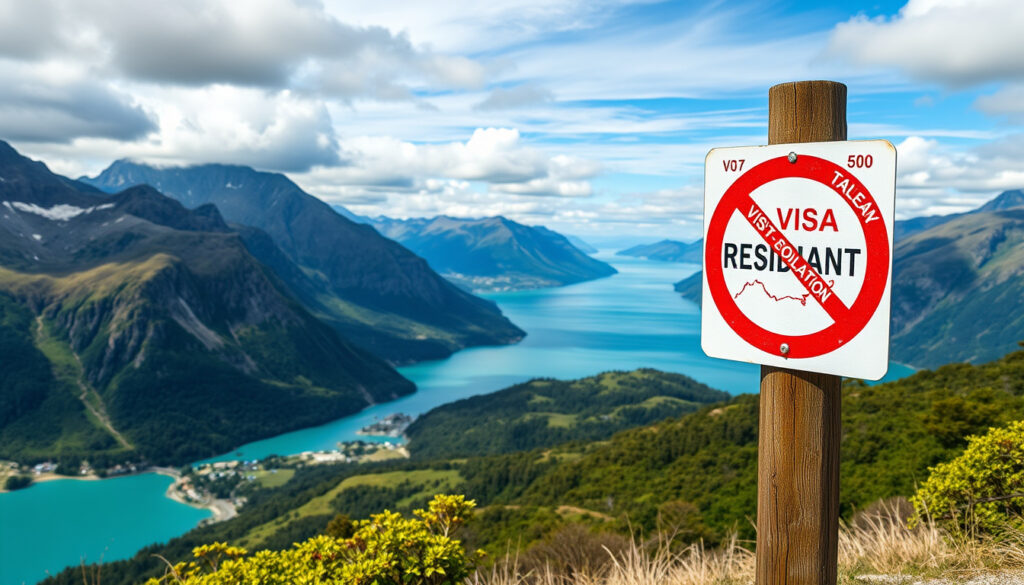
New Zealand Residency Restrictions: Rules, Limits & Visas
Planning a move to New Zealand means learning a language of limits before you can settle in freely. Resident visa holders face strict physical-presence requirements, work-history gates, and hard age cutoffs that catch many applicants by surprise.
Time to Permanent Resident Visa: 2 years after resident visa · Work to Residence minimum: 24 months · Straight to Residence eligibility: Indefinite stay · Recent policy change date: Mid-2026 pathways · Revocation risk factor: Extended absence
Quick snapshot
- Permanent Resident Visa requires 2 years of resident visa holding (New Zealand permanent residency on Wikipedia)
- 184 days minimum presence in NZ during each 12-month block of that 2-year period (INZ Official Guide for Resident Visa Holders)
- Skilled Migrant Category age cutoff is 55 — applications must arrive before your 56th birthday (New Zealand Immigration Adviser on Age Points)
- Whether post-2025 pathway changes apply retroactively to pending applications
- How Inland Revenue interprets tax residency for dual citizens with DTAs
- Mid-2026: New skilled-migrant pathways expected under current reform trajectory
- 10-year holding period applies to Parent Resident Visa before Permanent Resident Visa eligibility
- Pathway eligibility narrows if you exceed age 55 before invitation is received
- Residency conditions must be met before citizenship application can proceed
These figures represent the hard thresholds that determine whether your residency application succeeds or fails.
| Requirement | Value | Source |
|---|---|---|
| PR after resident visa | 2 years | Wikipedia |
| Work to Residence work min | 24 months | Immigration NZ |
| Policy update | 2025 loosening | Immigration NZ |
| Revocation trigger | Extended absence | NZ Government |
| Skilled Migrant Category age cutoff | 55 | VisaEnvoy |
| Citizenship: days per 12-month period | 240 | NZ Government |
| Citizenship: total days across 5 years | 1,350 | NZ Government |
| Partner Resident Visa to PRV | 2 years | NZ Government |
How long can a permanent resident stay out of New Zealand?
The answer depends on whether you hold a Permanent Resident Visa or a standard resident visa with travel conditions still attached. A Permanent Resident Visa carries no travel conditions — once granted, you can leave and re-enter indefinitely. A resident visa is different: it typically includes travel conditions that expire on a fixed date, and breaching those conditions can trigger serious consequences.
Absence rules for resident visas
When Immigration New Zealand grants a resident visa, it usually comes with a travel condition that limits how long you can spend outside New Zealand before the visa expires. If your travel conditions expire while you are overseas, you may not be able to return as a resident — you would need to apply for a new visa from offshore, which is a much higher bar. According to the official INZ guide, if you have held your resident visa for less than 24 months, you will not qualify for a Permanent Resident Visa and may instead receive a 12-month variation of travel conditions.
The 184-day threshold per 12-month block means missing even a single year resets your clock back to zero for PRV eligibility.
Risks of extended time abroad
Even after achieving Permanent Resident Visa status, extended absence carries indirect risks. If you spend too much time overseas, you may fail the physical presence requirements for citizenship. The New Zealand Government requires 5 years of resident status, 240 days in every 12-month period, and 1,350 days total across those 5 years. Going abroad for more than 4 months in any single 12-month period, or more than 15 months total across the 5-year window, disqualifies you from citizenship until those days are made up.
The implication: Permanent Resident Visa status itself does not expire, but a lifestyle of extended travel can quietly erode your path to citizenship — a status many residents ultimately want.
NZ Superannuation eligibility residents who spend fewer than 240 days per year in New Zealand risk losing their New Zealand Superannuation eligibility benefits, as the 5-year presence requirement directly affects both citizenship and super qualification.
Is it difficult to get residency in New Zealand?
Getting residency in New Zealand is straightforward in its requirements but demanding in its thresholds. The process follows distinct pathways — each with its own proof demands, timelines, and eligibility criteria. What makes it “difficult” depends entirely on which pathway fits your profile.
Key eligibility factors
The Skilled Migrant Category — the most common work-based pathway — uses a points system that weighs age, skilled employment, qualifications, and experience. Applicants between ages 20 and 39 can claim up to 30 age points, while those aged 40 to 44 receive 20 points. The window narrows sharply after 45, and principal applicants aged 56 or over face automatic decline under this category.
Work to Residence visas require a minimum of 24 months working in New Zealand for an accredited employer before you can apply for residency. The Straight to Residence pathway is available to holders of specific talent or priority visas and offers an indefinite-stay outcome directly.
Common barriers and success rates
The most common rejection reasons are incomplete documentation, insufficient points scores, and age-related ineligibility. Medical and character requirements also filter out applicants who cannot meet health standards or produce police clearances from countries where they have lived. According to Immigration New Zealand, medical waivers exist for partners or dependent children of New Zealand citizens or residence class visa holders, but principal applicants have limited waiver options.
The pattern: applicants with skilled employment offers, relevant qualifications, and age below 50 face the clearest path. Those without a job offer must score very high on the points scale, which is difficult to achieve without factors like New Zealand work experience or a job offer.
New Zealand trades a relatively transparent points system for strict physical presence and time-inholding requirements — applicants who score highly on the points test but cannot demonstrate sufficient days in-country still lose their visa.
First Home Buyers Grant NZ residents who fail the 184-day annual presence threshold may find their Permanent Resident Visa application delayed, directly impacting access to First Home Buyers Grant NZ schemes that require permanent residency.
Can I emigrate to New Zealand if I am over 50?
Yes — but the options narrow considerably after 50, and the Skilled Migrant Category becomes almost unavailable. The age cutoff of 55 (applications must be received before your 56th birthday) means that applicants in their early 50s still have a window, but it closes quickly and the points reward for age drops to just 5 points for ages 50 to 55.
Age limits for visas
The Skilled Migrant Category caps principal applicants at 55. Beyond that, applications are automatically declined regardless of other qualifications. This is a firm legal threshold — there is no appeal process for age disqualification under this visa category. According to immigration advisers, the practical consequence is that applicants aged 52 to 55 need very strong supporting factors — a high-salary job offer, exceptional qualifications, or regional skill shortages — to accumulate enough points to be invited.
Exceptions for skilled migrants
Applicants over 56 may still qualify under the Investor or Retirement categories, which have different criteria focused on financial assets rather than points scores. The Parent Resident Visa also carries no strict upper age limit, though it requires a sponsoring child who is a New Zealand citizen or resident aged 18 or older, who has themselves held that status for at least 3 years and spent 184 or more days in New Zealand in each of those 3 years.
What this means: the standard skilled-migration pathway effectively closes in your early-to-mid 50s. If you are determined to emigrate beyond that window, you need either a significant financial runway for investment-based categories or a family member already established in New Zealand to sponsor a Parent Resident Visa.
How long to live in NZ for residency?
The answer depends on which visa stage you are targeting. The clock starts at different points depending on whether you are pursuing Work to Residence, Straight to Residence, or the standard Skilled Migrant Category resident visa — and then resets again when pursuing Permanent Resident Visa.
Time requirements for PR
To convert a resident visa into a Permanent Resident Visa, you must hold your resident visa for at least 2 years continuously. During those 2 years, you must have been physically present in New Zealand as a resident for 184 days or more in each of the two 12-month periods. You also need tax residence status in New Zealand — which means you cannot simultaneously claim tax residency in another country under a double taxation agreement.
Work to residence timelines
The Work to Residence pathway requires 24 months of skilled employment with an accredited employer before you can lodge your residency application. Once approved, your resident visa starts a fresh 2-year clock toward Permanent Resident Visa eligibility. Combined, the minimum realistic timeline from first work visa to Permanent Resident Visa is roughly 3 to 4 years — assuming no processing delays and no gaps in employment.
The catch: every month spent outside New Zealand while on a resident visa potentially eats into your 184-day annual threshold. Remote work arrangements or extended overseas visits can quietly sabotage your Permanent Resident Visa application even if your employment history is otherwise solid.
Processing times for resident visas average 8 to 14 months depending on queue and completeness. During this period you are technically a resident but your 2-year Permanent Resident Visa clock has not started — adding to your total time in New Zealand before full indefinite status.
Can you lose residency in NZ?
Residency status is not automatically permanent until you hold a Permanent Resident Visa — and even then, certain actions can trigger revocation. Understanding the conditions attached to your specific visa type determines whether your status is truly secure.
Revocation powers
Section D8.15 of immigration instructions gives Immigration New Zealand the power to cancel a resident visa if the holder has not met the conditions of their visa, provided false or misleading information, or committed relevant character offences. A resident visa can also lapse if travel conditions expire and the holder is outside New Zealand — effectively trapping them offshore.
Main reasons for loss
The most common triggers are: failure to meet work or study conditions attached to the original visa; extended absence that violates travel condition dates; criminal convictions that trigger character grounds; and providing incorrect information during the application process, even unintentionally. Good character requirements apply continuously — a conviction after residency is granted can lead to revocation.
For Permanent Resident Visa holders, the conditions are looser but not absent. Tax residency status, character requirements, and compliance with any outstanding visa conditions from the prior resident visa all remain relevant. According to official government guidance, if an applicant has tax residence status in another country under a double tax agreement, they will not be considered to have tax residence status in New Zealand for Permanent Resident Visa purposes — which could affect eligibility if the PRV application is reviewed.
The pattern: residency loss almost always traces back to a specific compliance failure — a missed deadline, an undisclosed trip, a conviction. The risk is manageable for applicants who track their conditions carefully and maintain professional immigration advice.
Upsides
- Clear, published rules with published processing criteria
- Multiple pathways accommodate different profiles (skilled, family, investor)
- Permanent Resident Visa grants indefinite stay with no travel restrictions
- Parent Resident Visa offers path for older applicants with NZ-based children
Downsides
- Skilled Migrant Category age cutoff of 55 closes standard pathway for older applicants
- 184-day annual presence threshold requires careful travel planning
- Processing delays add months to years to total timeline
- Double taxation agreements can complicate tax residency during transition
Pathways to New Zealand Residency
New Zealand operates three main residency pathways, each targeting a different applicant profile and carrying distinct timelines and conditions.
- Skilled Migrant Category: Points-based assessment, age cutoff at 55, requires either a job offer from a New Zealand employer or high points without employment. Processing time 8–14 months. Leads to resident visa, then 2-year clock to Permanent Resident Visa.
- Work to Residence: Requires 24 months working for an accredited employer. Faster path to resident status for those already in New Zealand on work visas. Clock toward Permanent Resident Visa starts after residency approval.
- Partner and Parent Resident Visas: Family-based pathways. Partner Resident Visa requires 2 years with the partner before Permanent Resident Visa eligibility. Parent Resident Visa requires 10 years before the same milestone.
The trade-off: the fastest pathways (Work to Residence) require you to already be in New Zealand with employment. The pathways with no employment requirement (Skilled Migrant Category) require high points scores that penalize age. Family pathways have the longest holding periods before permanent residence is available.
There is no single “best” pathway — applicants who map their profile to the correct route first spend less time and money than those who try to force a misaligned pathway.
What the Numbers Say
Five key figures shape every residency decision in New Zealand — each representing a hard threshold or a calculable risk.
The 184-day presence floor per 12-month block directly determines whether your Permanent Resident Visa application will proceed — missing this threshold in any single year means your application stalls until the shortfall is made up.
- 2 years — minimum holding period for resident visa before Permanent Resident Visa application can be lodged
- 184 days — minimum in-country presence in each 12-month block of that 2-year period
- 55 years — age cutoff for Skilled Migrant Category applications (must be received before 56th birthday)
- 10 years — holding period for Parent Resident Visa before Permanent Resident Visa eligibility
- 1,350 days — total presence required across the 5-year citizenship window (averaging 270 days per year)
The implication: every pathway involves a holding period where your life decisions — where you travel, where you work, whether you maintain a job — directly affect your visa status. Unlike some countries where residency is a checkbox, New Zealand treats it as a continuous commitment.
To obtain a permanent resident visa, applicants must hold or have held a resident visa for at least two years continuously.
Applicants over 56 may qualify for temporary or resident visas under Investment or certain retirement categories.
Bottom line
New Zealand residency restrictions are not a single rule but a layered system of time thresholds, presence requirements, and category-specific gates. The rules reward early applicants through the Skilled Migrant Category, punish extended absence through both the Permanent Resident Visa presence threshold and the citizenship physical presence test, and offer limited options for those who cross the age 55 threshold without an existing pathway. For skilled migrants under 50 with a job offer, the path is demanding but navigable. For applicants over 55 without investment capital or a sponsoring family member already in New Zealand, the realistic options narrow to near-zero. Track your days from the moment your resident visa is granted — because New Zealand does.
new-zealand-immigration.com, youtube.com, turnerhopkinsimmigration.co.nz, immigration.govt.nz, govt.nz, immigration.govt.nz
Applicants facing New Zealand residency restrictions often start by calling Immigration NZ’s official 0800 helpline for clarity on absence rules and PR pathways.
Frequently asked questions
What are New Zealand resident visa requirements?
Requirements vary by visa category. For the Skilled Migrant Category, you need enough points from age, skills, employment, and qualifications — plus health and character clearance. For Work to Residence, you need 24 months working for an accredited employer. For family visas, you need a qualifying relationship or a sponsoring child in New Zealand. All pathways require meeting the resident visa conditions before Permanent Resident Visa eligibility begins.
Is there an age limit for New Zealand permanent residency?
The Skilled Migrant Category — the most common permanent residency pathway — has a hard age cutoff of 55. Applications must be received before your 56th birthday. Principal applicants aged 56 or over will have their skilled migrant application declined. However, Investment and Retirement visa categories have no strict upper age limit and can lead to residency.
How many years to get PR in New Zealand?
The minimum is approximately 3 to 4 years from first work visa to Permanent Resident Visa — assuming Work to Residence with no processing delays. The standard Skilled Migrant Category pathway adds the processing wait of 8 to 14 months. After resident visa approval, you must hold it for 2 years and meet the 184-day presence requirement in each 12-month block before Permanent Resident Visa application can proceed.
Can you get New Zealand resident visa without job offer?
Yes, through the Skilled Migrant Category if you score enough points without employment. Points for a job offer or offer of skilled employment adds 50 points to your application. Without a job offer, you need to compensate with high points from age, qualifications, and work experience. This makes the pathway significantly harder and the invitation threshold higher.
What is the New Zealand PR points calculator?
The points calculator for the Skilled Migrant Category scores applicants across four categories: age (max 30 points for ages 20-39), skilled employment or job offer (50 points), qualifications (max 70 points), and work experience (max 50 points, with bonus for New Zealand experience). Additional points are available for regional location, partner qualifications, and other factors. The current invitation threshold is typically 180 or higher.
What are downsides of New Zealand residency?
Key downsides include the strict physical presence requirements that complicate extended overseas travel, the age penalty in the points system that disadvantages applicants over 45, processing delays that add months to the timeline, and the risk of revocation for failure to meet visa conditions. Australian citizens have easier access, but all other nationalities face the full requirements.
How much to retire in New Zealand?
The Retirement category requires significant assets — typically NZD $1 million or more in funds or property, depending on investment thresholds and sponsor requirements. Standard Superannuation (NZ Super) eligibility begins at age 65 for residents who meet the residence criteria. The combination means most retirees need either private savings, transferred assets, or family sponsorship to access full residency benefits.
More related posts
 Level 4 Health and Wellbeing Pay Rate: HSE 2026 Guide
 Send Money Overseas From NZ – Cheapest Providers Compared
 Suzuki Swift Safety Rating: 3-Star Euro NCAP, ANCAP & UCSR
 A Knight of the Seven Kingdoms Episode 5: Recap & Rating
 Ka Mau Te Wehi Meaning – Māori Proverb Translation and Origin
 Good Pick Up Lines: Best Lines & How to Rizz Your Crush
 180 Days in Months: Conversion, Calculator & Context
 Spark Phones for Sale: Prices, Plans & Senior Discounts