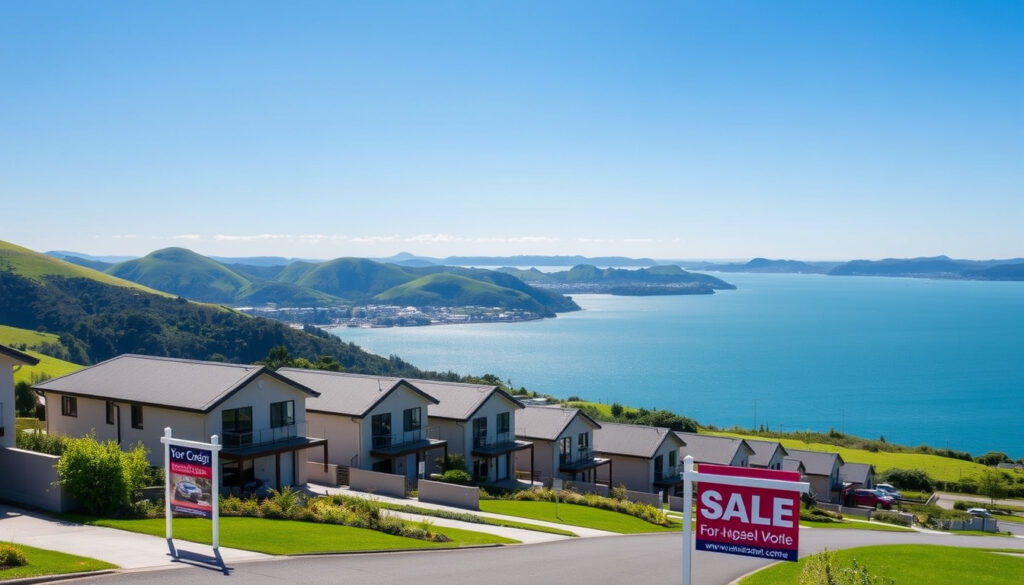
Houses for Sale in Whangarei: Prices, Listings & Guide
Whangarei offers genuine purchasing power in New Zealand’s property market: the median house price sits around $715,000–$720,000 as of early 2026, significantly below the national average, with rental yields in some nearby suburbs punching above 7%. Whether you’re a first-home buyer stretching a deposit, a retiree eyeing the coast, or an investor chasing yield, the math here is more compelling than many people realise. This guide walks through current listings, suburb-by-suburb prices, cost-of-living realities, and the practical rules for buying, including what Australian citizens need to know.
Houses listed on Trade Me: 1045 · Houses listed on OneRoof: 880 · Properties via Ray White Whangarei: 238 · RealEstate.co.nz listings: Multiple homes with photos and videos · Harcourts Whangarei District: Houses, apartments, townhouses, land
Quick snapshot
- Whangarei median price $715k–$720k vs national $795k (Team Davis)
- Most affordable suburb Raumanga at $479,950 average (Opes Partners)
- Most expensive suburb One Tree Point at $1,039,700 average (Opes Partners)
- Official REINZ or Stats NZ median price for Whangarei for early 2026
- Precise 2025–2026 sales volume figures for the district
- Future market forecasts beyond long-term growth benchmarks
- Average rent recorded at $568/week as of February 2026 (Opes Partners)
- Tikipunga prices grew +1.95% over March 2024–2026; Ngunguru fell -10.89% (Opes Partners)
- Northland sales activity increased year-on-year into 2026 (Team Davis)
- Coastal premium suburbs pushing past $1m as demand for lifestyle property continues
- Inner-suburb entry points under $500k remain viable for first-home buyers
- Kaikohe yielding 7.0% gross — highest in Northland — drawing investor interest
| Metric | Value |
|---|---|
| Location | Whangarei, Northland, New Zealand |
| Active Listings | 880+ houses on OneRoof; 938 on RealEstate.co.nz; 1045 on Trade Me |
| Whangarei Median Price | $715,000–$720,000 (early 2026) |
| National NZ Median | $795,000 |
| Auckland Median | $1.014 million |
| Most Affordable Suburb | Raumanga — $479,950 average |
| Most Expensive Suburb | One Tree Point — $1,039,700 average |
| Highest Yield Suburb | Kaikohe — 7.0% gross yield |
| Average Weekly Rent | $568/week |
How much does a house cost in Whangarei?
Whangarei’s property market presents a notably wide price spread depending on location. The median house price sits around $715,000–$720,000 as of early 2026, according to Team Davis (property market analysts). That already looks attractive when you compare it to Auckland at $1.014 million — the gap gives buyers meaningful purchasing power for the same budget. The national median of $795,000 also sits comfortably above Whangarei, making this one of the more affordable major centres in the North Island.
Whangarei District house values
The suburb price differences are dramatic. Raumanga, the most affordable suburb in Whangarei, averages $479,950 — attractive territory for first-home buyers hunting entry-level property. By contrast, One Tree Point — the most expensive suburb — averages $1,039,700, driven by its coastal positioning and water views. Parua Bay and Whangarei Heads average around $948,000, reflecting the lifestyle premium buyers pay for beach proximity.
For buyers with $500,000 or less to spend, Raumanga and Tikipunga offer the only realistic entry points in the current market. Everything else at that price point involves trade-offs on condition or location.
Premium coastal suburbs like Tamaterau and Onerahi routinely exceed $1 million. If water views matter to you, budget accordingly — or be prepared to look further from the coast for better value.
Looking at growth trends, not every suburb is moving in the same direction. Tikipunga posted the fastest-growing prices in Whangarei over the two-year period from March 2024 to March 2026, gaining +1.95%. Ngunguru went the other way, with prices falling -10.89% over the same period. For investors, the divergence matters: Tikipunga’s growth story suggests buyer confidence in that suburb, while Ngunguru’s decline warrants closer inspection before committing. The longest-term growth benchmark in the wider Northland region belongs to Kawakawa, which grew at 6.9% per year from January 2000 through March 2026 — according to Opes Partners (property market analysts).
Where is the best place to live in Whangarei?
“Best” depends heavily on who’s asking. The suburb that works for a young family looks completely different from what suits a retiree or an investor chasing yield. Whangarei has distinct neighbourhoods that cater to different priorities and price points, according to Paul Sumich (local real estate expert).
Explore great suburbs of Whangarei
- Kamo — popular with first-home buyers for its affordability and solid community amenities. Entry-level pricing makes it accessible without sacrificing access to schools and local shops.
- Tikipunga — offers entry-level pricing with recent development upside. The +1.95% price growth over two years suggests the market is taking notice of this suburb’s potential.
- The Avenues and Kensington — ideal for professionals who prioritise CBD proximity. These inner suburbs trade premium convenience for somewhat higher prices than outer-ring options.
- Maunu — desirable for families due to larger homes and proximity to Whangarei Hospital. If healthcare access or property size matters to you, this suburb merits consideration.
- Onerahi — a top coastal suburb commanding premium prices above the city median. The beach access and lifestyle appeal justify the premium for buyers who can afford it.
- Whangarei Heads and Parua Bay — averaging around $948,000, these suburbs offer coastal lifestyle without One Tree Point pricing. Average property values here reflect strong demand for beach-adjacent living.
Buyers prioritising space and affordability should focus on Kamo, Tikipunga, and Raumanga. Those willing to pay a premium for coastal lifestyle can look at Onerahi, Whangarei Heads, or One Tree Point — but the price gap is substantial.
Hikurangi is seeing growing interest from buyers seeking value outside the city centre. If you’re flexible on commute distance, this suburb may offer better purchasing power than the more established Whangarei neighbourhoods.
Is Whangarei expensive to live?
Compared to Auckland and most larger New Zealand centres, Whangarei is notably more affordable. The median house price of $715,000–$720,000 sits well below Auckland’s $1.014 million and the national median of $795,000. But housing costs are only part of the picture.
Cost of living in Whangarei
Average weekly rent in Whangarei is $568 as of February 2026, according to Opes Partners. For context, renters in Auckland typically pay significantly more for equivalent property. Housing affordability therefore extends beyond purchase prices — rental costs in Whangarei are genuinely competitive compared to larger markets.
Upsides
- Median house price $80,000+ below national average
- Auckland buyers can upgrade significantly for the same budget
- Rent at $568/week is more affordable than major centres
- Rental yields in nearby suburbs reach 7.0%
- First-home buyers can access properties under $500,000
Downsides
- Wage levels in Northland often trail Auckland equivalents
- Employment options more limited than in major cities
- Some services and specialist healthcare require travel to Auckland
- Rural property can involve longer maintenance and access challenges
- Coastal premium suburbs are already expensive ($948k–$1.04m average)
The trade-off for affordability is real: fewer high-paying career opportunities, less cultural infrastructure, and travel time to specialist services. But for buyers prioritising space, a coastal lifestyle, or stretching their dollar further, the cost difference is meaningful and persistent.
Is Whangarei a good place to retire?
Whangarei has several characteristics that appeal to retirees: a mild climate, coastal access, relatively lower property costs compared to Auckland, and a relaxed pace of life. Several retirement villages and lifestyle communities operate in the district, though detailed inventory data is limited in current public datasets.
Retirement villages and homes
For retirees considering Whangarei, the key appeal is the affordability gap between what a property might sell for in Auckland and what equivalent living costs in Whangarei. A couple selling an Auckland property at the $1.014 million median and buying in Whangarei at $715,000 could unlock meaningful capital for retirement spending or a mortgage-free lifestyle.
Whangarei Hospital provides solid healthcare access locally, but specialist medical services often require travel to Auckland. Retirees with complex health needs should factor this into their location decision.
The coastal suburbs — particularly Onerahi, Whangarei Heads, and Parua Bay — offer appealing lifestyle options for retirees seeking beach proximity. Average property values around $948,000 reflect this premium, but the trade-off is real: buyers seeking ocean views or beach access from their retirement home should expect to pay significantly above the city median.
Can an Australian citizen buy a house in New Zealand?
Australia and New Zealand have a special relationship under the Trans-Tasman Travel Arrangement, but property ownership rules are not identical to residency rights. Australian citizens can generally purchase residential property in New Zealand, though there are specific conditions and processes that apply.
Buying property rules for Australians
Under current New Zealand law, Australian citizens are treated more favourably than citizens of other countries when purchasing property, but they are not automatically entitled to buy without conditions. Australian buyers typically need to confirm their eligibility status, particularly if purchasing in certain areas or property types. Consulting a New Zealand property lawyer or a mortgage broker familiar with cross-Tasman transactions is strongly recommended before making an offer.
The rules around foreign buyer eligibility can change, and specific property types (such as some lifestyle blocks or properties near sensitive land) may have additional restrictions. Australian buyers should verify their eligibility with a qualified New Zealand solicitor before committing.
For Australian buyers looking at Whangarei specifically, the affordability advantage amplifies the appeal: an Australian buyer selling property in Sydney or Melbourne could find the price differential exceptionally advantageous. However, currency exchange rates, cross-border lending requirements, and potential tax implications all require professional advice.
“Whangarei has become an increasingly attractive property market in Northland, offering a balance between lifestyle, affordability, and long-term investment potential.”
— Team Davis
“Best depends on who’s asking. The best suburb for a young family looks different from the best suburb for a retiree, an investor, or a first home buyer stretching their deposit.”
— Paul Sumich, Real Estate Expert
The Whangarei property market presents a genuinely affordable option in New Zealand’s property landscape — particularly when you stack it against Auckland at $1.014 million or the national median of $795,000. The $715,000–$720,000 median gives first-home buyers access to the market at prices that simply aren’t available in the country’s major centres. Coastal lifestyle premiums push certain suburbs well above this figure, but the inner suburbs and outer-ring areas like Raumanga and Tikipunga keep ownership attainable.
Related reading: First Home Buyers Grant NZ · How Much is NZ Superannuation
Frequently asked questions
Where is the cheapest place in NZ to buy a house?
Whangarei sits among the more affordable major centres in New Zealand, with median prices around $715,000. Rural and smaller Northland towns like Kaikohe and Kawakawa offer lower entry points but come with reduced services and employment options. Other relatively affordable regions include parts of the South Island, such as Invercargill, though these involve significantly more isolation from major centres.
Is it cheaper to live in the UK or New Zealand?
Generally, New Zealand is more affordable for housing than the UK, particularly in London and the southeast of England. However, ongoing costs like groceries, utilities, and transport vary by region and personal circumstances. Property prices in New Zealand’s main centres are competitive internationally, though the country’s geographic isolation affects consumer goods pricing.
How many Maori live in Whangarei?
Whangarei has a significant Maori and iwi presence as the main urban centre of the Northland region. According to census data, the Maori population in the Whangarei District represents a substantial proportion of residents, reflecting the region’s historical and cultural significance to local iwi. For precise current figures, Statistics New Zealand provides the most authoritative data.
What are cheap houses for sale in Whangarei?
The most affordable houses in Whangarei are concentrated in suburbs like Raumanga (average $479,950), Tikipunga, and Hikurangi. Properties under $500,000 typically require compromise on condition, size, or location, but they do exist. Listings on Trade Me (1045 homes), OneRoof (880+), and RealEstate.co.nz (938 properties) allow buyers to filter by price to identify current options.
Are there new houses for sale in Whangarei?
New builds and recent constructions are available in Whangarei, though the volume is lower than in major growth areas like Auckland or Hamilton. Developers are building across the district, with both houses and townhouses appearing in new subdivisions. Buyers seeking new construction should search platform filters specifically for “new” or “built within the last year” and verify with listing agents.
What rural properties are for sale in Whangarei?
Rural and lifestyle properties are available throughout the Whangarei district and wider Northland region. Listings range from small lifestyle blocks close to town to larger farms in surrounding areas. Harcourts Whangarei District and Ray White Whangarei both list rural and semi-rural properties alongside urban housing. Buyers should note that rural property comes with additional considerations around water supply, wastewater systems, and access road maintenance.
More related posts
 Le Cordon Bleu New Zealand: Fees, Courses & Prestige
 My Computer Won’t Turn On: 5 Proven Fixes
 Air New Zealand Online Check-In: Times & Steps (2025)
 Is Harbour Bridge Open Today? Sydney Cork Live Status
 Cast of Kung Fu Panda 4: Full Voice Actors and Characters
 2025 NZ Public Holidays: Full Dates & Guide
 True Detective Season 3: Review, Cast, and Is It a True Story
 How to Deactivate Instagram: Step-by-Step Guide