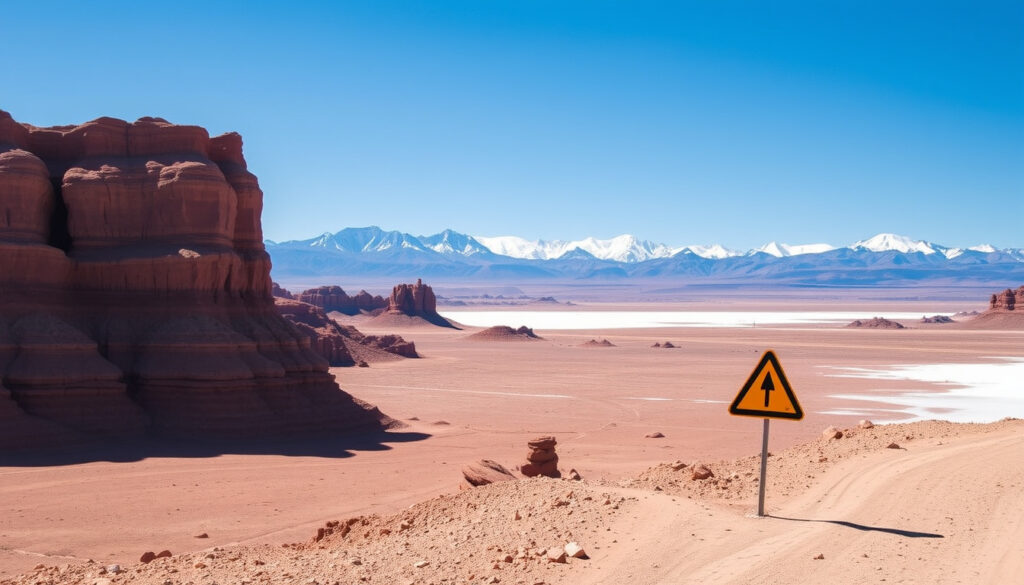
Is San Pedro de Atacama Worth It? Travel Guide, Safety, Altitude
You have probably seen the photos: otherworldly salt flats, steaming geysers at dawn, a valley that looks like the surface of the Moon — but getting to San Pedro de Atacama takes planning, a flight to Calama, a shuttle across the desert, and a body ready for 2,400 m of elevation. This guide cuts through the glossy brochures and helps you decide if this high-altitude base camp fits your travel style — and your budget.
Altitude: 2,408 m (7,900 ft) above sea level ·
Nearest airport: El Loa (CJC), Calama, about 100 km ·
Minimum visit: 2 full days ·
Top day trips: Valle de la Luna, El Tatio, high-altitude lagoons ·
Climate: Arid desert; warm days, cold nights
Quick snapshot
- Fly into Calama (CJC), not San Pedro de Atacama (Discoveny (travel guide))
- Take a shuttle or rental car from Calama (Discoveny (travel guide))
- Add a buffer day before high-altitude tours (Discoveny (travel guide))
- 2 days covers the essentials (Peter Orsel Travel Guide (independent travel blog))
- 3 days is the comfortable standard (Discoveny (travel guide))
- 4+ days allows slower pacing and more lagoons (Peter Orsel Travel Guide (independent travel blog))
- Transport and tours are the largest costs (Gotripzi (travel budget guide))
- Pay park entry fees in Chilean pesos (Gotripzi (travel budget guide))
- Book lodging early in peak season (Gotripzi (travel budget guide))
- Use normal tourist caution against petty theft (Atacama Chile Tours (travel operator))
- Protect against sun, wind, and dehydration (Atacama Chile Tours (travel operator))
- Acclimatize before going above 4,000 m (Atacama Chile Tours (travel operator))
Steps to plan your San Pedro de Atacama trip
- Book a flight to Calama’s El Loa Airport (CJC).
- Arrange a shared shuttle or rental car from Calama to San Pedro de Atacama.
- Include a full acclimatization day before any high-altitude tours.
- Reserve key tours (Valle de la Luna, El Tatio, highland lagoons) in advance during peak season.
- Pack essentials: SPF 50+ sunscreen, warm layers, at least 1.5 L water, and Chilean pesos.
- Enjoy the landscapes, but pace yourself to avoid altitude sickness.
San Pedro de Atacama is a logistics hub, not a resort. The town itself is a dusty grid of hostels and tour agencies. The payoff is access to landscapes that feel alien — but you trade comfort and convenience for that access. Budget-conscious travelers may find the cost-to-wonder ratio worth it; luxury seekers should temper expectations.
Five key facts about San Pedro de Atacama, one pattern: the town is small and remote, but its role as a gateway makes it the functional center of Atacama Desert tourism.
| Fact | Detail |
|---|---|
| Location | El Loa Province, Antofagasta Region, Chile (Corporación de Turismo de San Pedro de Atacama (official tourism body)) |
| Altitude | 2,408 m (7,900 ft) above sea level |
| Nearest airport | El Loa International Airport (CJC), Calama |
| Distance from airport | About 100 km by road |
| Tourism role | Base for Valle de la Luna, El Tatio, and highland lagoons |
Is San Pedro de Atacama worth it?
Who is San Pedro de Atacama best for?
- Travelers who prioritize natural wonders over urban comforts
- Photographers, stargazers, and hikers comfortable with early mornings (tours often depart before sunrise)
- Solo travelers and groups willing to book shared tours to keep costs down
- Anyone who has already spent time in Santiago or Chile’s wine regions and wants a contrast
The town sits at 2,408 m and functions as a launchpad for Valle de la Luna, El Tatio, and the highland lagoons — the Atacama Desert’s most celebrated landscapes. A stay of 2–3 nights covers the core sights without rushing, according to multiple travel guides.
What are the main drawbacks?
- The town itself is small and functional — its value comes from access to excursions rather than the town itself
- Long early-morning drives and high altitude are trade-offs visitors should weigh
- Costs are higher than in Santiago because of the remote location
- Public transport around the area is limited or absent, making tours or rental cars a necessity
The implication: the worth question depends entirely on what kind of traveler you are. For active, curious visitors, the Atacama delivers experiences that few other places on Earth can match. For anyone expecting resort amenities or walkable attractions, the trade-off will feel steep.
Why is San Pedro de Atacama famous?
What are the signature day trips around San Pedro de Atacama?
- Valle de la Luna: Rock formations and dunes that resemble a lunar landscape, part of the protected desert scenery
- El Tatio: A high-altitude geyser field about 90 minutes from town, best visited at sunrise when steam contrasts with the cold air
- Highland lagoons (Laguna Cejar, Laguna Chaxa, Miscanti and Miñiques): Salt flats and turquoise waters at elevations above 4,000 m
- Stargazing tours: The region’s clear, high-altitude skies make it one of the best stargazing destinations in the Southern Hemisphere
The Atacama Desert is recognized as one of the driest non-polar deserts in the world, with some weather stations recording less than 1 mm of annual precipitation.
Why is the Atacama Desert an important stargazing destination?
- More than 300 clear nights per year on average
- High altitude (the desert floor sits above 2,000 m across much of the area)
- Minimal light pollution — San Pedro de Atacama is surrounded by designated dark-sky zones
- Several professional observatories operate in the region, including ALMA
The same clear skies that make stargazing spectacular also mean intense UV exposure during the day. Travelers report sunburn within 30 minutes without SPF 50+. Plan your morning excursions with that in mind.
Why this matters: the Atacama’s unique environment — extreme dryness, high altitude, and near-zero light pollution — is the entire reason travelers make the journey. If those conditions do not excite you, the town itself offers little else.
How many days do you need in San Pedro de Atacama?
What can you cover in two days in San Pedro de Atacama?
- Day 1: Arrival and acclimatization, afternoon Valle de la Luna tour
- Day 2: Full-day excursion to either El Tatio or the highland lagoons, evening departure or overnight
- 2 days works for Valle de la Luna plus one other half-day or full-day excursion
What should you do with three or four days in San Pedro de Atacama?
- Day 1: Arrival, light walking in town, stargazing tour at night
- Day 2: Valle de la Luna in the afternoon (sunset tour is popular)
- Day 3: Sunrise at El Tatio (departure around 4:30–5:00 AM) followed by a visit to the highland lagoons
- Day 4 (optional): Slower-paced visit to Laguna Cejar or a cultural tour of nearby Atacameño villages
Three days is the comfortable minimum for adding a sunrise trip to El Tatio or highland lagoons, according to multiple travel guides. An extra day helps visitors adjust before excursions above 4,000 m. Tours generally start early — El Tatio departures are typically before 5:00 AM — so expedition-style pacing matters.
Why should you include an acclimatization day?
- San Pedro de Atacama sits around 2,400 m; day trips reach above 4,000 m
- Mild symptoms such as headache and fatigue can occur after a fast ascent
- Hydration, light activity on the first day, and ascending gradually reduce the risk
The pattern: two days is a teaser, three days is the real start, and four days gives you breathing room — literally and figuratively. The altitude limits how much you can pack in without feeling miserable.
Is it expensive to visit the Atacama?
How do most travelers reach San Pedro de Atacama?
- Fly into El Loa International Airport (CJC) in Calama
- Shared transfer from Calama airport to San Pedro de Atacama: about 10–15 USD per person
- Private transfer: about 60 USD or more depending on passengers
- One-way bus tickets from Santiago to San Pedro de Atacama vary from about 30 to 80 USD depending on company and service class
What are the main costs of an Atacama trip?
- Tour packages: three tours can cost between 150 and 200 USD
- Individual tours range from 20 to 35 USD for some attractions, with higher prices for more complex excursions
- Park entry fees (paid in Chilean pesos at the gate)
- Lodging: hostels from 20 USD/night, mid-range hotels from 80 USD/night, luxury options above 200 USD/night
- Food: more expensive than Santiago because of the remote location
Where can you save money in San Pedro de Atacama?
- Book shared tours instead of private ones
- Pay park entry fees in Chilean pesos to avoid unfavorable exchange rates at the gate
- Stay in hostels or guesthouses with kitchen access
- Book lodging early in peak season (December–February) to avoid last-minute price spikes
- Paying in Chilean pesos and booking shared tours are common ways to control costs
Budget travelers are advised to expect daily costs around 60 to 145 USD depending on assumptions and inclusions, while mid-range travelers should budget roughly 138 to 324 USD per day. One travel account reports a total trip cost of 1,439 USD per person.
The catch: costs in San Pedro de Atacama are structurally higher than in Santiago because of its remote location. The real question is not whether it is expensive — it is — but whether the experience justifies the premium for your travel style.
Is it safe to walk in San Pedro de Atacama?
Is crime a problem in San Pedro de Atacama?
- Multiple travel guides describe the town as generally safe and low in crime
- Tourists should still use normal caution against petty theft, as in any tourist destination
- Walking in the town center at night is common, but excursions outside town require arranged transport
What desert-safety precautions should you follow?
- The main risks in the desert are environmental: strong sun, dehydration, wind, and temperature swings
- Wear SPF 50+ sunscreen, a wide-brimmed hat, and sunglasses even on cloudy days
- Carry at least 1.5 L of water per person for any excursion
- Do not drink tap water because of mineral content that may upset the stomach
- Pack layers: temperatures can drop below freezing at night even in summer
Is it safe to drive around San Pedro de Atacama?
- Renting a car is possible, but gravel roads and remote stretches need planning
- GPS and cell signal are unreliable once you leave the main road
- A 4×2 vehicle can handle most day-trip routes in dry conditions; 4×4 is needed for some high-altitude lagoons after rain
Safety in San Pedro de Atacama is less about crime and more about preparation. The environment will punish carelessness — dehydration, sunburn, and altitude sickness are the real risks. The town itself is as safe as any tourist destination in Chile.
The trade-off: the freedom of renting a car versus the convenience and group safety of a guided tour. For solo travelers or those unfamiliar with desert driving, shared tours are the safer choice.
Is altitude sickness common in the Atacama Desert?
What are common altitude sickness symptoms?
- Headache, fatigue, nausea, dizziness, and shortness of breath
- Mild symptoms can occur at 2,400 m after a fast ascent from sea level
- Symptoms typically appear 6–12 hours after arrival and resolve within 24–48 hours with proper acclimatization
How can you prevent altitude sickness in the Atacama?
- Hydrate: drink 2–3 L of water per day from the moment you arrive
- Avoid alcohol and heavy meals on the first day
- Keep physical activity light on day one — a gentle walk around town, not a hike
- Ascend gradually: spend the first night at 2,400 m before attempting excursions above 4,000 m
- Coca tea and altitude medication (acetazolamide) are available locally
When should you seek medical help for altitude sickness?
- If symptoms worsen despite rest and hydration
- If you experience confusion, loss of coordination, or difficulty breathing at rest — these are signs of high-altitude cerebral or pulmonary edema and require immediate descent
- The town has a small medical clinic; serious cases are evacuated to Calama
Why this matters: altitude sickness is the most common reason travelers cut trips short or skip key excursions. Planning one acclimatization day is the single most effective way to protect your itinerary.
Why do they dump clothes in the Atacama Desert?
What is the fast-fashion waste problem in the Atacama Desert?
The clothing waste issue is connected to global fast fashion and unsold imported secondhand clothing that is shipped to Chile and ends up in the Atacama Desert’s arid zones, mainly outside the San Pedro de Atacama tourism zone. Desert conditions slow decomposition, so waste remains visible for years. The clothing dump is not a tourist attraction and should not be treated as one.
Where is the clothing dump located?
The visible clothing piles are associated with the Atacama’s arid conditions, mainly outside the San Pedro de Atacama tourism zone. Exact locations are not widely publicized, and the scale of dumping changes over time.
Should tourists visit the clothing dump?
No. The clothing dump is not a tourist attraction and should not be treated as one. Travelers are advised to avoid visiting out of respect for the environment and local communities.
The pattern: the clothing dump is a stark example of the environmental cost of global consumption, but it is not part of the San Pedro de Atacama travel experience.
Pros and cons of visiting San Pedro de Atacama
Upsides
- Access to some of the most otherworldly landscapes on Earth — Valle de la Luna, El Tatio, and highland lagoons are genuinely unique
- Excellent stargazing conditions with clear skies and professional observatories nearby
- Relatively safe for tourists compared to many other South American destinations
- Tour infrastructure is well developed: dozens of tour agencies, guides, and transport options
- International sustainable tourism certification obtained in 2026 signals community-level commitment
Downsides
- Expensive: daily costs of 60–145 USD for budget travelers, 138–324 USD for mid-range
- Altitude requires acclimatization, which can eat into limited itineraries
- Limited English outside tourism contexts can affect trip planning
- Long early-morning drives for key excursions (El Tatio departure at 4:30 AM)
- Public transport is limited or absent; tours or rental cars are mandatory for most attractions
- Tap water is not safe to drink because of mineral content
The pros clearly outweigh the cons for adventure travelers who prioritize natural wonders, but the cost and altitude remain significant barriers for others.
Confirmed facts and what remains unclear
Confirmed facts
- San Pedro de Atacama is a town and commune in El Loa Province, Antofagasta Region, Chile (Corporación de Turismo de San Pedro de Atacama (official tourism body))
- Calama’s El Loa Airport is the nearest commercial airport
- The Atacama Desert is one of the driest non-polar deserts on Earth (Atacama Chile Tours (travel operator))
- El Tatio and Valle de la Luna are major excursion destinations near San Pedro de Atacama
- The town obtained international sustainable tourism certification in June 2026 (Subsecretaría de Turismo de Chile (national tourism authority))
What’s unclear
- Exact local crime statistics for San Pedro de Atacama are not widely published at town level
- The scale of clothing dumping changes over time and is not tracked by tourism agencies in San Pedro de Atacama
- Estimated visitor numbers for the town vary by source and year
- The exact daily cost averages for budget travelers are not standardized across sources
- The specific impact of the sustainable tourism certification on visitor experience is not yet documented
The gaps in public data highlight the need for travelers to rely on firsthand accounts and official sources.
Key perspectives from informed voices
The Atacama Desert is one of the driest non-polar places on Earth, with some weather stations recording less than 1 mm of annual precipitation. The dryness and altitude create landscapes that have no analogue in most of the world.
Atacama Chile Tours (travel operator)
San Pedro de Atacama obtained an international sustainable tourism certification on June 3, 2026, consolidating its position as a world-class destination that meets global standards for environmental and cultural sustainability.
Subsecretaría de Turismo de Chile (national tourism authority)
Budget travelers should expect daily costs around 60 to 145 USD, while mid-range travelers should budget roughly 138 to 324 USD per day. The largest costs are transport and tours.
Gotripzi (travel budget guide)
Safety concerns in San Pedro de Atacama are more related to altitude sickness and UV exposure than violent crime. Sunburn can occur within 30 minutes without protection.
The San Pedro de Atacama, Chile, for Tourists by Tourists (travel video guide)
These perspectives collectively reinforce the main trade-offs of visiting San Pedro de Atacama.
Summary
San Pedro de Atacama is not a resort destination — it is a high-altitude logistics base that unlocks access to landscapes that feel like another planet. The cost is real, the altitude demands respect, and the early mornings are punishing. For travelers who prioritize unique natural experiences over comfort, the payoff is substantial. For the budget-conscious traveler weighing flights, transfers, tours, and daily expenses against what they will actually see, the decision is clear: if you have 3+ days and a tolerance for logistical friction, go. If you are short on time or prefer walkable attractions, consider the Atacama a destination to save for a longer Chile trip. Things to Do in Adelaide and Things to Do in Cambridge NZ offer alternative travel inspiration.
goingawesomeplaces.com, sanpedroatacama.com, visitchile.com, verynicetravels.com, sanpedroatacama.com
For those planning their stay, a detailed Hotel Kimal review offers insights into one of the town’s most popular boutique accommodations.
Frequently asked questions
What is the best way to get from Calama to San Pedro de Atacama?
Shared shuttle transfers cost about 10–15 USD per person and take roughly 1.5 hours. Private transfers are available for about 60 USD or more. Rental cars are also an option, with several agencies at Calama’s El Loa Airport.
Do I need to book San Pedro de Atacama tours in advance?
In peak season (December–February), booking popular tours like El Tatio sunrise and Valle de la Luna sunset a few days ahead is recommended. In shoulder seasons, you can usually book a day before through your hostel or a local agency. Many travelers report that same-day booking is possible for shared tours.
What should I pack for San Pedro de Atacama?
Essentials include: SPF 50+ sunscreen, wide-brimmed hat, sunglasses, 1.5 L reusable water bottle, warm layers (temperatures drop below freezing at night), comfortable walking shoes, headlamp for early-morning departures, and cash in Chilean pesos for park entry fees and smaller purchases.
Is San Pedro de Atacama a good destination for solo travelers?
Yes. The town has a well-established solo-traveler scene with hostels, shared tours, and group activities. Many tour agencies offer single-occupancy options at reasonable rates. The town is walkable and safe enough for solo evening strolls.
Are there ATMs and grocery stores in San Pedro de Atacama?
Yes, there are a few ATMs in the town center, but they can run out of cash, especially on weekends. Major grocery stores stock basic supplies. It is wise to bring enough Chilean pesos from Calama or Santiago to cover park entry fees and smaller vendors that do not accept cards.
What is the best time of year to visit San Pedro de Atacama?
The dry season (December–February) offers warmer days but is also the busiest and most expensive. April–June and September–November provide cooler temperatures, fewer crowds, and still excellent skies for stargazing. July–August (winter) brings very cold nights and occasional snow at high altitudes but also spectacular clear days.
Is San Pedro de Atacama suitable for families with children?
It can be, with preparation. The altitude affects children more noticeably than adults, so a slow acclimatization day is essential. Shared tours with early departures may be challenging for young children. Private tours with flexible schedules are a better option for families.
Why do they dump clothes in the Atacama Desert?
The clothing waste issue is connected to global fast fashion and unsold imported secondhand clothing that is shipped to Chile and ends up in the Atacama Desert’s arid zones, mainly outside the San Pedro de Atacama tourism zone. Desert conditions slow decomposition, so waste remains visible for years. The clothing dump is not a tourist attraction.
These answers should help resolve common planning questions.
More related posts
 Animals Starting with U: Complete List and Guide 2025
 Nunawading City vs Wellington Phoenix: Australia Cup Recap
 O Come All Ye Faithful Lyrics: Full Text & History
 What Chinese Year Is 2026? Fire Horse Meaning & Luck
 2025 NZ Public Holidays: Full Dates & Guide
 Old Fashioned Curried Sausages NZ: Perfect Recipe
 Metallic Taste in Mouth: Causes and When to See a Doctor
 New Zealand Residency Restrictions: Rules, Limits & Visas