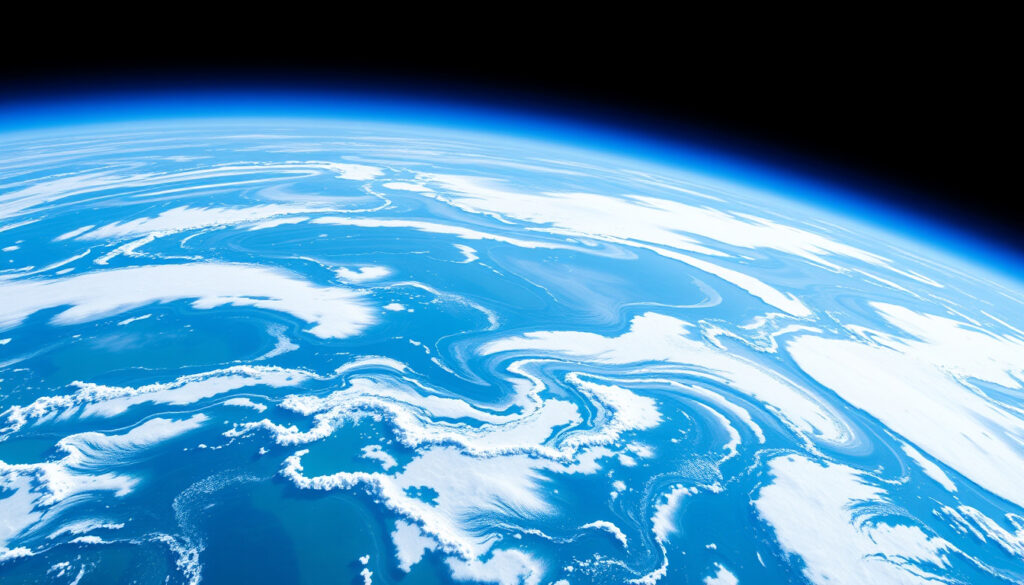
Oceans of the World – Guide to the Five Oceans
How Many Oceans Are There in the World?
Earth’s surface is dominated by vast bodies of saltwater that have shaped climate, culture, and life itself for billions of years. The world’s oceans form an interconnected global system covering approximately 71 percent of the planet’s surface.
Five oceans are currently recognized by international hydrographic authorities: the Pacific, Atlantic, Indian, Southern, and Arctic. Together, these bodies contain roughly 1.3 billion cubic kilometers of water, with an average depth approaching 3,790 meters. The Pacific stands as the largest, representing about 46.6 percent of all ocean area, while the Arctic remains the smallest. This recognition as five distinct oceans became official in 2000 when the International Hydrographic Organization formally acknowledged the Southern Ocean as a separate entity.
The interconnected nature of these basins means water flows between them through currents like the Antarctic Circumpolar Current, which circles Antarctica and connects the Atlantic, Pacific, and Indian Oceans. This global conveyor belt of water redistributes heat around the planet and regulates climate patterns that affect weather worldwide. Understanding geographical classifications helps frame how these massive water bodies relate to one another and to Earth’s broader physical geography.
Key Facts About the World’s Oceans
- The Pacific Ocean alone covers approximately 30 to 32 percent of Earth’s total surface area
- The Mariana Trench in the Pacific contains the deepest point on Earth at roughly 10,994 meters
- The Southern Ocean was officially recognized as the fifth ocean in 2000
- Ocean temperatures range from minus 2 degrees Celsius in polar regions to 30 degrees Celsius in tropical waters
- The Arctic Ocean has the lowest salinity due to freshwater inflow from rivers and melting ice
- Approximately 95 percent of all life on Earth inhabits the oceans
| Ocean | Area (million km²) | % of Ocean Area | Avg. Depth (m) | Max Depth (m) |
|---|---|---|---|---|
| Pacific | 168.7 | 46.6% | 4,280 | 10,994 |
| Atlantic | 82.4–85.1 | 23.5% | 3,339–3,646 | 8,605 |
| Indian | 70.6–73.6 | 19.5% | 3,741–3,960 | 7,450 |
| Southern | 20.3–22.0 | 6.1% | 3,270–4,496 | 7,235 |
| Arctic | 14.1–15.6 | 4.3% | 1,050–1,205 | ~5,450 |
Area measurements vary slightly across sources due to differing boundary definitions, though the Pacific consistently dominates, exceeding the total land area of all continents combined.
What Are the Sizes of the World’s Oceans?
The five oceans vary dramatically in scale, from the enormous Pacific to the comparatively compact Arctic. Understanding these differences helps illustrate the sheer volume of water that covers our planet and how different regions of Earth interact with this global system.
Pacific and Atlantic: The Largest Bodies
The Pacific Ocean spans 168.7 million square kilometers, making it larger than all of Earth’s land combined. Its volume reaches approximately 670 million cubic kilometers, and its coastline stretches for about 135,663 kilometers. The Atlantic follows as the second-largest, covering roughly 82 to 85 million square kilometers with a volume of about 310 million cubic kilometers. These two giants together account for approximately 70 percent of all ocean area on the planet.
Indian and Southern: The Southern Hemisphere Dominance
The Indian Ocean covers about 70 to 74 million square kilometers, representing approximately 19.5 percent of global ocean area. Unlike the Pacific and Atlantic, which extend through both hemispheres, the Indian Ocean is largely confined to the Southern Hemisphere. The Southern Ocean, encircling Antarctica south of 60 degrees south latitude, covers roughly 20 to 22 million square kilometers. Despite its smaller size, the Southern Ocean plays a critical role in global ocean circulation.
Arctic: The Smallest and Shallowest
The Arctic Ocean represents the smallest and shallowest of the five, with an area of approximately 14 to 16 million square kilometers and an average depth of just over 1,000 meters. Its relatively shallow depth and proximity to continental landmasses make it uniquely vulnerable to climate changes. The Arctic also maintains the lowest salinity of any ocean due to significant freshwater input from rivers and seasonal ice melt.
Ocean area measurements differ among authoritative sources due to variations in how boundaries are defined, particularly for the Southern Ocean. Figures from the International Hydrographic Organization and the National Oceanic and Atmospheric Administration may show slight variations.
Where Are the Oceans Located?
Each ocean occupies a distinct geographic position that shapes its characteristics, climate influence, and the ecosystems it supports. The arrangement of these basins reflects millions of years of tectonic movement and continues to evolve as Earth’s plates shift.
The Pacific: Spanning the Globe
The Pacific stretches between Asia and Australia on its western edge and the Americas on its eastern side, reaching from the Arctic in the north to the Southern Ocean in the south. This vast expanse contains approximately 25,000 islands, including major island nations and archipelagos throughout the Pacific. The western Pacific harbors the Coral Triangle, the center of global marine biodiversity, and the world-famous Great Barrier Reef off the coast of Australia.
The Atlantic: The Dividing Ocean
The Atlantic runs generally north to south between the Americas and Europe and Africa. It connects the Arctic Ocean in the north with the Southern Ocean surrounding Antarctica in the south. The Mid-Atlantic Ridge, a massive underwater mountain range, runs down the center of the Atlantic, marking the boundary between tectonic plates and creating new oceanic crust as the plates move apart.
The Indian and Southern: Southern Waters
The Indian Ocean lies primarily between Africa to the west and Asia and Australia to the east. Unlike the Pacific and Atlantic, it does not extend into the Northern Hemisphere beyond the tropical regions near the Indian subcontinent. The Southern Ocean completely encircles Antarctica, and its northern boundary is formally set at 60 degrees south latitude. This circumpolar body of water contains the Antarctic Circumpolar Current, the world’s largest ocean current, which flows unbroken around the entire Antarctic continent.
The Arctic: The Northern Cap
The Arctic Ocean occupies the region north of Eurasia and North America, centered on the North Pole. Unlike other oceans, much of its surface remains covered by sea ice throughout the year, though this coverage has been diminishing due to climate change. The Arctic connects to the Pacific through the Bering Strait and to the Atlantic through the Greenland Sea and Norwegian Sea.
What Are the Key Features and Depths of Each Ocean?
Ocean depths vary substantially, with some trenches plunging to nearly 11 kilometers while shallow continental shelves measure only a few hundred meters. These differences in bathymetry influence ocean circulation, nutrient distribution, and the types of marine life each region can support.
The Mariana Trench and Pacific Depths
The Pacific contains both the deepest ocean trench and the highest average depth of any ocean. The Mariana Trench, located in the western Pacific near the Mariana Islands, reaches the Challenger Deep at approximately 10,911 to 10,994 meters below sea level. This makes it the deepest known point in any ocean. The average depth of the Pacific exceeds 4,000 meters, reflecting the prevalence of deep ocean basins and abyssal plains throughout the region.
Atlantic Trenches and Features
The Atlantic’s deepest point lies in the Puerto Rico Trench, also known as the Milwaukee Deep, which descends to approximately 8,376 to 8,605 meters. The South Sandwich Trench, shared with the Southern Ocean, reaches about 8,246 meters. Average depths in the Atlantic range from roughly 3,339 to 3,646 meters, considerably shallower than the Pacific due to the wider presence of mid-ocean ridges and continental shelves.
Indian and Southern Ocean Depths
The Indian Ocean’s deepest point is the Sunda Deep in the Java Trench, reaching approximately 7,450 meters. Average depths hover around 3,960 meters, comparable to the Atlantic. The Southern Ocean maintains significant depth despite its smaller size, with an average of 3,270 to 4,496 meters. Its deepest known point reaches over 7,400 meters, while the South Sandwich Trench remains a major feature shared with the Atlantic basin.
If Mount Everest, the tallest land mountain at 8,849 meters, were placed in the Mariana Trench, it would still be completely submerged with nearly 2,000 meters of water above its peak.
Arctic Characteristics
The Arctic Ocean remains the shallowest of the five, with an average depth of approximately 1,050 to 1,205 meters. Its floor consists largely of continental shelves and relatively flat abyssal plains. Despite its shallow average, certain areas contain trenches exceeding 5,000 meters. The combination of cold temperatures, sea ice cover, and low salinity creates a unique environment distinct from all other oceans.
The Arctic Ocean demonstrates the most dramatic warming signals of any ocean region. Changes in sea ice extent and ocean temperatures affect global climate patterns, including the ocean conveyor belt that regulates temperatures across multiple continents.
History and Recognition of the Oceans
Human understanding of the world’s oceans has evolved significantly over centuries. For most of recorded history, cartographers and navigators recognized only four major oceans. The official addition of a fifth—the Southern Ocean—represents a relatively recent development in our geographic understanding.
From Four to Five Oceans
Throughout most of maritime history, maps depicted four oceans: Pacific, Atlantic, Indian, and Arctic. This classification persisted for centuries as explorers charted coastlines and navigation routes across these waters. The concept of distinct ocean basins made practical sense for trade, navigation, and cartographic purposes. For a deeper dive into the world’s oceans, consult this comprehensive perfume guide. perfume guide
- Pre-2000: Four oceans recognized globally—Pacific, Atlantic, Indian, and Arctic
- Year 2000: The International Hydrographic Organization formally recognized the Southern Ocean as the fifth world ocean
- 2000–present: Gradual adoption by national mapping agencies including NOAA in the United States
- 2021: National Geographic began referring to five oceans on its maps, marking broader public recognition
The formal recognition of the Southern Ocean reflected growing scientific attention to the Antarctic region and its unique oceanic characteristics. The Antarctic Circumpolar Current, which flows continuously around Antarctica, creates environmental conditions distinct enough to warrant separate classification.
Ongoing Boundary Discussions
Despite broad international acceptance, the Southern Ocean’s exact boundaries remain subject to some debate. The 60 degrees south latitude line serves as the general northern limit, but not all nations and organizations apply this boundary consistently. UNESCO’s Intergovernmental Oceanographic Commission emphasizes the interconnected nature of all oceanic basins, noting that artificial boundaries between oceans do not reflect the continuous flow of water and marine life across these regions.
What Is Certain and Uncertain About Ocean Classification?
While considerable consensus exists regarding the world’s oceans, certain aspects remain subjects of ongoing discussion among geographers, oceanographers, and cartographers.
| Established Information | Remaining Uncertainties |
|---|---|
| Five oceans recognized by IHO and most national authorities | Exact northern boundary of Southern Ocean varies by source |
| Pacific is largest and deepest ocean | Whether additional recognized oceans may emerge as understanding evolves |
| Arctic is smallest ocean by area and volume | Precise impact of climate-driven boundary changes |
| Mariana Trench contains deepest point on Earth | Ongoing discovery of potentially deeper trenches |
| Oceans cover approximately 71% of Earth’s surface | Exact percentage depends on tidal influences and boundary definitions |
| Four original oceans recognized for centuries | Long-term effects of ice melt on Arctic classification |
The Significance of Earth’s Ocean System
The five oceans function as a single, interconnected hydrological system that regulates planetary climate, drives weather patterns, and supports the majority of life on Earth. Ocean currents transport heat from the equator toward the poles, moderating temperatures across continents and maintaining the conditions necessary for diverse ecosystems.
Beyond their ecological importance, oceans have shaped human civilization through trade routes, cultural exchange, and access to resources. The Pacific alone contains more than 25,000 islands and supports fishing industries that feed billions of people. Marine biodiversity remains highest in the Coral Triangle, where the warm, shallow waters nurture an extraordinary variety of species.
Expert Sources on Ocean Geography
“The world’s oceans form a continuous body of salt water that covers more than 70 percent of Earth’s surface. While we commonly divide this system into five distinct oceans for practical purposes, the connections between them—the currents, the water masses, the migrating species—demonstrate that we are truly describing one global ocean with regional variations.”
— International Hydrographic Organization Guidelines on Ocean Boundaries
“The recognition of the Southern Ocean reflects both scientific understanding and practical needs. The Antarctic Circumpolar Current creates environmental conditions sufficiently distinct from neighboring oceans to warrant separate consideration in research and management contexts.”
— National Oceanic and Atmospheric Administration Ocean Service
Summary
The world encompasses five recognized oceans: Pacific, Atlantic, Indian, Southern, and Arctic. Together they cover approximately 71 percent of Earth’s surface with a total volume exceeding 1.3 billion cubic kilometers. The Pacific dominates in size and depth, containing the Mariana Trench and roughly 30 percent of Earth’s total surface. The Arctic remains smallest and shallowest, characterized by ice cover and low salinity. The Southern Ocean, officially recognized in 2000, encircles Antarctica and plays a critical role in global ocean circulation. These interconnected basins shape climate patterns, support marine biodiversity, and continue to reveal new scientific insights as exploration and research advance.
For understanding geographical classifications and global systems, recognizing both the distinct characteristics and interconnected nature of these five oceans provides essential context for understanding our planet’s physical geography.
Frequently Asked Questions
How many oceans are there in the world?
There are five recognized oceans: the Pacific, Atlantic, Indian, Southern, and Arctic. The Southern Ocean was officially added to this classification in 2000 by the International Hydrographic Organization.
What is the deepest point in the world’s oceans?
The Challenger Deep in the Mariana Trench reaches approximately 10,994 meters below sea level, making it the deepest known point in any ocean on Earth.
Which is the largest ocean?
The Pacific Ocean is the largest, covering approximately 168.7 million square kilometers and representing about 46.6 percent of all ocean area on Earth.
When was the Southern Ocean officially recognized?
The International Hydrographic Organization formally recognized the Southern Ocean as the fifth world ocean in the year 2000, though some organizations and nations had used the designation earlier.
What percentage of Earth is covered by oceans?
Oceans cover approximately 71 percent of Earth’s surface, containing roughly 1.3 billion cubic kilometers of water with an average depth of about 3,790 meters.
Are there only five oceans?
Currently, five oceans are recognized by international authorities. However, some oceanographers and organizations like UNESCO emphasize that these divisions are somewhat arbitrary given the continuous nature of the global ocean system.
What is the smallest ocean?
The Arctic Ocean is the smallest by both area (approximately 14 to 16 million square kilometers) and volume. It is also the shallowest, with an average depth of roughly 1,200 meters.
How do the oceans differ in temperature?
Surface temperatures range from minus 2 degrees Celsius in polar regions to around 30 degrees Celsius in tropical areas. The Arctic and Southern oceans are coldest, while tropical Pacific and Atlantic waters reach the highest temperatures.
More related posts
 Is Anzac Day a Public Holiday? 2026 Status in Australia & NZ
 How Many Tablespoons in a Cup: 16 Tbsp Guide + Chart
 GBP to NZD Forecast 2026: Near-Term Rise, Long-Term Drop
 Cetomacrogol and Glycerol Cream: Uses, Benefits, Side Effects
 Woman Falls into Water West Auckland: Key Incidents Reported
 Christchurch Earthquake Today: Live Updates & History
 Amanda Bynes Movies and TV Shows: Full Filmography & Life Story
 Trade Me Book a Courier: How to Book, Prices, Tracking & More