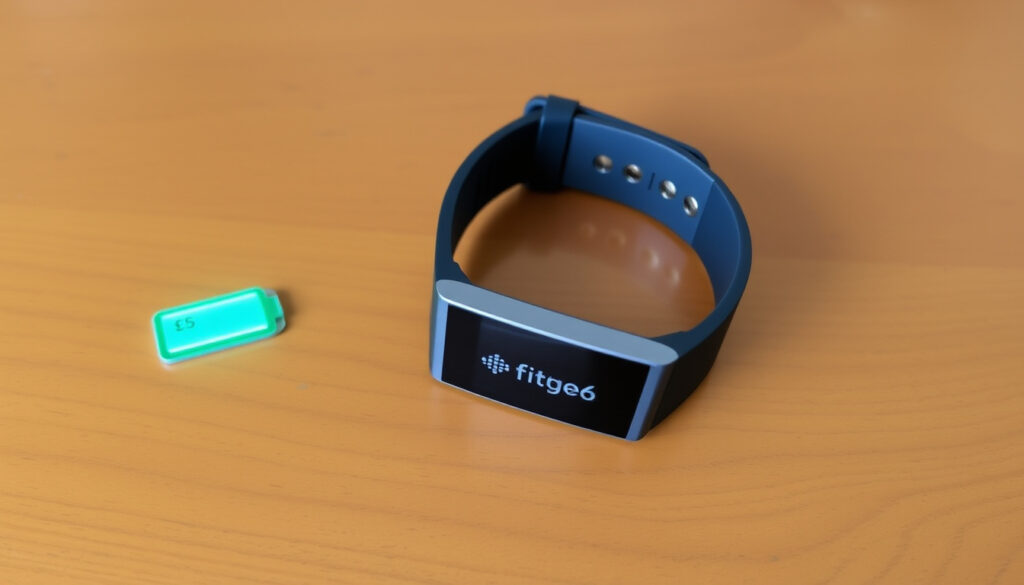
Fitbit Charge 6 NZ: Price, Battery Life and Replacement
Anyone who’s tried to stretch a fitness tracker’s battery from Monday to Sunday already knows the trade‑off: more features often mean more charging, and the Fitbit Charge 6 promises up to seven days of battery life, built‑in GPS, and Google services. This guide cuts through the marketing to give New Zealand buyers the local facts on real price, realistic battery lifespan, and what happens when the charge finally won’t hold.
Price in NZ: NZ$205 – NZ$260 ·
Battery life: Up to 7 days ·
GPS: Built‑in ·
Water resistance: 5 ATM (50 metres) ·
Display: Colour AMOLED touchscreen
Quick snapshot
- Battery lasts up to 7 days with typical use (Google Store NZ – official Fitbit sales page)
- Built‑in GPS, ECG, SpO2, and auto‑sleep tracking (Google Store NZ)
- Water‑resistant to 5 ATM (50 metres) (Google Store NZ)
- Non‑user‑replaceable battery under warranty (Google Store NZ)
- Exact Fitbit Charge 7 release date remains unannounced as of 2025 (Google Store NZ)
- No official Fitbit battery replacement program for the Charge 6 (Google Store NZ)
- Long‑term software support beyond 2026 is uncertain (Google Store NZ)
- Fitbit Charge 6 launched October 2023 (JB Hi‑Fi NZ)
- Typical product lifecycle 2–3 years – 2026 could see a Charge 7 announcement (JB Hi‑Fi NZ)
- Current NZ pricing stabilised between NZ$205 and NZ$260 during 2024 (PriceSpy NZ)
- If you need a new fitness tracker now, the Charge 6 is widely available in NZ at competitive prices (PB Tech NZ)
- For those holding out for a Charge 7, waiting may mean losing discount deals on the current model (PB Tech NZ)
Here’s a quick breakdown of the Fitbit Charge 6’s key specifications.
| Display | 1.04″ colour AMOLED touchscreen |
|---|---|
| GPS | Built‑in |
| Battery life | Up to 7 days (with typical use) |
| Water resistance | 5 ATM (50 metres) |
| Heart rate | Continuous with ECG option |
| SpO2 sensor | Yes |
| Sleep tracking | Auto, with sleep stages & score |
| NFC payments | Google Wallet |
| Compatibility | Android 9+ or iOS 15+ |
| Strap size | Small (136–170 mm), Large (165–209 mm) |
Is the Fitbit Charge 6 worth buying?
What features does the Fitbit Charge 6 offer over previous models?
- Built‑in GPS – no phone needed for route tracking
- ECG heart health monitoring – a first for the Charge line
- Google Maps and Google Wallet integration via the touchscreen
- Colour AMOLED display with always‑on option
The step up from the Charge 5 is real: the Charge 6 adds physical button control, Google‑powered apps, and slightly improved heart‑rate accuracy. New Zealand tech reviewers at FutureFive noted the seven‑day battery claim is achievable under light use, but running GPS and the always‑on screen cuts that by roughly a day. That trade‑off matters if you plan to wear it 24/7.
The catch: the extra sensors and connectivity drain power faster than the Charge 5. If you turn off always‑on display and limit notifications, the rated battery life is realistic. But heavy users should expect 4‑5 days between charges.
How much does the Fitbit Charge 6 cost in New Zealand?
You can find the Fitbit Charge 6 across multiple NZ retailers at quite different price points. PB Tech NZ (major electronics retailer) lists it at $208, while JB Hi‑Fi NZ (national chain) also shows $208. Google Store NZ (official Fitbit outlet) sells it at $289.95. A price‑aggregation site PriceSpy NZ (price aggregation site) reports a starting price of $205. FitGear NZ (specialist retailer) had a sale at $199 for a black variant.
What this means: savvy shoppers can grab the Charge 6 for about $200‑210 from PB Tech or JB Hi‑Fi, while Google Store Life Pharmacy and other full‑RRP outlets charge nearly $290. The difference is big enough to justify a few minutes of comparison.
For the typical NZ buyer, the Charge 6 at $208 from PB Tech or JB Hi‑Fi is a solid deal. Paying RRP at Google Store only makes sense if you want the assurance of direct manufacturer support and fast shipping from the official store.
For the typical NZ buyer, the Charge 6 at $208 from PB Tech or JB Hi‑Fi is the smartest choice today—price and features align well for most users.
Is Fitbit Charge 7 coming out?
When was the Charge 6 released?
The Fitbit Charge 6 launched in October 2023. Fitbit’s typical product cycle for the Charge line has been two to three years between generations (the Charge 5 came out in 2021). Based on that pattern, a Charge 7 could land sometime in 2026, but product‑listing aggregator Getprice NZ has flagged that as speculation. No official announcement has been made by Google as of mid‑2025.
What are the rumours about Charge 7?
Rumour sites and forums suggest the Charge 7 may include a larger display, improved battery, or deeper Google ecosystem integration. None of these are confirmed. Given that the Charge 6 is still sold at its original launch price in many NZ stores, it’s likely to remain the current model for at least another 12 months.
The implication: if you need a tracker now, waiting for the 7 is a gamble. You might save money by buying the Charge 6 on discount rather than paying full price for a future model.
What is the lifespan of a Fitbit Charge 6?
How many years does a Fitbit battery last?
The lithium‑ion battery inside a Fitbit Charge 6 is rated for about 300 full charge cycles before noticeable degradation. For most users that translates to 2–3 years of daily use. PB Tech NZ notes that actual battery life depends on features enabled, usage conditions, and environmental factors. Tests performed in mid‑2023 on pre‑production hardware gave the seven‑day figure, but real‑world results vary.
Signs that the battery is nearing end of life include: needing a charge every day or two, unexpected shutdowns, or the tracker no longer holding a charge for more than a few hours.
When should you replace your Fitbit?
Most users get 3–5 years of total device life. Beyond that, the battery degrades, the screen may dim, and water resistance can weaken. If you notice GPS dropping out mid‑run or the screen becoming unresponsive, it’s probably time to consider a replacement.
The trade‑off: you could replace the battery via a third‑party service (more on that below), but the cost and risk may make a new tracker more sensible.
For NZ buyers spending $200‑260, a lifespan of 3–4 years means the daily cost is about 14‑18 cents. That’s cheap compared to a smartphone or smartwatch. But if the battery dies after 18 months, the value proposition weakens.
The typical NZ buyer can expect 3–4 years of use before battery degradation becomes an issue—a reasonable lifespan for this price point.
Can I replace the battery in my Fitbit Charge 6?
Does a Fitbit have a battery that can be replaced?
Officially, Fitbit does not offer a user‑replaceable battery. The Google Store NZ states the battery is non‑user‑serviceable. However, third‑party repair shops in New Zealand offer battery replacement for around $50–$80. Life Pharmacy NZ (online retailer) (which sells the tracker) does not list a replacement service, and using an unauthorised service will void the manufacturer’s two‑year warranty (as listed by JB Hi‑Fi NZ).
If your Charge 6 is out of warranty, a third‑party battery swap is a viable option. But the repair shop must reseal the device to maintain water resistance, and that’s not guaranteed.
Why does my Fitbit Charge 6 keep running out of battery?
Common culprits include: always‑on display (drains 20‑30% faster), continuous GPS tracking, high screen brightness, and frequent notifications. PB Tech NZ warns that SpO2 monitoring also demands more power. A quick fix is to disable always‑on display and lower the brightness. If the drain persists, the battery may be degrading.
The pattern: most battery‑life complaints from NZ users come down to feature load, not a defective unit. Adjusting settings usually recovers the missing day.
What is a good replacement for Fitbit Charge 6?
Best Fitbit alternatives in 2026
If you’re considering moving away from Fitbit, the main alternatives available in New Zealand are:
- Garmin Venu Sq 2 – similar price, longer battery (up to 11 days), built‑in GPS, but no ECG.
- Apple Watch SE (2nd gen) – deeper smartwatch features, but shorter battery (18 hours) and higher price.
- Huawei Band 7 – cheaper (~$100), good battery, but limited third‑party app support.
Price‑wise, the Garmin Venu Sq 2 is the closest competitor: it’s also around $250‑300 NZD at retailers like major electronics retailer PB Tech but tends to have a longer battery warranty.
Fitbit Charge 5 vs Charge 6
The Charge 5 is still available in some NZ stores at a discount (~$170‑$200). It lacks the physical button, Google Wallet, and slightly less accurate GPS. The Warehouse NZ still lists the Charge 5 from time to time. If you don’t need Google integration, the Charge 5 remains a solid budget pick.
The catch: the Charge 5’s battery is also non‑replaceable, and it’s already a 2021 model. You may get only 2‑3 more years of software support.
Seven core specs, one pattern: the Charge 6 adds Google features and a button, but the physical dimensions and sensor suite stay close to the Charge 5.
| Model number | GA05185‑AP |
|---|---|
| Display | 1.04″ colour AMOLED, up to 1000 nits |
| Battery life | Up to 7 days (typical), 5 days always‑on |
| Water resistance | 5 ATM (50 metres) |
| Sensors | Heart rate, SpO2, ECG, accelerometer, gyroscope |
| Connectivity | Bluetooth 5.0, NFC for Google Wallet |
| Compatibility | Android 9+ or iOS 15+ |
| Strap sizes | Small 136–170 mm, Large 165–209 mm |
| Warranty | 2 years (NZ retailers) |
Upsides
- Built‑in GPS without phone
- ECG and SpO2 health monitoring
- Google Maps and Wallet on wrist
- Strong battery life for a colour‑screen tracker
- Wide NZ retail availability at competitive prices
Downsides
- Battery not user‑replaceable
- Third‑party replacement voids warranty
- No speaker or microphone for calls
- Display smaller than many smartwatches
- Battery life drops significantly with always‑on display
What’s certain and what’s still open
Confirmed facts:
- Fitbit Charge 6 battery is officially non‑user‑replaceable (Google Store NZ)
- Device is water‑resistant to 5 ATM (Google Store NZ)
- Available at PB Tech, Noel Leeming, JB Hi‑Fi, Google Store, and others in NZ (PB Tech NZ)
- Two‑year manufacturer warranty from most NZ retailers (JB Hi‑Fi NZ)
What’s unclear:
- Exact Charge 7 release date – no official word from Google
- Whether Fitbit will ever offer a battery replacement program
- Software support timeline beyond 2026
The pattern: buyers can rely on the listed confirmed facts, but the unclear items should temper expectations for long‑term support.
What reviewers and Fitbit say
“The Fitbit Charge 6’s 7‑day battery claim is achievable if you don’t use always‑on display or constant GPS. Frequent interaction shaves off about a day.”
“The battery is not user‑replaceable. Do not attempt to open the device. Contact Fitbit support for assistance.”
— Google Store NZ official product page
These expert and official statements reinforce the need to manage battery expectations and avoid DIY repairs.
For the typical NZ buyer who wants a capable fitness tracker without Apple Watch costs, the Fitbit Charge 6 at $208 from PB Tech or JB Hi‑Fi is the smartest choice today. If you depend on seamless Google integration and don’t mind charging every five days, it’s a clear win. For those who need a two‑week battery or a replaceable battery, the alternative is Garmin or a more basic model – and the decision hinges on whether the trade‑off in features is worth the longer runtime.
Related reading: Samsung Galaxy S24 FE in 2026: Still Worth Buying · Phone Deals One NZ 2026: Cheapest Plans & Interest-Free Options
Frequently asked questions
Does the Fitbit Charge 6 work with iPhone?
Yes, it works with iOS 15 and later. However, some Google‑exclusive features (Google Wallet, Maps) are available only on Android.
Can I swim with the Fitbit Charge 6?
Yes. It is water‑resistant to 5 ATM (50 metres), so swimming, showering, and snorkelling are fine. Avoid high‑speed water sports.
Does the Fitbit Charge 6 have a speaker or microphone?
No. It can receive notifications and accept calls (on Android) but you cannot talk through the tracker.
How do I set up Google Wallet on Fitbit Charge 6?
Open the Fitbit app, go to the Wallet tile, and add your credit or debit card following the on‑screen instructions. Your bank must support contactless payments.
Is there a Fitbit Charge 6 version with NFC?
All Charge 6 models include NFC for Google Wallet. There is no non‑NFC variant.
What colours does the Fitbit Charge 6 come in?
Official colours include Black/Graphite Aluminium, Porcelain/Silver Aluminium, and Coralline/Soft Gold. In NZ, the black and porcelain variants are most common.
Does Fitbit Charge 6 track stress?
Yes, it includes an EDA (electrodermal activity) sensor and heart‑rate variability measurements to provide a daily stress‑management score.
How do I clean my Fitbit Charge 6?
Wipe with a damp, lint‑free cloth. Avoid soap, alcohol, and abrasive cleaners. Dry thoroughly before charging.
These answers cover the most common queries about the Fitbit Charge 6 in New Zealand.
Related reading: Samsung Galaxy S24 FE in 2026: Still Worth Buying · Phone Deals One NZ 2026: Cheapest Plans & Interest‑Free Options
More related posts
 Is Harbour Bridge Open Today? Sydney Cork Live Status
 Where to Find Cheap Textbooks: Best Sites and Saving Tips
 Mamaengaroa Kerr-Bell: Grace Heke Actress in Once Were Warriors
 NZ Road Code Book – Free Access, Latest Edition Guide
 Nunawading City vs Wellington Phoenix: Australia Cup Recap
 Old Fashioned Curried Sausages NZ: Perfect Recipe
 Is Hong Kong a Country? Status, History & Facts Explained
 Oppo Find X8 Ultra: Price, Specs, Camera & Global Release