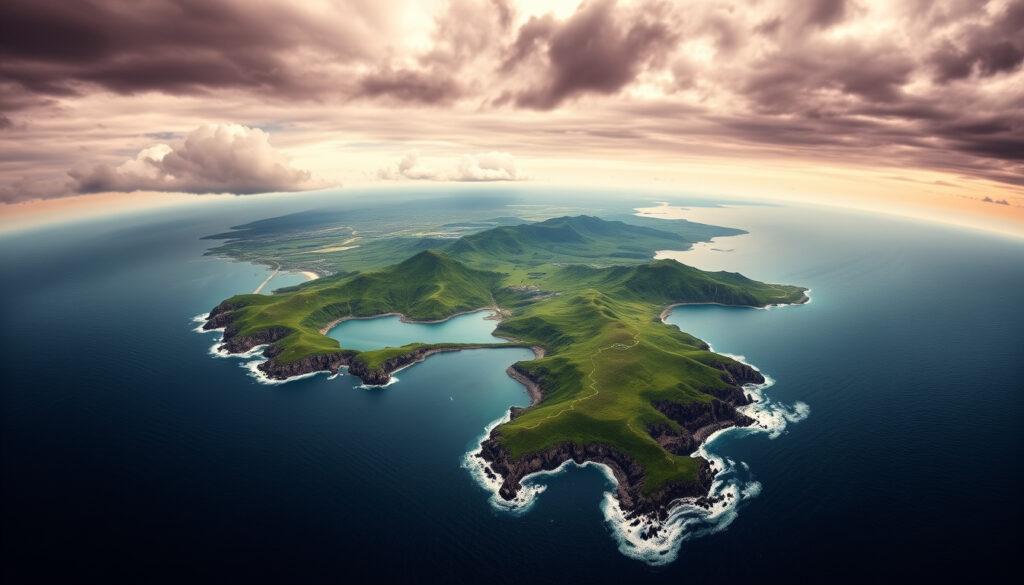
Te Ika-a-Māui: Meaning, Story, and Cultural Significance
The North Island’s Māori name, Te Ika-a-Māui, literally means “the fish of Māui” – a name that encapsulates a legend and an official identity. If you’ve ever glanced at a map of New Zealand and noticed the North Island has a Māori name that sounds like a fish story, you’re not alone.
Te Ika-a-Māui translation: The fish of Māui · Geographic referent: North Island, New Zealand · Official status: Official alternative name for the North Island (LINZ, New Zealand’s land information authority) · Māori legend: Māui and the giant fish
Quick snapshot
- Te Ika-a-Māui translates to “the fish of Māui” (LINZ)
- Official alternative name for New Zealand’s North Island (LINZ)
- The legend tells of Māui catching a giant fish that became the North Island (Te Ara: The Encyclopedia of New Zealand)
- Exact origin and variations of the legend across iwi (tribes) (Te Ara)
- Whether the name “Te Ika-a-Māui” was used before European contact or is a modern adaptation (LINZ)
- Te Ika-a-Māui continues to be used in official government documents, maps, and signage (LINZ)
- The name is central to Māori cultural identity and language revitalisation efforts (Te Ara)
- March 2013: NZ Geographic Board selected Te Ika-a-Māui as the most appropriate Māori name (LINZ)
- October 2013: Government announced official dual names for the main islands (BBC News)
- Exact pronunciation variations across iwi (tribes) (Māori Dictionary)
- Whether the name “Te Ika-a-Māui” was used before European contact or is a modern adaptation (LINZ)
Six key facts offer a quick overview of the name’s official status and legendary roots.
| Label | Value |
|---|---|
| Official name | Te Ika-a-Māui (alternative for North Island) |
| Translation | The fish of Māui |
| Location | North Island, New Zealand |
| Māori demigod | Māui |
| Related legend | Māui fishing up the North Island |
| First Māori radio station | Te Reo Irirangi o Te Ika-a-Māui |
What Does Te Ika-a-Māui Mean?
Literal translation
The phrase Te Ika-a-Māui breaks down into te (the), ika (fish), a (of), and Māui (the demigod). The Land Information New Zealand (LINZ) official place-name record confirms the translation as “the fish of Māui.” The BBC reported the same meaning when the government announced the dual naming in 2013.
Geographic reference
Since 2013, Te Ika-a-Māui has been the official alternative name for New Zealand’s North Island. The New Zealand Geographic Board, which consulted iwi across the country, decided in March 2013 that Te Ika-a-Māui and Te Waipounamu (South Island) were the most appropriate Māori names. The government made the dual names official in October 2013.
The dual naming means every map, government website, and official document now carries the Māori name alongside the English one. For visitors, knowing Te Ika-a-Māui isn’t optional trivia—it’s the recognised name of the island.
The implication: Te Ika-a-Māui is not a nickname or a translation—it’s a legally equal name, carrying the same weight as “North Island” in official contexts.
What Does te tara o te ika a maui Mean?
Meaning of ‘tara’
The phrase te tara o te ika a maui (often written with macrons: Te Tara o te Ika a Maui) means “the peak of the fish of Māui.” The word tara in this context refers to a peak or point, according to Māori Dictionary, a trusted online resource for te reo Māori.
Location: Coromandel Peninsula
This name specifically refers to the Coromandel Peninsula and its mountain ranges. The peninsula juts out from the North Island’s east coast, resembling a peak on the giant fish’s back. The Wiktionary entry for Māui notes that alternative traditional names like Te Ika-nui-a-Māui (“the great fish of Māui”) also exist, showing the richness of the naming tradition.
The pattern: Regional Māori names like Te Tara o te Ika a Maui don’t just label a place—they preserve a geographic metaphor that runs through the entire Māui legend.
What Is the Story of Te Ika-a-Māui?
Māui’s plan to fish
According to the Te Ara Encyclopedia of New Zealand, an authoritative government-funded reference, the demigod Māui created a fishhook from his grandmother’s jawbone. He then went fishing with his brothers in their canoe.
The giant fish creation
Māui cast his hook and caught a gigantic fish. His brothers, ignoring his warning not to cut it, hacked at the fish. Their cuts created the mountains, valleys, and rugged terrain of the North Island. The fish itself became the land—Te Ika-a-Māui. The same Te Ara account says the fishhook became the cape that forms the southernmost tip of Hawke’s Bay.
Connection to the North Island
In the legend, Māui’s canoe is said to have become the South Island, known as Te Waka a Māui (the canoe of Māui). The North Island is the fish. This creation story is not just a myth—it’s a fundamental part of Māori mātauranga (knowledge) that explains the landscape. A Te Mātauranga Māori resource from the Ministry of Education describes the fish as being populated from Hawaiki, the ancestral homeland.
The legend’s geographic details are remarkably precise: the fish’s tail points north (Te Hiku o te Ika a Maui, the Far North), and its head lies toward Wellington. The Coromandel Peninsula is a “peak” on the fish’s back. These aren’t coincidences—they’re a traditional map encoded in story.
What this means: The Māui legend is a geological and cultural map of the North Island, explaining why the land looks the way it does and why certain places bear the names they do.
What Does Māui Mean in Māori?
Name as a demigod
Māui is the name of a prominent demigod in Māori mythology. Te Ara’s entry on Māui describes him as a trickster and hero who performed many feats, including fishing up the North Island. The name is a proper noun with no direct translation; it is culturally significant and carries mana (prestige).
Linguistic origin
The spelling Māui includes a macron over the a, indicating a long vowel sound. Variants like “Maui” (without macron) appear in English texts, but the macron is important in te reo Māori for correct pronunciation and meaning. The TalkPal language guide explains that Māori vowels are pronounced consistently: a as in “car,” e as in “bed,” i as in “see,” o as in “or,” and u as in “shoe.”
The trade-off: While the name “Māui” is untranslatable, its cultural weight means that using it correctly (with the macron) is a sign of respect for the language and the people who speak it.
Is Māui Based on a True Story?
Myth vs history
Māui is a mythological figure, not a historical person. Te Ara categorises the Māui stories as pūrākau (traditional narratives) that explain natural phenomena. No archaeological evidence supports the literal story of a demigod fishing up an island. However, the legend holds deep cultural truth as a foundational story of Māori identity.
Cultural significance
The legend of Māui is one of the most popular Māori stories. It teaches values of determination, resourcefulness, and respect for the natural world. The BBC’s coverage of the 2013 naming noted that the dual recognition was part of a broader effort to honour Māori culture and language. Today, the name Te Ika-a-Māui is used in everything from official government documents to the name of New Zealand’s first Māori radio station, Te Reo Irirangi o Te Ika-a-Māui.
Why this matters: Whether or not Māui existed as a historical figure is beside the point. The story is a cultural fact: it shapes how Māori see the land, and it has official recognition from the government. That’s a different kind of truth.
What we know for sure — and what remains uncertain
Confirmed facts
- Te Ika-a-Māui is the Māori name for the North Island (LINZ)
- The name translates to “the fish of Māui” (Māori Dictionary)
- The legend tells of Māui catching a giant fish that became the North Island (Te Ara)
- Te Waipounamu is the South Island (LINZ)
What remains unclear
- Exact origin and variations of the legend across different iwi (tribes) (Te Ara)
- Whether the name “Te Ika-a-Māui” was used before European contact or is a modern adaptation (LINZ)
- Te Ika-a-Māui continues to be used in official documents, maps, and signage (LINZ)
- The name is central to Māori cultural identity and language revitalisation (Te Ara)
Voices on the name and the legend
“Te Ika-a-Māui and Te Waipounamu are the most appropriate Māori names for the two main islands of New Zealand.”
— New Zealand Geographic Board (LINZ), on the 2013 decision
“Te Ika-a-Māui — the fish of Māui — refers to the North Island.”
— Māori Dictionary (John C. Moorfield), definition of the term
“Māui caught the great fish with a hook made from his grandmother’s jawbone. The fish became the North Island, known as Te Ika a Maui.”
— Te Ara: The Encyclopedia of New Zealand, retelling the legend
The name Te Ika-a-Māui is more than a translation—it’s a window into how Māori see the land: as a living creature, a gift from the demigod Māui, and a story passed down through generations. For anyone visiting New Zealand’s North Island, using the Māori name alongside the English one is a small but meaningful act of recognition. For New Zealanders, the dual name is a reminder that the country’s geography is inseparable from its indigenous culture. The choice is clear: acknowledge the name, or miss the story behind the land.
en.wikipedia.org, facebook.com, youtube.com, en.wikipedia.org, a-hobbits-journey.blogspot.com, planeta.com
Frequently asked questions
What is the difference between ‘Te Ika-a-Māui’ and ‘North Island’?
Te Ika-a-Māui is the Māori name for the North Island. Since 2013, both names are official and can be used interchangeably in official contexts. The Māori name carries the cultural story of Māui fishing up the island.
How do you pronounce Te Ika-a-Māui?
Approximately “Teh ee-kah ah mah-oo-ee.” The Wikipedia entry for the North Island gives the IPA as [tɛ i.kɐ ɐ mɑː.ʉ.i]. The macron over the a in Māui means the vowel is long.
What does Te Waipounamu mean?
Te Waipounamu is the Māori name for the South Island. It means “the waters of greenstone” (pounamu, a type of jade found in the South Island).
Are there other names for the North Island in Māori?
Yes. An alternative traditional name is Te Ika-nui-a-Māui (“the great fish of Māui”), recorded by Wiktionary. Regional names like Te Hiku o te Ika a Maui (Far North) and Te Tara o te Ika a Maui (Coromandel Peninsula) also exist.
What is the significance of the name Te Ika-a-Māui in modern New Zealand?
It is used on official maps, government documents, and signage. It also appears in the name of the first Māori radio station, Te Reo Irirangi o Te Ika-a-Māui. The name is a symbol of the revival of te reo Māori and recognition of Māori culture.
Where is Te Hiku o te Ika-a-Māui?
Te Hiku o te Ika-a-Māui means “the tail of the fish of Māui.” It refers to the Far North region of the North Island, including the area around Northland and Cape Reinga.
What is a tara in Māori geography?
Tara means “peak” or “point” in Māori. In the phrase Te Tara o te Ika a Maui, it refers to the Coromandel Peninsula, which is seen as a peak on the back of the giant fish.
Explore more Māori culture with our Ki o Rahi field guide and discover the geography of the North Island by checking out Things to do in Taupō.
More related posts
 Travelodge Hotel Auckland Wynyard Quarter – Location, Amenities & Reviews
 How Long Is the New Avatar Movie – 3 Hours 15 Minutes Confirmed
 FC 26 Web App: Login, Access, Release Date Guide
 O Come All Ye Faithful Lyrics: Full Text & History
 BNZ Home Loan Rate Cut: Fixed Rates and Guidance
 Andrea Vance C-Word Column: Fallout Explained
 Nottingham Forest vs Man City standings: head-to-head, charges
 6 Seater Dining Table NZ: Compare Sizes, Costs & Top Picks