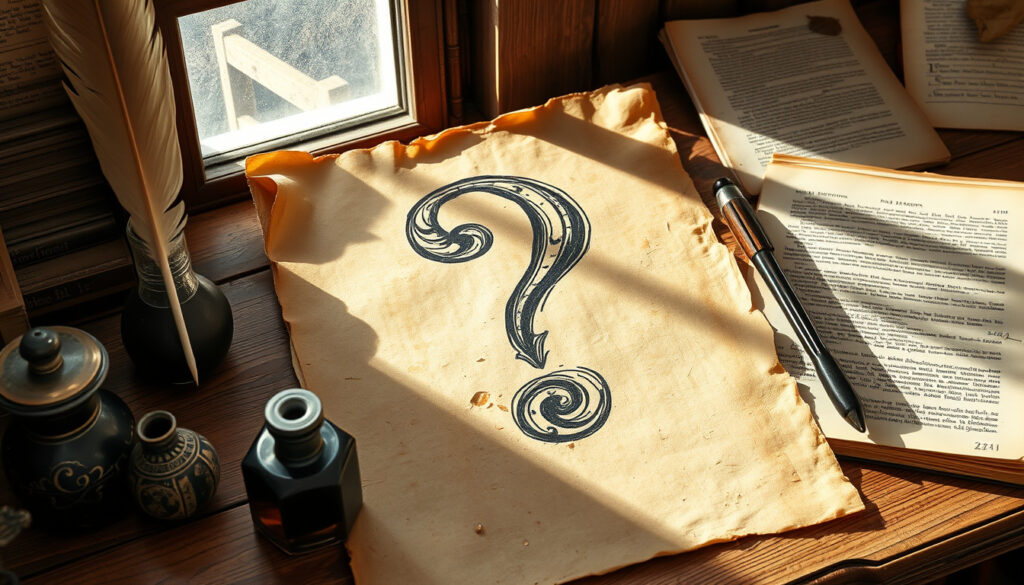
Upside Down Question Mark – History, Meaning and Typing Guide
The upside down question mark (¿) stands as one of the most distinctive elements of Spanish punctuation. Unlike the standard question mark found in English and many other languages, this inverted symbol appears at the beginning of interrogative sentences, setting it apart both visually and functionally. Though it may seem unfamiliar to those accustomed to writing only in English, the inverted question mark serves a specific purpose deeply rooted in linguistic tradition and readability concerns.
Also referred to as the opening question mark or simply the Spanish question mark, this punctuation mark has been a standard feature of Spanish orthography for nearly three centuries. Its unique placement helps readers anticipate that a question is about to follow, which proves particularly valuable in a language where sentence structure often leaves the interrogative nature unclear until the very end. Understanding this symbol means exploring both its practical applications and the historical circumstances that led to its adoption.
This guide covers everything from the symbol’s official name and Unicode designation to the various methods available for typing it across different devices and operating systems. Whether you are learning Spanish, working with Spanish-language documents, or simply curious about this distinctive punctuation mark, the information presented here will help you use and recognize the inverted question mark with confidence.
What Is the Upside Down Question Mark?
The upside down question mark, designated as ¿ in printed text, functions as the opening counterpart to the standard question mark placed at the end of interrogative sentences. This paired punctuation system marks the beginning and conclusion of questions in Spanish and several other languages that have adopted the convention from Spanish orthography.
Inverted question mark (¿)
U+00BF
Spanish opening interrogative
18th century Spain
The symbol belongs to a broader category of inverted punctuation marks that includes the upside down exclamation mark (¡). Together, these marks help establish the tone and intent of sentences from their very beginning, allowing readers to prepare for the interrogative or exclamatory nature of what follows.
Key facts about the inverted question mark:
- The inverted question mark marks the start of a question, while the standard question mark appears at the end
- Both symbols must be used together to properly punctuate Spanish interrogative sentences
- The mark appears in several languages besides Spanish, including Galician, Asturian, and Esperanto
- It was formally introduced by the Real Academia Española in 1754
- The Unicode character code U+00BF represents this symbol in digital text
- Similar inverted marks do not appear in right-to-left scripts like Arabic, despite their bidirectional text handling
- The symbol has inspired modern “irony marks” used in some creative writing contexts
| Aspect | Details |
|---|---|
| Symbol | U+00BF ¿ |
| HTML Entity | ¿ |
| Introduced | Real Academia Española, 1754 |
| Paired Symbol | Regular question mark (?) |
| Related Mark | Inverted exclamation mark (¡) |
| Mirrored Form | Not exact; standard ? at end |
Why Does Spanish Use an Upside Down Question Mark?
The inverted question mark emerged from the Real Academia Española’s efforts to standardize Spanish orthography during the 18th century. Founded in 1713, the academy published its first Ortografía Española in 1738, but the second edition in 1754 formally introduced inverted question and exclamation marks at the beginning of relevant sentences. This innovation aimed to eliminate ambiguity that readers faced when encountering long, complex sentences that might or might not be interrogative in nature.
Linguistic Reasons for the Inverted Mark
Spanish presents unique challenges that the inverted question mark addresses effectively. As a pro-drop language, Spanish frequently omits subject pronouns because verb conjugations already indicate who is performing the action. This grammatical feature means that intonation, which serves a crucial role in marking questions in spoken speech, must be complemented visually in written text.
Without an opening question mark, readers might progress through an entire sentence before realizing it concludes with a question. Consider how the Spanish phrase “¿Dónde vas?” follows a different grammatical pattern than its English equivalent. The inverted mark at the beginning signals immediately that a question follows, allowing readers to adjust their interpretation from the start rather than at the end.
The inverted question mark compensates for Spanish’s reliance on verb conjugation rather than pronoun placement. In spoken Spanish, question intonation provides this signal, but written text requires visual punctuation to achieve the same clarity.
Adoption and Spread of the Convention
The rule initially applied only to long sentences where ambiguity posed the greatest risk. However, in 1870 the academy expanded the requirement to cover all interrogative sentences regardless of length. This expansion reflected a growing consensus that consistency served readers better than case-by-case judgment.
Adoption across Spanish-speaking regions proceeded gradually. Some authors resisted the change initially, and informal writing sometimes omitted the opening mark well into the 20th century. Today, however, the inverted question mark appears as standard practice in formal Spanish writing throughout the world, from newspaper articles to legal documents to academic publications.
How Do You Type an Upside Down Question Mark?
Typing the inverted question mark varies depending on your operating system, keyboard layout, and device type. Several methods exist, ranging from keyboard shortcuts to copy-paste solutions, ensuring that users on any platform can insert this symbol when needed.
Desktop Computers: Windows and Mac
Windows users with numeric keypads can hold the Alt key while typing 0191 on the keypad to produce ¿. This alt code method works universally on Windows systems without requiring special keyboard configurations.
On Mac computers, pressing Option + Shift + ? generates the inverted question mark directly. Mac users with Spanish keyboard layouts may find that Shift + ? produces ¿ automatically, as these keyboards map the symbol to the standard question mark position.
Mobile Devices: iPhone, iPad, and Android
iOS devices including iPhones and iPads offer a straightforward method: press and hold the question mark key on the keyboard, then drag your finger to select ¿ from the popup menu that appears. This long-press technique reveals alternate characters including the inverted question mark.
Android devices using Gboard or similar keyboards typically support the same long-press method on the question mark key. Users who have installed Spanish keyboard layouts may find ¿ appears as a direct option alongside the standard question mark.
If you frequently type in Spanish, consider switching your device’s keyboard language to Spanish. This change places ¿ directly on the Shift + ? position, eliminating the need for complex shortcuts or long-press menus.
Alternative Methods
Character map applications on Windows and Character Viewer on Mac provide searchable interfaces for locating special characters including the inverted question mark. These tools prove useful when shortcuts prove difficult to remember or when working with unfamiliar keyboards.
Copy-paste remains the most universal method: simply copy ¿ from another source and paste it into your document. Many Spanish language websites and reference materials include the symbol, making it easily accessible for insertion into emails, documents, and social media posts.
Technical Details: Unicode and Copy-Paste for ¿
The inverted question mark occupies a specific position in the Unicode character set, ensuring consistent representation across digital platforms and applications. Understanding these technical specifications helps users appreciate why the symbol appears identically whether typed on a Windows computer, an iPhone, or a web browser.
Unicode Standardization
Unicode assignment U+00BF identifies the inverted question mark within the Latin-1 Supplement block. This standardized code point ensures that devices and software from different manufacturers interpret the symbol identically, facilitating accurate text exchange across platforms.
HTML documents can represent the character using the entity ¿ in situations where direct character input proves problematic or where strict encoding requirements apply. This entity resolves to the same U+00BF character, maintaining visual consistency while providing an alternative insertion method.
Ensure your text editor or content management system uses UTF-8 encoding to properly display the inverted question mark. Older systems using Latin-1 or ASCII may display the character incorrectly or strip it entirely during save operations.
Copy-Paste Availability
The symbol ¿ appears throughout Spanish-language web content, making copy-paste a reliable fallback method when keyboard shortcuts fail. Academic resources, news outlets, and language learning platforms typically include properly formatted inverted question marks that users can select and transfer to their own documents.
No dedicated emoji equivalent exists for the inverted question mark in standard emoji sets. Mobile messaging applications that lack Spanish keyboard support may prevent users from inserting ¿ in casual conversations. In such cases, users sometimes substitute the English question mark with quotation marks or parenthetical notes to indicate the intended punctuation.
Historical Timeline of the Inverted Question Mark
The development of the inverted question mark reflects broader trends in Spanish orthography standardization during the Enlightenment era. Several key moments shaped the symbol’s evolution from proposal to universal adoption.
- 1713: The Real Academia Española (Royal Spanish Academy) is founded in Madrid with the mission of standardizing Spanish grammar and spelling
- 1738: First edition of the Ortografía Española published, establishing initial punctuation guidelines but without inverted marks
- 1754: Second Ortografía Española edition formally introduces inverted question and exclamation marks for long sentences
- 1840s-1860s: Debate continues among writers and publishers regarding the necessity and practicality of opening marks
- 1870: Academy expands rule to require inverted marks for all interrogative sentences regardless of length
- 1895: Inverted marks appear in major Spanish newspapers and academic publications, signaling widespread professional adoption
- 1991: Unicode 1.0 standardizes U+00BF for the inverted question mark, enabling digital representation worldwide
- Present: The symbol remains standard in formal Spanish writing across all Spanish-speaking countries and international organizations
The timeline illustrates how orthographic conventions require sustained institutional support to achieve universal adoption. Unlike orthographic changes imposed abruptly, the inverted question mark gained acceptance gradually through consistent academy endorsement, educational system implementation, and professional publishing standards.
Established Facts and Remaining Uncertainties
Understanding what scholars definitively know about the inverted question mark helps distinguish factual information from common misconceptions. The following comparison clarifies the boundaries of established knowledge.
| What We Know for Certain | What Remains Unclear or Debated |
|---|---|
| The Real Academia Española introduced the mark in 1754 | Whether individual printers proposed the idea before the academy’s formal adoption |
| Spanish uses both opening ¿ and closing ? for questions | Exact rate of informal usage omitting opening marks in digital communication |
| The mark appears in Galician, Asturian, and Esperanto besides Spanish | Whether additional languages may adopt the convention in the future |
| Unicode U+00BF represents the character | Specific emoji proposals that may or may not gain Unicode approval |
| English has no equivalent opening question mark | Whether English-language style guides may eventually recommend partial adoption |
Scholars continue researching the precise historical circumstances surrounding the mark’s invention, as detailed records from the academy’s early deliberations remain limited. The ongoing debate about emoji equivalents reflects broader conversations about digital communication evolving beyond traditional punctuation conventions.
The Cultural and Linguistic Context
The inverted question mark embodies more than a practical punctuation solution; it represents Spanish language identity and orthographic sophistication. Its presence signals membership in a linguistic community that has maintained distinctive conventions despite increasing globalization of communication standards.
Spanish-speaking countries collectively represent over 20 nations where the inverted question mark appears in official documents, educational materials, and everyday communication. This geographic breadth demonstrates how a single orthographic innovation, once adopted, can become deeply embedded across diverse cultures sharing a common language.
The mark also serves as a marker of register and formality. While casual digital communication sometimes drops the opening question mark for speed, professional and academic writing universally maintains both opening and closing punctuation. This distinction parallels how other orthographic conventions signal attention to proper form even when technically optional.
Expert Sources and References
The Real Academia Española remains the authoritative body on Spanish orthographic conventions, including the use of inverted punctuation marks. The academy’s website provides comprehensive guidance on proper punctuation, confirming that both opening and closing marks should appear in all formal interrogative constructions.
“La Ortografía de la lengua española establece el uso de los signos de interrogación antecedido (¿) y seguido (?) de cierre en toda oración interrogativa directa.”
— Real Academia Española, Ortografía oficial
Unicode Consortium documentation provides the technical specifications that enable digital representation of the symbol across platforms and devices. These specifications ensure consistent rendering regardless of the application or operating system used to display text containing the inverted question mark.
The inverted question and exclamation marks were introduced into Spanish orthography by the Real Academia Española in the 18th century to mark the beginning of interrogative and exclamatory sentences.
— Unicode Names List, U+00BF documentation
Summary and Key Takeaways
The upside down question mark represents a distinctive feature of Spanish punctuation that has endured for nearly 300 years. Its introduction by the Real Academia Española addressed genuine linguistic challenges in a pro-drop language where sentence-final question marks alone could create ambiguity. Today, the symbol appears as standard practice in formal Spanish writing worldwide, with Unicode standardization ensuring consistent digital representation.
Multiple methods exist for typing the inverted question mark across different platforms, from alt codes on Windows to keyboard shortcuts on Mac and long-press techniques on mobile devices. Understanding these methods empowers users to insert the symbol correctly regardless of their technical setup.
For those exploring linguistic diversity and punctuation conventions, the inverted question mark offers an example of how orthographic innovations can become deeply embedded in a language’s identity. Whether encountered in a Spanish novel, an academic article, or a digital message, the ¿ symbol carries both practical function and cultural significance.
To learn more about linguistic concepts and their meanings, explore our guide on Ka Mau Te Wehi Meaning or discover interesting word origins in our article on Taco Cat Goat Cheese Pizza.
Frequently Asked Questions
What is the alt code for the upside down question mark?
On Windows, hold the Alt key and type 0191 using the numeric keypad to produce ¿. This method works on any Windows system without requiring special keyboard configurations or software installations.
Is there an upside down question mark emoji?
No standard emoji for the inverted question mark exists in current emoji sets. While Unicode has assigned ¿ a standard code point, mobile messaging platforms typically do not include it among their accessible emoji options.
How do I type ¿ on a Mac?
Press Option + Shift + ? to insert the inverted question mark on Mac computers. Users with Spanish keyboard layouts may find Shift + ? produces the symbol directly without requiring modifier keys.
What languages besides Spanish use the inverted question mark?
Galician and Asturian, both Romance languages spoken in regions of Spain, have adopted the inverted question mark from Spanish orthography. Esperanto also uses the symbol as part of its standard punctuation system.
What is the Unicode for the upside down question mark?
The Unicode code point U+00BF represents the inverted question mark. This code falls within the Latin-1 Supplement block and ensures consistent representation across digital platforms and applications.
Can I copy and paste the inverted question mark?
Yes, the symbol ¿ can be copied from any source containing it and pasted into documents, emails, or web forms. This method works regardless of your keyboard configuration or operating system.
Why did the Real Academia Española introduce the inverted question mark?
The academy introduced the symbol in 1754 to eliminate ambiguity in written Spanish. In a language where question intonation provides oral signals but sentence structure may not indicate interrogative intent, visual punctuation at sentence beginning helps readers prepare for questions.
More related posts
 Taco Cat Goat Cheese Pizza – Perfect Palindrome Explained
 Team Global Express NZ: Tracking, Ownership & Contact
 Day Light Saving 2026 in Ireland: Forward 29 March, Back 25 Oct
 Bream Bay Medical Centre Ruakākā: Phone, Address & Doctors
 Prayer Times in Auckland, New Zealand: 5 Sources Compared
 Los Cabos Shoes NZ Review: Quality, Price, and Where to Buy
 Cast of Deadpool 3: Full List in Deadpool & Wolverine
 Auckland to Bali Flights: Prices, Airlines & Tips