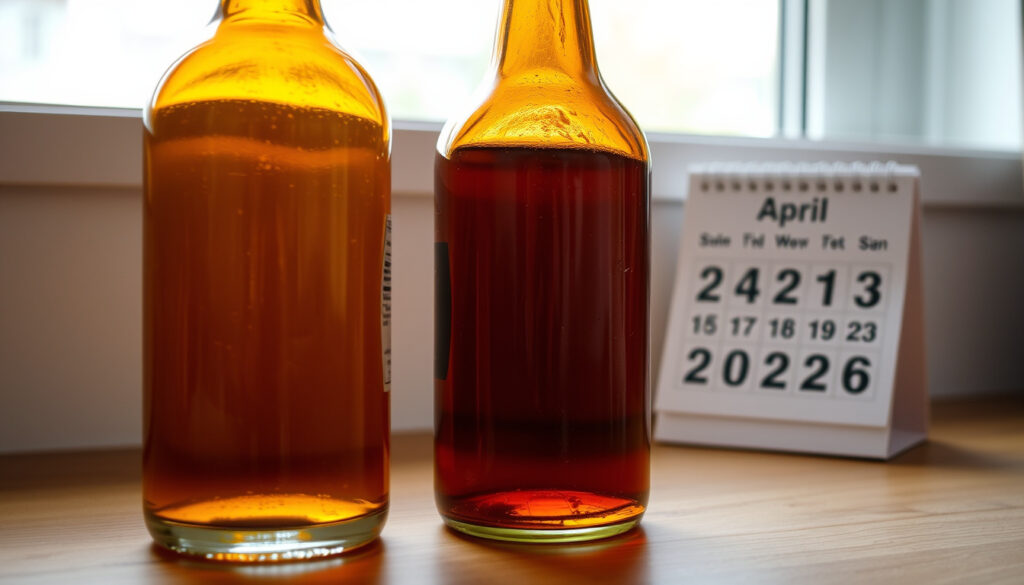
L&P Bottle Change: Brown Bottles Go Clear in April 2026
Few drinks carry the same nostalgic weight as a cold L&P on a hot Kiwi summer day. But that iconic brown bottle—familiar to generations of New Zealanders—is about to disappear from shelves forever, replaced by a clear plastic version in a move that prioritises recyclability over tradition.
Giant bottle height: 6.8 metres ·
Change date: April 2026 ·
Original bottle color: Brown ·
New bottle color: Clear ·
Founded: 1907
Quick snapshot
- Brown to clear plastic (Coca-Cola New Zealand Media Centre)
- Rollout begins April 2026 (Coca-Cola New Zealand Media Centre) (Coca-Cola New Zealand Media Centre)
- Recyclability focus (Coca-Cola New Zealand Media Centre) (Coca-Cola New Zealand Media Centre)
- 6.8m tall concrete bottle (Coca-Cola New Zealand Media Centre)
- Paeroa, NZ (Coca-Cola New Zealand Media Centre)
- Split in half for promotion (Coca-Cola New Zealand Media Centre)
- Exact date of giant bottle construction (commonly cited as 1968 but not in provided sources)
- Precise UK availability details
Coca-Cola New Zealand is betting Kiwi fans will trade a century-old brand signature for better environmental outcomes. The brown bottle’s sentimental pull is real—but so is the fact that coloured PET has no domestic recycling path.
Why Did L&P Change Their Bottle?
Seven facts, one pattern: every major decision points to a single constraint—New Zealand’s recycling infrastructure can’t handle coloured plastics.
| Driver | Detail | Source |
|---|---|---|
| Recyclability | Clear PET is easier to recycle in New Zealand than brown plastic | Coca-Cola NZ Media Centre |
| Domestic processing gap | Many councils send coloured PET bottles to landfill; no NZ facility can recycle them locally | 1News |
| Bottle-to-bottle loop | Clear PET increases chances bottles become new bottles instead of single-use items | Coca-Cola NZ Media Centre |
| Regulatory commitment | Coca-Cola is a signatory to the Ministry for the Environment’s Plastic Packaging Declaration | rova |
| 2025 packaging target | Coca-Cola aims for 100% reusable, recyclable or compostable packaging by 2025 or earlier | rova |
| Long-considered move | Coca-Cola was exploring the transition as early as 2022 | rova |
When did the change happen?
- The rollout begins nationwide in April 2026 (Coca-Cola New Zealand Media Centre)
- Clear bottles will progressively replace brown across all sizes (Coca-Cola New Zealand Media Centre)
- The change is the most significant packaging shift in the brand’s 119-year history (Coca-Cola New Zealand Media Centre)
The implication: the timeline wasn’t arbitrary. Coca-Cola had signalled this move since 2022, and the 2026 rollout synchronises with broader packaging commitments that most Kiwi consumers likely haven’t noticed yet.
What is the new bottle made of?
- Clear PET (polyethylene terephthalate), the same plastic used for most soft drink bottles globally (Coca-Cola New Zealand Media Centre)
- As of 2020, all Coca-Cola plastic bottles under 1 litre and all water bottles use 100% recycled plastic in New Zealand (rova)
- Caps and labels are not yet made from recycled content (rova)
What this means: the bottle material itself doesn’t change—PET is still PET. The colour does. And in New Zealand’s recycling system, that single colour change makes the difference between landfill and a closed loop.
What Is an L&P Drink?
What does L&P stand for?
- L&P stands for Lemon & Paeroa (Coca-Cola New Zealand Media Centre)
- It’s a carbonated soft drink flavored with lemon and Paeroa mineral water (Coca-Cola New Zealand Media Centre)
- It was first produced in 1907, making it 119 years old as of 2026 (Coca-Cola New Zealand Media Centre)
Why is it called L&P?
- The name derives from the town of Paeroa in the Waikato region, where the mineral water was originally sourced (Coca-Cola New Zealand Media Centre)
- Early marketing leaned heavily on the natural mineral water angle, positioning it as a health tonic of sorts (Newstalk ZB)
- The brand is considered a Kiwiana icon, often listed alongside Marmite and Pineapple Lumps (NZ Herald)
L&P is a Kiwiana icon, much like Old Fashioned Curried Sausages NZ.
For New Zealanders, the name isn’t just a product label—it’s a geography lesson and a piece of cultural shorthand. Changing the bottle means touching that identity.
When Was the L&P Bottle Made?
What is the history of the L&P bottle?
- The original L&P bottle design dates back to the early 1900s, using brown glass initially (rova)
- The brown plastic bottle became standard after the switch from glass in later decades (Coca-Cola New Zealand Media Centre)
- The brown colour was originally overprinted with a white label that became the iconic look, but the printed white label was phased out over time
When was the giant bottle built?
- The giant L&P bottle in Paeroa is a 6.8-metre-tall concrete structure that has become a roadside landmark and tourist photo stop (Coca-Cola New Zealand Media Centre)
- It was temporarily re-skinned with one half brown and one half clear to mark the packaging change (Coca-Cola New Zealand Media Centre)
- The split design creates a visual metaphor—old L&P vs new L&P standing side by side (1News)
The pattern: the bottle has always been a stage for the brand’s evolution. The giant concrete bottle, once a literal product promotion, now serves as a monument to the brand’s willingness to change.
Is L&P Owned by Coke?
Is L&P only in NZ?
- L&P is owned by Coca-Cola since 1990 (rova)
- It is predominantly sold in New Zealand, accounting for the vast majority of its sales (Coca-Cola New Zealand Media Centre)
- Export markets include Australia and some Pacific Islands, but volumes are small relative to domestic (Newstalk ZB)
Can you buy L&P in the UK?
- Very limited availability—some specialist NZ food importers stock it, but it’s not sold in mainstream UK supermarkets (Newstalk ZB)
- Expats and tourists are the primary demand drivers for exports (NZ Herald)
- No official distribution channel exists for the UK market, making it a rare find
The catch: despite being owned by the world’s largest beverage company, L&P remains a fiercely local brand. Coca-Cola’s global distribution muscle isn’t applied here—which means the bottle change is a decision made for New Zealanders, not global shareholders.
Coca-Cola New Zealand made a domestic infrastructure play, not a global branding one. The brown bottle’s end is a New Zealand story about New Zealand’s recycling capability, and the half-brown, half-clear giant bottle in Paeroa tells that story better than any press release could.
Is L&P Still Sold?
Is L&P still being produced?
- Yes, L&P is still sold throughout New Zealand (Coca-Cola New Zealand Media Centre)
- Production continues under Coca-Cola’s New Zealand operations (Coca-Cola New Zealand Media Centre)
- The brown-to-clear transition does not affect availability or production volume (Coca-Cola New Zealand Media Centre)
What is the current status of L&P?
- The brand is actively selling through its current brown bottle inventory until the April 2026 deadline (Coca-Cola New Zealand Media Centre)
- After April 2026, all bottling will use clear PET (Coca-Cola New Zealand Media Centre)
- The giant Paeroa bottle will remain as a monument, its half-brown, half-clear paint job serving as a permanent visual record of the transition (Coca-Cola New Zealand Media Centre)
The pattern: L&P isn’t disappearing—it’s evolving. The brand that has survived 119 years through two world wars, a corporate acquisition, and multiple packaging shifts will now navigate its most visible change yet. For a drink born from mineral springs in a small Waikato town, that’s a long run.
What this means: L&P remains a staple of New Zealand shelves, simply evolving its packaging for the modern recycling landscape.
Timeline signal
- – L&P first produced (Coca-Cola New Zealand Media Centre)
- – Coca-Cola acquires L&P (rova)
- – L&P switches from brown to clear plastic bottles; giant bottle statue split in half (Coca-Cola New Zealand Media Centre)
Confirmed facts and what’s unclear
Confirmed facts
- L&P changed to clear plastic bottles starting April 2026 (Coca-Cola New Zealand Media Centre)
- Giant bottle statue was split into brown and clear halves (Coca-Cola New Zealand Media Centre)
- Coca-Cola owns L&P (rova)
- L&P was first produced in 1907 (Coca-Cola New Zealand Media Centre)
- Coloured PET bottles can’t be recycled domestically in NZ (1News)
- Coca-Cola committed to the Plastic Packaging Declaration before 2022 (rova)
What’s unclear
- Exact date of giant bottle construction (commonly cited as 1968 but not in provided sources)
- Precise UK availability details beyond limited import channels
- Whether the giant bottle paint job is permanent or a temporary installation
- Impact, if any, on the drink’s flavour profile due to plastic colour change (Coca-Cola says no)
What the experts say
“Brown bottle loyalists, look away – L&P is going clear.”
Coca-Cola New Zealand spokesperson
“Paeroa’s giant L&P bottle gets makeover as drink changes packaging.”
The two quotes capture the split personality of this change: a big corporate announcement with playful marketing, and a local news story rooted in a small-town landmark. For Coca-Cola New Zealand and local Kiwi drinkers, the change ultimately represents a tangible step towards domestic recyclability at the cost of a cherished brand tradition.
en.wikipedia.org, reddit.com, reddit.com, coca-cola.com, reddit.com, coca-cola.com, rqn.com.au, coca-cola.com
Frequently Asked Questions
Is the new clear plastic chemically different from the brown plastic?
No. Both bottles are made from PET (polyethylene terephthalate). The only difference is the colour additive. Clear PET is preferred in New Zealand because it has a viable domestic recycling pathway, whereas coloured PET bottles often end up in landfill.
Did the brown bottle exist before plastic?
Yes. L&P was originally sold in brown glass bottles. The brown plastic bottle became standard after the company switched from glass in the latter half of the 20th century.
Is the half-brown, half-clear giant bottle permanent?
Coca-Cola has not explicitly stated whether the split paint job on the 6.8-metre concrete bottle in Paeroa is a permanent installation or a temporary promotional marker for the April 2026 transition.
What specific recycling barrier does the clear bottle overcome?
New Zealand’s domestic recycling infrastructure cannot process coloured PET bottles. As a result, many councils send them to landfill. Clear PET bottles can be recycled locally into new bottles.
Does the colour of the plastic affect the taste?
Coca-Cola New Zealand confirms the flavour profile of L&P remains completely unchanged. The recipe has not been altered—only the colour of the packaging has changed.
Are there plans to expand L&P distribution in the UK?
No. Coca-Cola does not operate official distribution channels for L&P in the UK. Availability is limited to specialist New Zealand food importers, and there are no announced plans to change this.
More related posts
 Where to Watch Georgie and Mandy’s First Marriage – Paramount+ and CBS Guide
 Fitbit Charge 6 NZ: Price, Battery Life and Replacement
 When to Plant Potatoes in New Zealand: Best Months & Tips
 The Fate of Ophelia by Taylor Swift: Meaning, Story, and Facts
 How to Clean Baseboard Heaters: Best Methods & Professional Tips
 How to Lose Weight: Evidence-Based Tips for Safe Results
 Fortnite Item Shop Today: Current Items & Reset Times
 Under the Tuscan Sun: Real Story, Locations & Cast