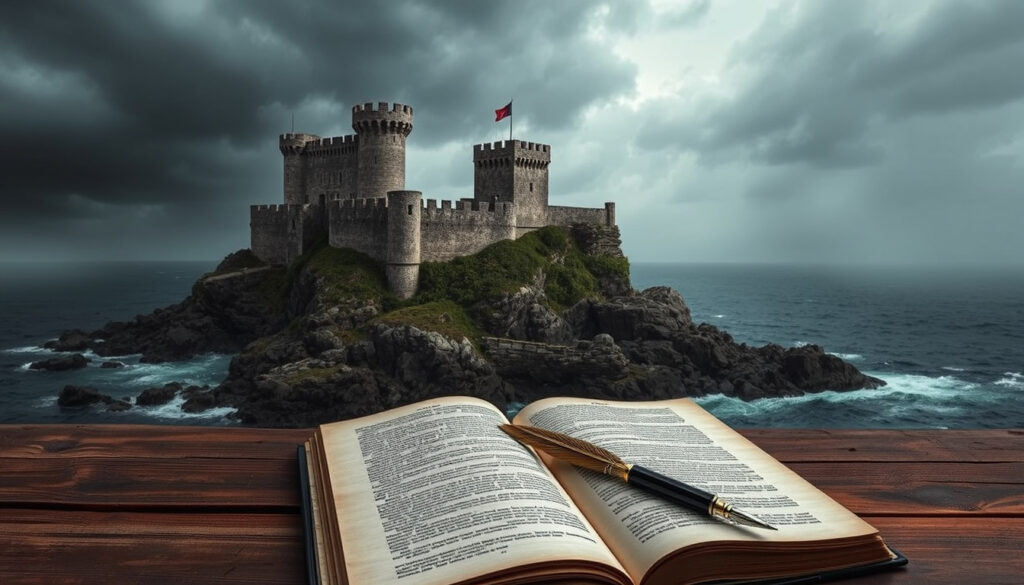
The Count of Monte Cristo: Plot, True Story & Bans
You’ve heard the name, maybe seen the movie, but the true story behind *The Count of Monte Cristo* is even wilder than fiction — Alexandre Dumas wove a tale of betrayal, hidden treasure, and cold revenge that still hooks readers today. This guide unpacks the plot, the real-life cases Dumas borrowed from, why the book keeps getting banned, and the famous quote readers never forget.
Original publication: 1844–1846 (serial) ·
Author: Alexandre Dumas ·
Original language: French ·
Setting: Marseille, Paris, Château d’If ·
Adaptations: 50+ films, TV series, stage plays ·
Pages (standard edition): ~1,200
Quick snapshot
- Dumas was inspired by a real police archive case (Smithsonian Magazine)
- The novel was serialized 1844–1846 (Encyclopaedia Britannica)
- Historians debate how much of the real case Dumas actually used (Amusing Planet)
- Claims of a USSR ban lack strong documentary evidence (Wikipedia)
- 2024 French film starring Pierre Niney brings new audience interest (Wikipedia)
The key facts about the novel are summarized in the table below.
| Attribute | Value |
|---|---|
| Author | Alexandre Dumas |
| Year published | 1844–1846 (serial) |
| Original title | Le Comte de Monte-Cristo |
| Setting | Marseille, Paris, Château d’If, Monte Cristo island |
| Genre | Adventure, historical fiction, revenge novel |
| Notable adaptation | 2002 film (Buena Vista) |
What is the story of The Count of Monte Cristo all about?
Who is Edmond Dantès?
- Edmond Dantès is a young, honest sailor wrongfully imprisoned for treason after a conspiracy by jealous rivals (Wikipedia).
- His arrest occurs on the day of his wedding to Mercédès, set during the Bourbon Restoration in France (Encyclopaedia Britannica).
How does Dantès escape from prison?
- In the Château d’If prison, he meets Abbé Faria, a fellow inmate who educates Dantès and reveals a hidden treasure on the island of Monte Cristo (Wikipedia).
- Dantès escapes after Faria’s death, taking his place in the burial shroud and swimming to freedom (Amusing Planet).
What happens after Dantès finds the treasure?
- He recovers the treasure and reinvents himself as the mysterious, wealthy Count of Monte Cristo (Wikipedia).
- He systematically targets Danglars, Fernand, and Villefort — the three men who framed him (Wikipedia).
The implication: Dumas built a plot where the hero’s transformation is both literal (treasure) and moral (becoming a calculating avenger). The tension between justice and revenge drives the entire narrative.
What is the true story behind The Count of Monte Cristo?
Is the novel based on real events?
- Dumas was inspired by a real police archive case of a shoemaker falsely imprisoned, whose details he read around 1838 (Smithsonian Magazine).
- The case involved a man named François Picaud, denounced by a friend, who after release took revenge on his accusers (Smithsonian Magazine).
What did Alexandre Dumas borrow from real life?
- Dumas embellished the core story with a hidden treasure, the exotic Count persona, and a multi-layered plot involving countless characters (Encyclopaedia Britannica).
- A major biographical inspiration was Dumas’ own father, General Thomas-Alexandre Dumas, a Black general of the French Revolution whose career was destroyed by betrayal — an experience some scholars say Dumas channeled into Dantès’ story (Vox).
The real Picaud case is disputed by historians — some suspect the story was dramatized by archivist Jacques Peuchet to sell police records. The novel may have more of Thomas-Alexandre Dumas’ life in it than anyone realized.
The pattern: Dumas blended a documented vendetta with a personal family grievance. The resulting novel feels truer than the actual archive because it speaks to a universal desire for justice after injustice.
“Dumas was inspired by a real police archive case of a shoemaker falsely imprisoned.”
— Smithsonian Magazine
Why was The Count of Monte Cristo banned?
Which countries banned the book?
- The book was reportedly banned or challenged in some authoritarian states due to its theme of extrajudicial revenge, and was briefly prohibited in parts of the United States during the 19th century for alleged immorality (Wikipedia).
- Some sources claim the novel was banned in the Soviet Union for its aristocratic and religious themes, but concrete archival evidence is thin (Encyclopaedia Britannica).
What were the reasons for the bans?
- The novel includes drug references — Dantès uses hashish in his revenge against one enemy — which led to challenges in school curricula (Wikipedia).
- Modern bans are rare but the book has been challenged for violence, moral ambiguity, and perceived subversion of authority (Wikipedia).
The trade-off: Bans often backfire, making a book more sought after. The persistence of censorship attempts shows the novel still strikes a raw nerve about law, justice, and who gets to punish.
What is the main message of The Count of Monte Cristo?
How does the theme of revenge evolve?
- The central message traces revenge’s corrosive effect: Dantès’ revenge initially feels righteous, but he learns that achieving justice does not equal happiness (Lit2Go ETC, University of South Florida).
- The narrative tracks from vengeance to redemption, with patience and hope — embodied by Abbé Faria and Haydée — serving as counterweights (Encyclopaedia Britannica).
Is forgiveness a key message?
- By the novel’s end, Dantès comes to see mercy as a higher form of justice than revenge, though the journey to that realization is brutal (Lit2Go ETC, University of South Florida).
- The final words — “Wait and hope” — suggest that patience is as powerful as revenge, a moral ambiguous enough to keep readers debating for 170 years (Encyclopaedia Britannica).
The catch: Even after Dantès shows mercy to his last enemy, the novel never fully resolves whether his revenge was justified. Dumas leaves the verdict to the reader, which is why the book still feels modern.
What is the most famous line from The Count of Monte Cristo?
- “Wait and hope.” (French: “Attendre et espérer.”) — It appears at the novel’s end and encapsulates the themes of patience and endurance (Encyclopaedia Britannica).
- Another widely known line: “All human wisdom is contained in these two words: Wait and hope.” (Lit2Go ETC, University of South Florida).
The most famous line almost contradicts the novel’s plot. Dantès doesn’t just wait — he actively executes a 14-year scheme for revenge. The quote is the moral capstone, not the story’s engine.
What this means: The quote is the final lesson Dantès learns after he has exhausted revenge. It frames the novel not as a simple revenge story, but as a meditation on what to do after justice — or vengeance — is served.
“Wait and hope.”
— Edmond Dantès, The Count of Monte Cristo (Encyclopaedia Britannica)
simple.wikipedia.org, hekint.org, youtube.com, amazon.com, elle.fr
For a deeper look at the plot, characters, and historical context, readers can refer to this complete guide to the novel.
Frequently asked questions
Who is the author of The Count of Monte Cristo?
Alexandre Dumas, the French writer of adventure novels, wrote the work between 1844 and 1846 (Encyclopaedia Britannica).
Is The Count of Monte Cristo based on a true story?
Partly. Dumas drew from a real case of a shoemaker falsely imprisoned, but heavily embellished the plot with treasure, multiple characters, and an exotic Count persona (Smithsonian Magazine).
What is the main message of the book?
The novel warns that revenge can consume the avenger, and that patience and hope are ultimately more valuable than vengeance (Lit2Go ETC, University of South Florida).
Why is the book called The Count of Monte Cristo?
After escaping prison, Edmond Dantès finds treasure on the island of Monte Cristo and adopts that name as his new identity, the Count of Monte Cristo (Wikipedia).
What happens at the end of The Count of Monte Cristo?
Dantès completes his revenge and sails away with Haydée, leaving behind the famous line “Wait and hope.” The novel ends on a note of quiet redemption (Encyclopaedia Britannica).
Is the 2002 movie faithful to the book?
Not very. The 2002 film shortens the timeline, changes key relationships, and adds a heroic escape scene that differs from the novel’s more cautious, calculated Dantès (Wikipedia).
What are the major themes in the novel?
Revenge, justice, patience, hope, forgiveness, and the corrupting power of vengeance. The narrative explores whether personal justice can ever truly satisfy (Lit2Go ETC, University of South Florida).
The FAQ covers the essential points that readers often ask about the novel.
Related reading
- A Court of Mist and Fury banned analysis — Another popular novel that has been challenged, offering a parallel look at censorship and literature.
- True Detective Season 3 true story review — Explores how real-life material is adapted for entertainment, much like Dumas’ transformation of the Picaud case.
For readers diving into *The Count of Monte Cristo* today, the choice is clear: read the unabridged edition (watch that 1,200-page count) or start with a modern film adaptation, but know that the novel’s moral questions — can revenge ever be just, and when does patience become surrender? — are what keep it alive. The book’s real power lies not in its plot but in its refusal to answer those questions for you.
More related posts
 How Much is NZ Superannuation: Rates 2026, After Tax & More
 200 Pounds in kg: Exact Conversion, Stone Equivalent, BMI
 Sol de Janeiro 48: Scent Profile, Reviews & Availability
 How to Lose Weight: Evidence-Based Tips for Safe Results
 Air New Zealand Online Check-In: Times & Steps (2025)
 Prayer Times in Auckland, New Zealand: 5 Sources Compared
 Online Jobs from Home in Ireland: No Experience Needed
 What’s My Car Worth? Free Car Valuation in Ireland (2025)