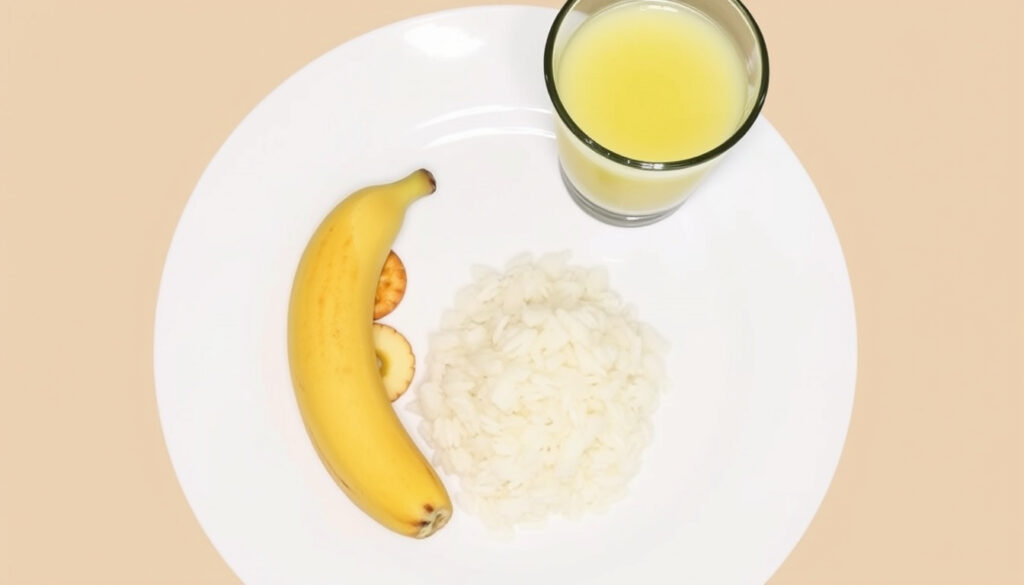
What to Eat When You Have Diarrhoea: BRAT Diet & More
Few things derail a day quite like a sudden bout of diarrhoea. It is a common misery, with around the World Health Organization (WHO) estimating 1.7 billion cases globally each […] In the midst of it, the question of what to eat feels urgent, yet the advice is often conflicting. This guide cuts through the noise, offering a practical, evidence-based approach to eating and drinking your way back to comfort, with a focus on what actually works and what to avoid.
Typical Duration: 2-4 days · Main Risk: Dehydration · First-Line Diet: BRAT Diet · Key Electrolytes: Sodium & […]
Quick Snapshot
- […]
- […]
- […]
- […]
The mainstay dietary approach, the BRAT diet (bananas, rice, applesauce, toast) from the Cleveland Clinic, is designed to be […] The primary risk isn’t a lack of eating, but the danger of dehydration. […]
| Key Fact | Detail |
|---|---|
| Typical Duration | 2-4 days |
| Main Risk | Dehydration |
| First-Line Diet | BRAT Diet |
| Key Electrolyte | Sodium & […] |
What to eat when you have diarrhoea: BRAT diet & more
The most effective strategy often begins with the BRAT diet. These foods are recommended by Cleveland Clinic because they are bland, low in fibre, and easier to tolerate when your digestive system is upset. […]
What is the BRAT diet?
This simple dietary pattern is a classic first-line approach for a reason. Bananas, for instance, are not only easy to digest but also contain pectin, a soluble fibre that helps absorb excess water in the gut, and potassium, an essential electrolyte often lost during episodes of diarrhoea.
The BRAT diet is a starting point, not a permanent solution. […]
Each component has a specific role. […]
For many, the practical question of what to eat focuses on these binding foods. […]
For example, University Hospitals Sussex NHS advises that low-fibre foods such as white bread, white pasta, and rice are […]
The consistent factor is simplicity. […]
The University Hospitals Sussex NHS recommends low-fibre foods such as white bread as part of its guidance.
Scrambled eggs on toast is a solid meal choice because it combines low-fibre carbohydrates with soft, easily digestible protein. […]
What not to eat during diarrhea?
The The Oregon Clinic advises avoiding raw vegetables, citrus fruits, coffee, and alcohol.
The Norfolk and Norwich University Hospitals NHS Foundation Trust specifically flags sugar-free drinks and […]
The risks of these foods aren’t just discomfort. […]
How long does diarrhoea typically last?
Understanding the typical duration of diarrhoea is key to managing your expectations and knowing when to seek medical help. […]
What is the typical duration for acute diarrhea?
The common guidance points to a quick resolution, but it’s crucial to know that “quick” is relative.
Most cases of acute diarrhoea last for 2 to 4 days. […] Additionally, signs of dehydration (University Hospitals Sussex NHS) or St George’s University Hospitals NHS notes that dehydration is a primary risk) necessitate immediate […]
Knowing the timeline separates a nuisance from a medical need. […]
What should you drink to stay hydrated?
The Norfolk and Norwich University Hospitals NHS Foundation Trust advises aiming for 8 to 10 cups of fluid per day.
University Hospitals Sussex NHS confirms this, recommending at least 1.5 to 2 litres of fluid per day as a baseline. […] To properly rehydrate, you need to replace the electrolytes—sodium, potassium, and chloride—that are being lost. The NHS advises that oral rehydration solutions (ORS) are the most effective way to do this.
A Cleveland Clinic article and Cleveland Clinic advise avoiding clear juices in favour of electrolyte drinks to avoid sugar spikes.
For adults with diarrhea, the choice isn’t just water or nothing. […]
What are some meal ideas?
Here are a few meal ideas that align perfectly with medical advice:
A broth-based soup with pasta or rice is a great option, as per University Hospitals Sussex NHS suggestions.
The Cleveland Clinic advises that this helps replenish lost nutrients and energy.
The goal of these recipes is to provide energy and nutrients without stimulating the gut. […]
Preparing food this way minimizes the risk of triggering symptoms. […]
A modern take is the NNUH NHS guidance which calls for “low fibre, high salt and high sugar” foods, which […]
However, Norfolk and Norwich University NHS advises being cautious, as many commercial yogurts are high in […]
bratdiet.study, health.clevelandclinic.org, medicalnewstoday.com, mskcc.org, uhsussex.nhs.uk, nrmedcenter.com, eastofenglandcommunityhealthandcare.nhs.uk, health.clevelandclinic.org
Frequently Asked Questions
What is the BRAT diet?
The BRAT diet stands for bananas, rice, applesauce, and toast. It is a classic first-line dietary approach recommended by institutions like the Cleveland Clinic because these foods are bland, low in fibre, and easy on the digestive system.
How long does diarrhoea typically last?
Most cases of acute diarrhoea last for 2 to 4 days. If symptoms persist beyond this period, or if you experience signs of dehydration, it is important to seek medical advice.
What should I drink to stay hydrated?
Oral rehydration solutions (ORS) are the most effective way to replenish lost fluids and electrolytes. University Hospitals Sussex NHS recommends aiming for at least 1.5 to 2 litres of fluid per day.
More related posts
 Mother’s Day Gift Ideas: 15 Unique Presents for Every Mom
 What is a Soft Fork? Definition, Examples, Hard Fork Differences
 Lena The Plug and Johnny Sins Collaboration: Key Facts
 Hawke’s Bay Farmers’ Market: Hours, Location & Guide
 Athletic Club vs Arsenal 2025: Result and Analysis
 Shark PowerDetect Clean & Empty Review: Worth It vs Dyson
 Real Madrid vs Valencia CF Lineups – Confirmed XIs Injuries News
 Where to Find Cheap Textbooks: Best Sites and Saving Tips