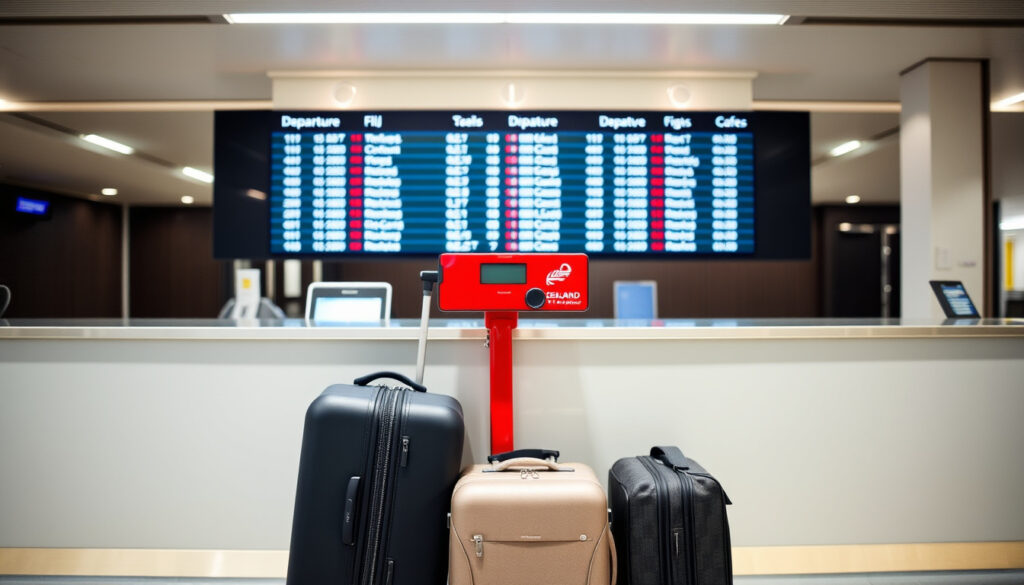
Air New Zealand Baggage Allowance: Carry-on & Checked Limits
You’ve got your bags packed, the itinerary set, and then comes that nagging question: will my suitcase make the cut at the check-in counter? Air New Zealand’s baggage rules are straightforward on paper, but the difference between a smooth trip and a last-minute fee often comes down to knowing the exact numbers and where exceptions hide. This guide walks through the allowances, fees, and common pitfalls—backed by official policy—so you can pack with confidence and avoid surprises.
Checked bag weight limit: 23 kg (50 lb) ·
Carry-on weight limit: 7 kg (15 lb) ·
Carry-on size limit: 118 cm (46 in) total dimensions ·
Economy carry-on allowance: 1 carry-on + 1 personal item ·
Business/Premium carry-on allowance: 2 carry-on + 1 personal item
Quick snapshot
- Checked bag weight limit 23 kg – verified by Air New Zealand official site
- Carry-on weight limit 7 kg – verified by Air New Zealand carry-on page
- Carry-on dimensions: 118 cm total (55x40x23 cm) – verified by Air New Zealand
- Liquids over 100 ml banned in carry-on – per TSA liquids rule
- Exact fee amount for overweight baggage varies by route – not consistently published for all sectors
- Enforcement strictness differs at check-in vs. gate – personal item weighing is rarely done but not guaranteed
- Star Alliance Gold extra allowance not explicitly detailed online for all bookings
- Measuring method for carry-on (with/without wheels) is not always explained at counters
- Overweight fee amounts for specific international routes are not publicly listed
- Routine policy updates occur periodically; no major changes announced for 2025 as of early 2025 (Reddit NZ Travel community)
- Seasonal fluctuations in enforcement intensity reported by travelers on Reddit NZ Travel community
- Pre-purchase extra bags online for best rates – Air New Zealand Baggage Help
- Travelers flying after 2025 should recheck allowances as routes and codeshares evolve (Air New Zealand Baggage Help)
The table below captures the core baggage limits every traveler needs to know before packing.
| Detail | Value |
|---|---|
| Max checked bag weight | 23 kg |
| Max carry-on weight | 7 kg |
| Carry-on dimensions | 118 cm total |
| Economy checked allowance | 1 bag (on most international fares) |
| Premium Economy checked allowance | 2 bags |
| Business Premier checked allowance | 3 bags |
| Personal item size | Fits under seat, not strictly measured |
| Overweight bag maximum | 32 kg |
How much luggage is allowed on Air New Zealand?
The answer depends on your cabin class and fare type. The airline publishes clear numbers, but the difference between a free bag and a fee comes down to understanding which allowance applies to your ticket.
Checked baggage allowance per cabin class
Two rules, one starting point: each checked bag can weigh up to 23 kg (50 lb) under the free allowance, as stated on Air New Zealand’s checked-in baggage page. The number of free bags varies:
- Economy (most international fares): 1 checked bag
- Premium Economy: 2 checked bags
- Business Premier: 3 checked bags
Domestic fares on Air New Zealand often include one 23 kg bag, but some low fares (like Seat-only) exclude checked baggage entirely. Always check your ticket’s baggage allowance before packing.
Carry-on baggage allowance
One bag plus a personal item is the standard for Economy. For Premium Economy and Business cabins, that becomes two carry-on bags plus a personal item. The weight cap is 7 kg per bag for all cabins – but higher-tier travelers can take up to 14 kg total, with no single item exceeding 10 kg, per Air New Zealand’s carry-on page. The maximum size is 118 cm total (55 cm × 40 cm × 23 cm), including wheels and handles.
Special items and sporting equipment
Musical instruments, sports gear (golf clubs, skis), and medical devices may be accepted as additional items or replace a checked bag. Pre-approval from the airline is recommended; check Air New Zealand’s baggage help centre for specific dimensions and fees.
Business travelers get three checked bags and two carry-ons; Economy gets one and one. The gap is wider than many airlines offer, making cabin choice a real cost difference for heavy packers.
Is Air New Zealand strict about carry-on size?
Short answer: yes. Passenger accounts on forums and the airline’s own procedures confirm that bags are weighed and sized at both check-in and the gate.
Official carry-on size and weight limits
The dimensions are fixed: 118 cm total linear measurement (55 cm × 40 cm × 23 cm). Weight is capped at 7 kg per bag for all passengers – no exceptions for “soft-sided” or “stretchy” bags. The official policy explicitly states that measurements include wheels and packed-away handles, as noted on Air New Zealand’s carry-on page.
Enforcement at the gate and boarding
Gate agents routinely ask passengers to place carry-on bags in the sizer. If it doesn’t fit, it’s checked for a fee. A Reddit user on r/NewZealand_Travel reported: “Air New Zealand is very strict about carry-on weight. They weighed every bag at the gate.” This aligns with advice from a travel analysis by Upgraded Points.
Tips to avoid excess charges
- Use a lightweight suitcase or soft-sided duffle that matches the sizer.
- Pre-weigh your bag at home with a luggage scale.
- Distribute heavy items (books, shoes) into your personal item if you need extra weight room.
- Purchase extra carry-on allowance online ahead of time if you know you’ll be near the limit.
Even if your carry-on fits the sizer at home, gate agents may still enforce the weight limit. A bag that’s technically within size but over 7 kg will be sent to the hold – and that overweight fee applies if it’s already at the gate.
The implication: strict enforcement makes a lightweight suitcase a smart investment for frequent flyers.
What happens if your bag is over 23kg?
One number to remember: 23 kg is the free limit, 32 kg is the absolute max. Between those lies a fee.
Excess baggage fees for overweight bags
Any checked bag weighing more than 23 kg and up to 32 kg incurs an overweight charge. The fee varies by route: domestic flights typically cost less (around NZD 30 per extra bag, according to travel guide Upgraded Points), while international routes have higher rates set by distance and region. The airline uses a weight-based system – the heavier the bag, the higher the fee.
Maximum weight allowance (32 kg)
Per Air New Zealand’s optional services and fees page, no single bag can exceed 32 kg. Bags over that weight are not accepted – you must repack into multiple bags or ship items separately. The maximum linear dimension per piece is 158 cm.
What to do if your bag is overweight
- Remove extra weight at home or at the airport – many airports have re-packing stations.
- Pre-pay for extra weight online through Air New Zealand’s manage booking portal.
- Consider sending heavy items (books, gear) via courier or shipping to your destination.
The pattern is clear: the airline would rather you pay a fee than force last-minute repacking. Pre-paying online usually costs less than paying at the counter.
Is perfume allowed in flights?
Yes, but with restrictions that catch many passengers.
Carry-on restrictions for liquids and aerosols
The standard 100 ml rule applies: any liquid, aerosol, or gel in your carry-on must be in containers of 100 ml or less, placed in a 1-litre transparent bag. Perfume bottles over 100 ml cannot travel in the cabin – they must go into checked baggage. This follows TSA liquids rule and IATA guidelines.
Checked baggage rules for perfumes and cosmetics
Perfume is allowed in checked bags, but containers must be protected against breakage. Airlines limit the total quantity of flammable liquids (like alcohol-based perfumes) – generally no more than 2 litres total, consistent with IATA dangerous goods regulations. Pack perfume in its original box and wrap in clothing to avoid shattering.
Special regulations for dangerous goods
Aerosol deodorants, hairsprays, and perfumes containing flammable propellants are restricted. The New Zealand Civil Aviation Authority (CAA) provides guidance: limited quantities for personal use are allowed in checked baggage, but larger canisters (over 500 ml) are prohibited.
For travelers with pricey perfumes, checked baggage risks breakage but allows larger bottles. Carry-on guarantees safety but limits you to travel-size bottles. The smart packer decants into small bottles or buys at destination.
What this means: if you want to carry a full-size perfume, put it in your checked bag and protect it well.
Can you take 10kg hand luggage and a handbag?
No, not under the standard allowance. The carry-on weight cap is 7 kg, not 10 kg. However, you can still bring a small additional item. For more information on baggage allowances, check out the A3 size in inches.
Air New Zealand’s personal item policy
Every passenger is allowed one small personal item – a handbag, laptop bag, or small backpack – in addition to their carry-on. The personal item is not weighed separately, but it must fit under the seat in front of you. Air New Zealand defines it as “a small item such as a purse, laptop bag, or small backpack,” per the carry-on baggage page.
Combining carry-on and personal item
The key is that your carry-on bag (suitcase or duffle) must be ≤7 kg. Your personal item (handbag, camera bag, tiny backpack) does not add to that weight limit for the carry-on – but the total weight you bring into the cabin is not formally restricted beyond the 7 kg carry-on cap. In practice, if you have a 7 kg carry-on and a 3 kg laptop bag, you’re at 10 kg total, which is allowed as long as the carry-on itself doesn’t exceed 7 kg. But the airline may still ask you to check your carry-on if it looks too big.
What counts as a small item
- Handbag or clutch
- Laptop bag or briefcase
- Camera bag
- Small backpack (if used as personal item, not as carry-on)
- A duty-free bag (within liquid limits)
A backpack can serve as either your carry-on or your personal item, but not both at the same time. If you use a backpack as your personal item, you can still bring a small rolling suitcase as your carry-on – as long as each meets size and weight rules.
The takeaway: you can bring more than 7 kg total by distributing weight into a personal item, but the carry-on itself must be under 7 kg. Frequent flyers on forums recommend investing in a lightweight carry-on suitcase to maximise space for your belongings.
Fare comparison table
Three cabin tiers, one clear pattern: the number of free checked bags and carry-on pieces increases steadily as you move up.
| Allowance | Economy | Premium Economy | Business Premier |
|---|---|---|---|
| Checked bags (free) | 1 | 2 | 3 |
| Max weight per checked bag | 23 kg | 23 kg | 23 kg |
| Carry-on bags | 1 + personal item | 2 + personal item | 2 + personal item |
| Carry-on weight limit | 7 kg per bag | 7 kg per bag (up to 14 kg total) | 7 kg per bag (up to 14 kg total) |
| Personal item | Yes (under seat) | Yes | Yes |
The pattern: each step up in cabin effectively doubles your checked allowance while keeping per-bag weight limits unchanged. Heavy packers should factor cabin choice into their budget.
Specifications table
Six policy anchors, one pattern: the numbers are consistent but the exceptions (like route-specific fees) add complexity.
| Specification | Limit |
|---|---|
| Maximum checked bag weight (free allowance) | 23 kg |
| Maximum checked bag weight (overweight) | 32 kg |
| Maximum checked bag dimensions | 158 cm total |
| Carry-on weight limit (Economy) | 7 kg |
| Carry-on weight limit (Premium/Business, per bag) | 7 kg |
| Carry-on dimensions (including wheels) | 118 cm total (55×40×23 cm) |
| Personal item weight limit | Not specified; must fit under seat |
| Overweight fee trigger | 23 to 32 kg |
| Maximum number of checked bags (Business) | 3 |
| Maximum number of carry-on bags (Premium/Business) | 2 + 1 personal item |
The consistency in per-bag weight limits means the real differentiator is how many bags you can bring – not how heavy each one is.
What we know and what remains unclear
Confirmed facts
- Checked bag weight limit 23 kg – Air New Zealand official site
- Carry-on weight limit 7 kg – Air New Zealand carry-on page
- Carry-on size 118 cm total – verified by same page
- Liquids over 100 ml banned in carry-on – TSA
- Overweight bags from 23-32 kg incur fee – Air New Zealand fees page
What’s unclear
- Exact fee amount for overweight baggage per specific route (domestic vs international not fully itemised)
- Enforcement strictness at every airport – some gates are stricter than others
- Whether personal item is ever weighed – rare but reported in some traveller accounts
- Star Alliance Gold extra allowance details for all fare types
- Overweight fee amounts for specific international routes are not publicly listed
What travellers say
“Each checked-in bag can weigh up to 23kg (50lb) before incurring fees.”
— Air New Zealand official site, Checked-in baggage page
“Air New Zealand is very strict about carry-on weight. They weighed every bag at the gate.”
— Reddit user on r/NewZealand_Travel, community thread
For the average traveler flying Economy on Air New Zealand, the baggage allowance is generous compared to many low-cost carriers, but strict enforcement means the margin for error is small. The smart move: pack your carry-on to 7 kg exactly, pre-purchase any extra weight online, and keep your perfume in checked baggage in its original packaging. For business or premium economy passengers, the extra bags are a real perk – but the weight limits per bag are the same 23 kg, so heavy items can still trigger fees. For the traveler flying to New Zealand, the choice is clear: measure your bag at home, weigh it on a scale, and pay for extra allowance online before you get to the airport – or face a fee that could be higher than the prepaid price.
dtdcaustralia.com.au, stasher.com, upgradedpoints.com, youtube.com
For precise dimensions and enforcement tips, check the official Air New Zealand carry-on size rules to avoid gate surprises.
Frequently asked questions
Does Air New Zealand allow a personal item in addition to carry-on?
Yes. Every passenger can bring one small personal item (purse, laptop bag, small backpack) in addition to their carry-on allowance. The personal item must fit under the seat. It is not weighed separately but must be small enough to stow safely.
What is the overweight baggage fee on Air New Zealand?
The fee varies by route. Domestic extra bags typically start around NZD 30, while international routes have higher fees based on weight and distance. The best way to avoid a surprise is to pre-pay for extra weight online through the Manage Booking portal before departure.
Can I take a suitcase and a backpack as carry-on?
If you use the suitcase as your carry-on and the backpack as your personal item, yes. If both are full-sized, you may be asked to check one. The suitcase must meet the 7 kg weight limit and 118 cm size limit; the backpack must fit under the seat.
Are medications exempt from the liquid restriction?
Yes. Essential medications and medical items in liquid form are exempt from the 100 ml rule for carry-on, but you may need to declare them at security. Keep them in a separate bag and inform the screening officer. Air New Zealand follows IATA and TSA guidelines.
How many checked bags are included in a Business fare?
Business Premier and Business Premier Luxe fares include 3 checked bags (each up to 23 kg). Connecting Business fares also include 3 checked bags per the official policy.
Does Air New Zealand weigh personal items?
Not typically. The official policy does not specify a weight limit for personal items. However, if the personal item appears oversized or extremely heavy, a gate agent may ask to weigh it or check it. Most travellers report that personal items are not weighed, but it’s not guaranteed.
More related posts
 70 AUD to NZD: Live Rate, Converter & Historical Data
 Outdoor Chair Cushions NZ: Waterproof, Replacement & Large Sizes
 Egg Salad Recipe NZ: Secrets, Ingredients & Tips
 Real Madrid vs Valencia CF Lineups – Confirmed XIs Injuries News
 My Computer Won’t Turn On: 5 Proven Fixes
 How Exposed Am I NZ? Check Your Digital Footprint with NCSC Tool
 English to Urdu Translation: Best Free Tools & Accurate Methods
 Is Harbour Bridge Open Today? Sydney Cork Live Status