What Is a Molecule? Definition, Examples & Differences
Ever stared at a drop of water and wondered what is actually in there? This guide will clear up the confusion between atoms, molecules, and compounds with simple explanations and relatable examples.
Smallest unit of matter with properties: Molecule | Minimum atoms: 2 (diatomic molecules) | Bond types: Covalent, ionic (in compounds) | Size range: 0.1 to 10 nm
Here is a quick snapshot of key molecule facts.
| Label | Details |
|---|---|
| Smallest unit of matter with properties | Molecule |
| Minimum atoms | 2 (diatomic molecules) |
| Bond types | Covalent, ionic (in compounds) |
| Size range | 0.1 to 10 nm |
Because we’re talking foundational chemistry, let’s ground this in the basics everyone should recognize.
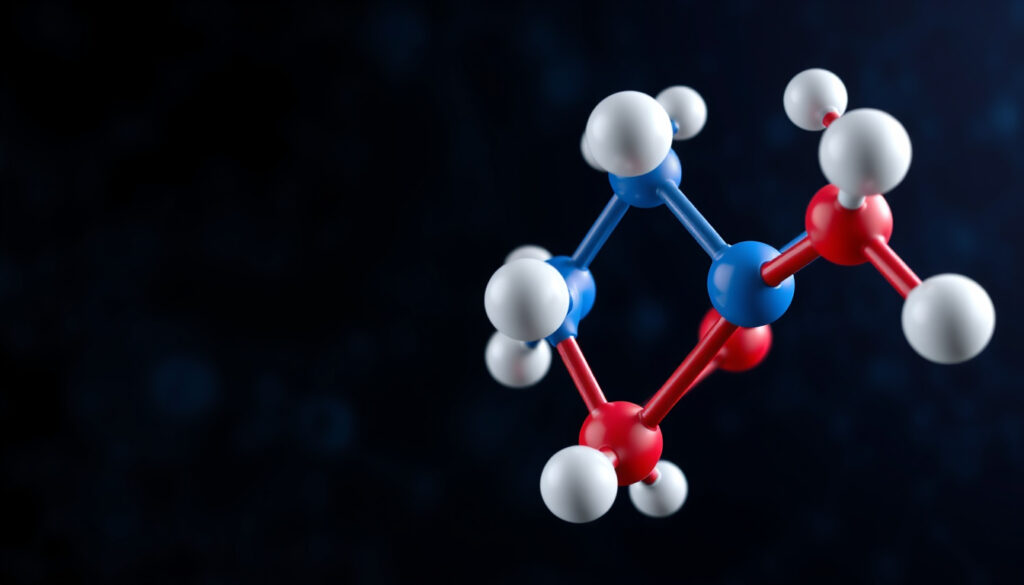
A molecule is a group of two or more atoms held together by chemical bonds.
What best defines a molecule?
A molecule isn’t a mystery—it’s just a group of atoms stuck together. Think of it as a tiny team of atoms that are holding hands through chemical bonds. These teams can be as simple as two atoms (like the oxygen you breathe, O₂) or big and complex like the long chains of DNA. The crucial part is that the atoms are bonded, not just floating near each other.
The everyday meaning is usually this: a named unit you can write down, like water (H₂O) or carbon dioxide (CO₂). But chemists use the word a bit more carefully. Sometimes they use “molecule” to mean any bonded group, and sometimes they use it to specifically exclude ionic compounds like salt. That’s a subtlety we’ll clear up in a moment.
The implication: understanding this nuance helps you navigate chemistry texts with confidence.
Key Insights
- Atoms are the basic building blocks, but they hardly ever exist alone in nature. They bond to form molecules. (BBC Bitesize educational resource)
- If a molecule is made of only one type of element, like oxygen (O₂), it’s a molecule but NOT a compound. That’s a classic test question. (Eureka by PatSnap technical insight platform)
- Water is a molecule, but it’s also a compound because it contains hydrogen and oxygen—two different elements bonded together. (Eureka by PatSnap technical insight platform)
- A single molecule is about 0.1 to 10 nanometers long. You can fit millions of them across the head of a pin. (Chemistry LibreTexts open-access resource)
What is the difference between an atom and a molecule?
Let’s settle the “atom vs. molecule” debate once and for all. An atom is the smallest unit of an element that still has that element’s properties. Think of gold—the atom is the smallest piece of gold that is still gold. A molecule, on the other hand, is a group of two or more atoms that are chemically bonded together.
- Atom Nature: Independent, defining the element.
- Molecule Nature: Bonded, defining the structure.
- Everyday Example: The oxygen you breathe is O₂ (a molecule). The “O” in drinking water is an atom.
A molecule is the smallest unit of a compound that retains its chemical properties.
What is an atom?
Atoms are the smallest units of matter that retain the properties of an element. They consist of a nucleus (protons and neutrons) surrounded by a cloud of electrons. When atoms bond, they form a molecule.
Here’s the visual: imagine a single Lego brick. That’s an atom. Now, snap two bricks together. That’s a molecule. If you snap a red brick (hydrogen) to a blue brick (oxygen), you get water—a compound. But if you snap two red bricks (hydrogen) together, you get H₂ gas, which is a molecule but not a compound. The color difference is what matters.
What is a compound vs. molecule?
This is where people get tripped up. All compounds are molecules, but not all molecules are compounds. It’s like how all squares are rectangles, but not all rectangles are squares. The rule is simple: a molecule becomes a compound when it contains at least two different elements. If a molecule has only one type of atom, it’s just a molecule, not a compound.
The table below clarifies the differences.
| Feature | Molecule | Compound |
|---|---|---|
| Composition | Two or more atoms (same or different) | Two or more different elements bonded |
| Examples | O₂, H₂, H₂O, CO₂ | H₂O, CO₂, NaCl (salt) |
| Chemical Formula | Shows the atom count, e.g., O₂ | Shows the element ratio, e.g., C₆H₁₂O₆ (glucose) |
| Separation | Can be separated into atoms (chemically) | Can only be broken down into elements via chemical reactions |
Look at the table above: water (H₂O) is a molecule because it’s a bonded cluster, but it’s also a compound because hydrogen and oxygen are different elements. In contrast, a molecule of oxygen (O₂) is just two oxygen atoms holding hands—no different elements involved for it to be a compound.
The catch
Molecular oxygen (O₂) is a pure molecule, but it’s not a compound. It’s a molecule of an element. This nuance trips up students on multiple-choice tests, but now you know the trick: ask yourself, “Are there different elements in that formula?” If the answer is no, it is not a compound.
The implication: the compound label always requires chemical diversity.
What are examples of molecules?
Let’s put this into practice with things you see daily. Look at the carbon dioxide you exhale. CO₂ is a linear molecule with one carbon and two oxygens. It’s a compound. Now, look at the nitrogen in the air—N₂. That’s a molecule of an element. Is it a compound? No. What about the ozone layer, O₃? It’s a molecule, but again, it’s pure oxygen—so no compound. The final test: if it’s on the periodic table as a single element symbol, it might be an atom or a molecule of that element, but it can’t be a compound unless you add a different element to the mix.
Confirmed Facts
- This is a universal rule in chemistry. (BBC Bitesize educational resource)
- Water is a molecule made of two hydrogen atoms and one oxygen atom. (Eureka by PatSnap technical insight platform)
- Carbon dioxide (CO₂) and glucose (C₆H₁₂O₆) are prime molecule examples. (Eureka by PatSnap technical insight platform)
- Molecules are electrically neutral groups of atoms. (Chemistry LibreTexts open-access resource)
One more angle: the actual shape matters. Molecules have specific masses and shapes. A water molecule is bent, not straight. This shape is why ice floats, why water is a liquid at room temperature, and why it’s so great at dissolving things. A molecule isn’t just a symbolic squiggle on a page—it’s a physical object with geometry, which dictates how it behaves.
Why this matters
Once you see molecules as physical objects with shapes and charges, the entire periodic table becomes a set of structural building blocks. You stop memorizing formulas and start predicting how substances interact—like why oil and water don’t mix (the water molecules prefer each other).
The pattern: examples like CO₂ and H₂O illustrate that molecular shape determines function.
How do you know if something is a molecule?
To identify a molecule, ask: Is it a group of atoms bonded together? Look for chemical formulas that show multiple atoms (like O₂, H₂O). If it’s a single atom, it’s an element’s atom, not a molecule. If it’s two or more atoms, it’s a molecule. Remember that noble gases like helium exist as single atoms; by some definitions they are monatomic molecules, but typically we say they are atoms.
- Check the formula: If it has subscripts (like H₂), it’s likely a molecule.
- Consider the state: Most gases (O₂, N₂) and many liquids (H₂O) are molecular.
- Test for compound: If the molecule has more than one element, it’s a compound.
byjus.com, chemistry-dictionary.com, scienceunlock.com, bbc.co.uk, britannica.com, chem.libretexts.org, vedantu.com, aakash.ac.in, difference.wiki
Frequently Asked Questions
What is a compound but not a molecule?
Actually, that’s a trick question. In standard chemistry definitions, every compound is a molecule because the definition of a compound specifically involves atoms of different elements bonded together, which is a molecule. However, an ion (like sodium, Na⁺) is not a molecule. A better phrasing is: “What is a molecule but not a compound?” The answer is an element molecule, like O₂ or N₂. These are molecules because they have a defined number of atoms bonded together, but they’re not compounds because they contain only one element.
Is an atom smaller than a molecule?
Yes, significantly. Atoms are the smaller building blocks. Molecules are made of atoms. The phrase “smallest unit of matter with properties” applies to the atom for an element, but the molecule is the smallest unit of a compound that retains its chemical properties. For example, a single water molecule is the smallest unit of water that is still water. You can’t just have half a water molecule.
Can you see a molecule?
Molecules are too small to be seen with a standard optical microscope. They are on the nanometer scale. However, powerful tools like scanning tunneling microscopes (STMs) can visualize them. These specialized machines use a sharp tip and electric current to map out the electron clouds of molecules, creating iconic images that look like colorful blobs of atoms.
Is salt (NaCl) a molecule?
Interestingly, this is a point of confusion. Sodium chloride is actually an ionic compound, not a molecular compound. In solid form, it forms a giant three-dimensional lattice structure, not a discrete molecule like water. It’s correct to call it a compound, but calling it a “molecule” is technically sloppy. The rule of thumb: if it involves a metal and a non-metal (like sodium and chlorine), it’s likely ionic and forms a lattice, so there isn’t a single “molecule of NaCl”—there’s a crystal structure.
Why do some atoms bond to form molecules?
The short answer is: to become stable. Atoms bond to achieve a full outer shell of electrons, usually by sharing (covalent bonds) or transferring (ionic bonds) electrons. Most atoms are like an unhappy person looking for a friend—they just want to complete their set. Oxygen, for example, needs two more electrons, so it pairs up with two hydrogens to make water, which is a happier, more stable arrangement.
Related Reading
To go deeper into the world of chemistry and clear up any remaining confusion, exploring how elements interact at the atomic level is a logical next step.
- BBC Bitesize: Atoms and Molecules
- Eureka by PatSnap: Atom vs. Molecule
- Study.com: Atom vs. Molecule Definition
- Parts of a Circle: Complete Guide with Diagram & Examples
- Planets in Our Solar System: Count, Order, and Facts
The beauty of chemistry is that these tiny particles are the foundation of everything. Once you grasp the distinction between an atom, a molecule, and a compound, you start seeing the world not as solid matter, but as a dynamic dance of bonded atoms. And that’s a perspective that turns a boring chemistry class into a revelation.
More related posts
 The Last Letter by Rebecca Yarros: Summary, Ending & FAQs
 Where to Watch Georgie and Mandy’s First Marriage – Paramount+ and CBS Guide
 Song Joong-ki 2025: Divorce, Wife, Children, Net Worth
 Fajr Time in Auckland Today: Prayer Times and Guide
 Houses for Sale in Otaki: Listings, Prices & Agencies Guide
 Air New Zealand Extra Baggage: Costs, Booking & Rules
 bath and beyond nz
 Arsenal vs Nottingham Forest Timeline: History & Results