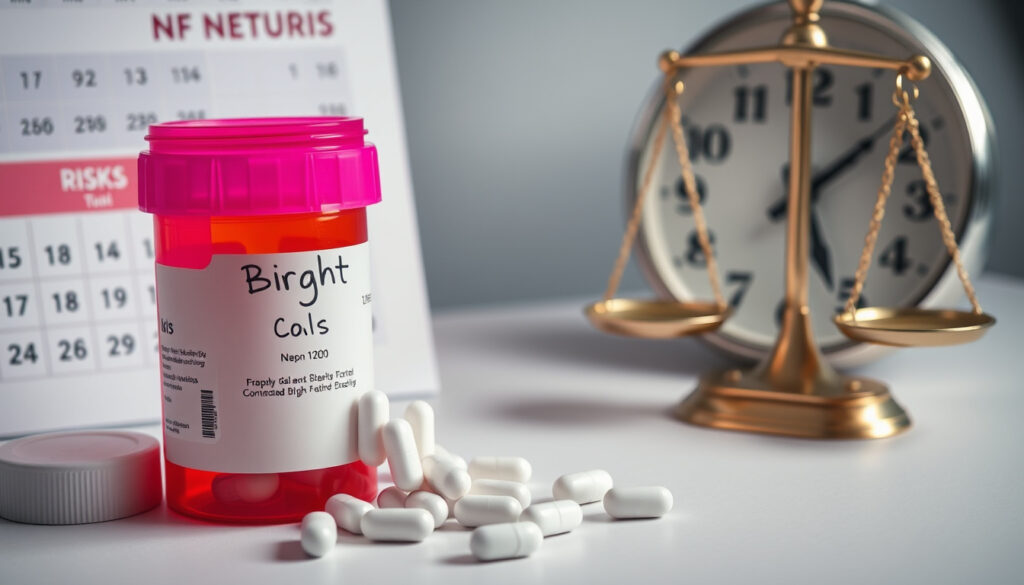
Birth Control Side Effects: Risks, Benefits, Timeline
Anyone who’s stared at a pack of birth control pills wondering if the side effects are worth it already knows the uneasy feeling. The good news: for over 10 million women in the US who use the pill, most side effects are temporary and manageable — backed by guidance from the NHS (UK’s national health authority) and the Mayo Clinic (US academic medical center) — and here’s what to expect, when to worry, and how to weigh the risks against the real benefits.
Women in the US using the pill: Over 10 million ·
Effectiveness with perfect use: Over 99% ·
Common side effect: nausea: Affects up to 30% of new users ·
Risk of serious side effects: Less than 1 in 1,000
Quick snapshot
- Nausea, headaches, breast tenderness — usually improve after 3 months (NHS (UK’s national health authority))
- Bloating and breakthrough bleeding common in first months (Mayo Clinic (US academic medical center))
- Blood clots (DVT/PE): risk is rare (NHS (UK’s national health authority))
- High blood pressure and liver tumors (very rare) (Mayo Clinic (US academic medical center))
- Lighter, less painful periods (NHS (UK’s national health authority))
- Improved acne and lower risk of ovarian/endometrial cancer (Mayo Clinic (US academic medical center))
- Restored natural fertility (Cleveland Clinic (US hospital system))
- Potential mood improvement and return of natural cycle (NHS (UK’s national health authority)) (Cleveland Clinic (US hospital system))
Four key facts, one pattern: nearly all side effects are temporary and tied to the body’s adjustment period, while serious risks are remarkably rare.
| Fact | Value |
|---|---|
| Users in US | Over 10 million women |
| Typical failure rate | 7% (real-world use) |
| Common side effect duration | 2-3 months for most |
| Blood clot risk (non-smoker, <35) | 1 in 3,000 to 1 in 10,000 |
What are the side effects of the birth control pill?
For someone starting the pill, the first 2-3 months are the hardest — but that’s also where the real adaptation happens.
Common short-term side effects
- Nausea, headaches, and breast tenderness affect up to 3 in 10 new users (NHS (UK’s national health authority)).
- Breakthrough bleeding or spotting is especially common in the first cycle (Mayo Clinic (US academic medical center)).
- Bloating and mood swings also appear early but often fade within weeks (NHS (UK’s national health authority)).
Factors influencing side effects severity
- Type of pill: combined estrogen-progestin pills have more reported side effects than progestin-only pills (NHS (UK’s national health authority)).
- Individual hormone sensitivity plays a major role — some women tolerate estrogen well, others do not (Mayo Clinic (US academic medical center)).
- Body weight can affect hormone levels and how the pill works (NHS (UK’s national health authority)).
The pattern: someone who sticks with it for 3 months often finds the side effects fade — the body’s adjustment timeline is remarkably consistent across NHS guidance and clinical experience.
What are the most serious side effects of birth control?
For a woman under 35 who doesn’t smoke, the risk of a serious complication from the pill is about 1 in 3,000 to 1 in 10,000 — lower than the risk of blood clots during pregnancy itself.
Blood clot risks (DVT, PE)
- The combined hormonal pill increases the risk of deep vein thrombosis (DVT) and pulmonary embolism (PE), though the absolute risk remains low (NHS (UK’s national health authority)).
- Risk is higher for smokers over 35, people with obesity, or those with a family history of blood clots (Mayo Clinic (US academic medical center)).
- According to the NHS, migraine with aura is a contraindication for the combined pill due to increased stroke risk.
High blood pressure and liver effects
- The combined pill can raise blood pressure in some women, requiring regular monitoring (NHS (UK’s national health authority)).
- Liver tumors (both benign and malignant) are rare but possible with long-term use (Mayo Clinic (US academic medical center)).
Cancer risks vs. protective effects
- The combined pill slightly increases the risk of breast and cervical cancer while you’re on it — but that risk falls after stopping (Mayo Clinic (US academic medical center)).
- It significantly reduces the risk of ovarian and endometrial cancers, with protection lasting many years after stopping (NHS (UK’s national health authority)).
The trade-off: the rare but real risks — clots, blood pressure, and a slight cancer increase — are balanced against genuine protection against ovarian and endometrial cancers, a fact that often surprises women who only hear about the downsides.
What are the benefits of going off the pill?
Women who stop the pill may gain back their natural cycle and mood balance — but they also lose the cancer protection and cycle control the pill provides.
Potential positive changes after stopping
- Natural fertility returns — most women ovulate within 3-6 months of stopping (Cleveland Clinic (US hospital system)).
- Mood improves for some women, likely because synthetic hormones no longer affect brain chemistry (NHS (UK’s national health authority)).
- Breast tenderness and nausea typically disappear within weeks of stopping (Mayo Clinic (US academic medical center)).
Return to natural menstrual cycle
- Cycle may take 3-6 months to normalize after stopping (Cleveland Clinic (US hospital system)).
- Some women experience heavier, more painful periods after the pill, since the pill artificially lightened them (NHS (UK’s national health authority)).
- Acne may return as natural hormone levels resurge (Mayo Clinic (US academic medical center)).
The implication: going off the pill restores natural physiology, but that also means the return of untreated period pain, cramps, and acne for many women.
What are the worst side effects of the pill?
The most disruptive side effects — mood changes and decreased libido — are also the hardest to predict, because they depend on individual hormone sensitivity.
Most disruptive but common side effects
- Mood changes and depression are among the most reported reasons women stop the pill (NHS (UK’s national health authority)).
- Decreased libido affects a significant subset of users, though it’s not consistently studied (Mayo Clinic (US academic medical center)).
- Weight gain — though many women report it, clinical studies show mixed evidence (NHS (UK’s national health authority)).
When to see a doctor
- Signs of blood clots: leg pain/swelling, sudden chest pain, trouble breathing (NHS (UK’s national health authority)).
- Migraine with aura — especially if it’s new or worsening — requires immediate medical attention (NHS (UK’s national health authority)).
- Jaundice, severe abdominal pain, or visual changes should also prompt a call to your GP (Mayo Clinic (US academic medical center)).
Why this matters: the worst side effects aren’t necessarily the rarest — they’re the ones that affect quality of life daily, and they’re often treatable by switching pill type or method.
Is it healthier to not be on the pill?
For a 28-year-old non-smoker with heavy periods, the pill may be healthier — but for a 38-year-old smoker, the risks outweigh the benefits.
Health trade-offs: on vs. off the pill
- On the pill: lower ovarian/endometrial cancer risk, lighter periods, improved acne (Mayo Clinic (US academic medical center)).
- Off the pill: higher ovarian/endometrial cancer risk, heavier periods, return of acne (NHS (UK’s national health authority)).
- But off the pill: lower blood clot risk, no hormone-related mood changes, natural fertility restored (Cleveland Clinic (US hospital system)).
Decision framework for personal choice
- Age and smoking status are the biggest factors in determining safety of the combined pill (NHS (UK’s national health authority)).
- Family history of blood clots or breast cancer shifts the balance (Mayo Clinic (US academic medical center)).
- Personal priorities matter: if cycle regularity and acne control are non-negotiable, the pill may be the healthier choice (NHS (UK’s national health authority)).
Upsides
- Lighter, less painful periods (NHS (UK’s national health authority))
- Reduced risk of ovarian and endometrial cancers (Mayo Clinic (US academic medical center))
- Improved acne and cycle regularity (NHS (UK’s national health authority))
Downsides
- Increased risk of blood clots (rare but serious) (NHS (UK’s national health authority))
- Slight increase in breast and cervical cancer risk (Mayo Clinic (US academic medical center))
- Mood changes and decreased libido for some (NHS (UK’s national health authority))
The pattern: there is no universal “healthier” — the question is what trade-offs each person finds acceptable based on their age, health history, and priorities.
Timeline: what to expect and when
First week
- Most common side effects (nausea, spotting, breast tenderness) often begin within days (NHS (UK’s national health authority)).
3 months
- Adaptation period: most side effects subside — the “3 month rule” (NHS (UK’s national health authority)).
After stopping
- Natural cycle usually restarts within 3-6 months (Cleveland Clinic (US hospital system)).
Why this matters: the timeline is predictable — and that predictability empowers you to make an informed choice about whether to ride out the first three months or switch methods.
Confirmed facts and what’s unclear
Confirmed facts
- Nausea and breakthrough bleeding are common in first 3 months (NHS (UK’s national health authority)).
- Blood clot risk is increased, especially in smokers over 35 (NHS (UK’s national health authority)).
- Pill reduces risk of ovarian and endometrial cancer (Mayo Clinic (US academic medical center)).
What’s unclear
- Whether stopping the pill definitively improves mood for all women.
- Long-term effects on fertility beyond 1 year after stopping.
- Whether weight gain is directly caused by the pill — studies show mixed evidence.
The combined pill is one of the most studied medications in history — the data is robust, but every woman’s body responds differently.
Most side effects of hormonal contraception are mild and improve within three months. If they persist, talk to your GP about switching methods.
One paragraph summary: Your body’s reaction to the pill is not a test of whether you’re “right” for it — it’s information. For most women under 35 who don’t smoke, the side effects are temporary and the cancer protection is real. But if the mood changes or libido loss are unacceptable, there are alternatives — the IUS, copper coil, or progestin-only pill — that may fit better. For a woman reading this in New Zealand or the US, the decision is clear: spend the first 3 months tracking your symptoms, or switch to a method with fewer systemic effects.
nhs.uk, nhs.uk, mayoclinic.org, mayoclinic.org, shswl.nhs.uk, mayoclinic.org, best.barnsleyccg.nhs.uk, mayoclinic.org, wsh.nhs.uk, mayoclinic.org, mayoclinic.org
Frequently asked questions
Can birth control pill cause depression?
Some women report mood changes, including depression, while taking the combined pill. The NHS notes that while mood swings are listed as a common side effect, the evidence for a direct causal link to clinical depression is mixed. If you feel your mood has worsened significantly, talk to your GP.
How long do side effects last on the pill?
Most common side effects — nausea, breakthrough bleeding, breast tenderness — typically improve within 2 to 3 months of starting the pill, according to the NHS. This is known as the “3 month rule.”
Does the pill make you gain weight?
Many women worry about weight gain, but large studies have found no consistent evidence that the combined pill causes significant weight gain. The NHS states that while some women report weight gain, it’s not proven as a direct effect.
Can birth control cause blood clots?
Yes, the combined hormonal pill increases the risk of blood clots (deep vein thrombosis and pulmonary embolism). For non-smokers under 35, the absolute risk is approximately 1 in 3,000 to 1 in 10,000 (NHS).
Is it safe to take birth control for many years?
For healthy non-smokers, long-term use of the combined pill is considered safe by the NHS and Mayo Clinic. Regular check-ups including blood pressure monitoring are recommended.
What happens if I stop taking the pill suddenly?
Stopping the pill suddenly is safe and does not cause withdrawal side effects. Your natural menstrual cycle may take 3-6 months to return, and you may experience heavier periods and acne as your hormone levels normalize (Cleveland Clinic).
What are the benefits of stopping birth control pill?
Benefits can include restored natural fertility, improved mood, lighter side effect profile, and the return of a natural menstrual cycle. However, you also lose the cancer protection and cycle regularity the pill provides (NHS).
More related posts
 Mitre 10 MEGA Papanui Products & Shopping Guide
 Best Program to Learn Spanish in 2026: Top 5 Compared
 How to Deactivate Instagram: Step-by-Step Guide
 45 USD to NZD: Convert 45 US Dollars to New Zealand Dollars Today
 KFC Menu with Prices NZ PDF: Official Prices & Deals 2026
 500 Yen to NZD: Conversion Rate, Value & Comparison
 Ant-Man and the Wasp: Hit or Flop, Cast, Plot & More
 Taco Cat Goat Cheese Pizza – Perfect Palindrome Explained