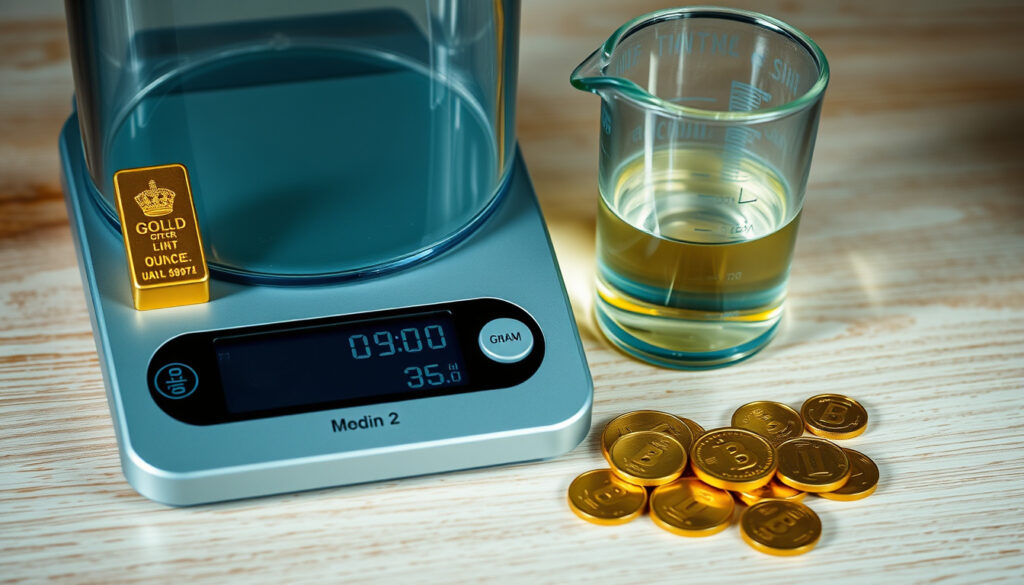
How Much Is an Ounce? Grams, ml, and Gold Price Guide
If you’ve ever pulled out a kitchen scale, measured a liquid in a cup, and checked a gold price online all in the same day, you’ve already met three different versions of the ounce. Once you separate weight from volume and everyday goods from precious metals, the ounce is surprisingly simple, and this guide lays out the exact numbers you need for cooking, investing, and general curiosity.
1 avoirdupois ounce = 28.35 grams ·
1 troy ounce = 31.10 grams ·
1 US fluid ounce = 29.57 ml ·
1 imperial fluid ounce = 28.41 ml ·
1 ounce (troy) of gold = varies—check live price
Quick snapshot
- Avoirdupois ounce = 28.35 g (Wikipedia – Encyclopedia entry)
- Troy ounce = 31.10 g (The Royal Mint – UK bullion authority)
- 1 oz = 1/16 lb (Wikipedia – Avoirdupois system)
- US fl oz = 29.57 ml (Wikipedia – US fluid ounce)
- Imperial fl oz = 28.41 ml (Wikipedia – Imperial fluid ounce)
- 2 tbsp = 1 fl oz (Wikipedia – Cooking measurement)
- Gold is priced per troy ounce (LBMA – Global bullion market authority)
- Check live prices on Kitco or JM Bullion (Kitco – Live precious metals pricing)
- Troy ounce heavier than everyday ounce (StoneX – Financial glossary)
- A slice of bread ≈ 1 oz (Wikipedia – Ounce comparisons)
- A standard envelope ≈ 1 oz (Wikipedia – Ounce in everyday life)
- A AA battery ≈ 1 oz (Wikipedia – Ounce)
The table below summarizes the five ounce variants in a single glance.
| Type | Exact Weight or Volume | Common Use |
|---|---|---|
| Avoirdupois ounce | 28.3495 g (Wikipedia – Avoirdupois) | Groceries, body weight, postage |
| Troy ounce | 31.1035 g (StoneX – Financial glossary) | Gold, silver, platinum, palladium |
| US fluid ounce | 29.5735 ml (Wikipedia – US fluid ounce) | US recipes, beverages, medicine |
| Imperial fluid ounce | 28.4131 ml (Wikipedia – Imperial fluid ounce) | UK recipes, older British cookbooks |
| Food-label fluid ounce (US) | 30 ml (Wikipedia – US food labeling) | Nutrition facts, commercial kitchen |
Five values, but only two ounce systems. The everyday ounce (avoirdupois) and the precious-metals ounce (troy) differ by about 10% — enough to cost you real money if you use the wrong one on a gold trade. For more weight conversion tools, check out our convert kg to pounds guide.
What Does 1 Ounce Look Like?
Visualizing an Ounce with Everyday Objects
- A slice of bread — about 1 avoirdupois ounce (Wikipedia – Ounce comparisons).
- A standard envelope — close to 1 ounce (Wikipedia – Postage weight reference).
- A AA battery — roughly 1 ounce (Wikipedia – Ounce).
When you hold a stack of four US quarters, you’re holding nearly 1 avoirdupois ounce (each quarter weighs 0.2 oz). It’s a lighter weight than most people expect — about the heft of a small apple.
Common Items That Weigh About One Ounce
- One fluid ounce of water weighs 1.043 oz avoirdupois — a near 1:1 match at room temperature (Wikipedia – Water density).
- A credit card weighs roughly 0.3 oz, so three stacked cards hit 1 oz.
- A single slice of commercial bread (about 28 g) is essentially 1 oz.
The pattern: the avoirdupois ounce is the ounce of daily life — loaves, letters, batteries. It’s the default unless you specifically hit the world of precious metals. If cooking with ounces, our medium rare steak temp guide also covers fluid ounce measurements.
If you’re weighing ingredients for a recipe and use a troy ounce by accident, you’d add 10% more than intended. For a batch of brownies that’s a fudge disaster; for a gold trade it’s thousands of euros.
Is an Ounce 28 or 32 Grams?
Avoirdupois Ounce vs Troy Ounce
Two historical systems give two different answers. The avoirdupois ounce — used for almost everything except precious metals — weighs exactly 28.3495 grams (Wikipedia – Avoirdupois ounce). The troy ounce, reserved for gold, silver, platinum and palladium, weighs 31.1035 grams (The Royal Mint – Troy ounce definition).
The difference is about 2.75 grams — roughly the weight of a standard pencil. In everyday terms, one troy ounce equals about 1.097 avoirdupois ounces (StoneX – Financial glossary).
Why Two Different Values Exist
The avoirdupois system dates to medieval England for weighing general goods like wool and grain. The troy system evolved separately for precious metals and gemstones, tied to the Roman monetary system. The two have coexisted for centuries: the metric system settled their exact values in the 19th century (LBMA – History of the troy ounce). Today, you’ll use avoirdupois at the grocery store and troy at the bullion dealer.
The takeaway: an ounce is either 28.35 g (everyday) or 31.10 g (precious metals). Any source quoting 28 g is rounding; any quoting 32 g is likely using a rough approximation for troy.
Key insight for buyers: Using the wrong ounce can cost you almost 10% on a gold trade. Always verify which ounce a price refers to before transacting.
How Much Is 1 Ounce in ml?
US Fluid Ounce vs Imperial Fluid Ounce
The answer depends on which side of the Atlantic you’re measuring. A US fluid ounce is exactly 29.5735 milliliters (Wikipedia – US fluid ounce). An imperial fluid ounce (used in the UK and some Commonwealth countries) is 28.4131 milliliters (Wikipedia – Imperial fluid ounce).
The US version is about 4% larger. That means a recipe from a British cookbook using “1 oz” of milk will actually pour about 4% less volume than an American recipe using the same word.
Common Approximations and Kitchen Equivalents
- 2 tablespoons = 1 US fluid ounce (Wikipedia – Cooking measurement).
- In US nutrition labeling, 1 fluid ounce is rounded to 30 ml (Wikipedia – US food labeling).
- 1 imperial tablespoon (15 ml) × 1.9 ≈ 1 imperial fluid ounce.
The practical rule: for loose cooking, treat 1 US fl oz as 30 ml. For precision (baking, medicine, chemistry), use the exact conversion.
How Much Is an Ounce of Gold?
Current Gold Price per Troy Ounce
Gold is always priced per troy ounce — 31.1035 grams. The price changes every minute during market hours. As of , the spot price hovers around USD 2,350 per troy ounce (check Kitco – Live gold chart for the latest).
Why Gold Uses a Different Ounce
The tradition goes back to the Middle Ages. Gold and silver were traded in troy pounds (12 troy ounces), while everyday goods used avoirdupois pounds (16 ounces). The London Bullion Market Association (LBMA) and global exchanges still quote gold in troy ounces (LBMA – Troy ounce standard).
Gold Price in Ireland and Global Markets
Irish investors see gold quoted in euros per troy ounce. The euro-denominated price follows the USD price, adjusted for exchange rates. JM Bullion and BullionByPost both offer live euro conversions (JM Bullion – Gold price chart, BullionByPost – Troy ounce explanation).
What this means: that “ounce of gold” from the news is always a troy ounce — about 10% heavier than a standard grocery ounce, hence the higher gram count.
Gold price pages often show both per-ounce and per-gram pricing. The per-gram number is the troy ounce price divided by 31.1035, not by 28.35. Using the wrong divisor can mislead you by almost 10% — enough to matter on a purchase of €500 or more.
Takeaway for investors: Always confirm that a gold price quote uses the troy ounce (31.10 g) before calculating your total. The difference between troy and avoirdupois ounces can shift your investment value by nearly 10%.
How to Turn ml to oz?
Conversion Formula for US Fluid Ounces
Divide milliliters by 29.5735 to get US fluid ounces. For example, 500 ml ÷ 29.5735 = 16.91 US fl oz (Wikipedia – US fluid ounce conversion).
Conversion Formula for Imperial Fluid Ounces
Divide milliliters by 28.4131 to get imperial fluid ounces. 500 ml ÷ 28.4131 = 17.60 imperial fl oz (Wikipedia – Imperial fluid ounce conversion).
Using an Online Converter or Calculator
- Identify whether you need US or imperial fluid ounces (check the recipe origin).
- Enter the milliliter value into a converter like Kitco’s unit converter or a search engine.
- For quick kitchen estimates, use 30 ml = 1 US fl oz. It’s within 1.5% accuracy — fine for soups and sauces, not for pharmacy.
The trade-off: speed vs precision. For everyday cooking, 30 ml per ounce is fine. For lab work or distillation, use the exact ratio.
“The avoirdupois ounce is the ounce used in the United States customary and British imperial systems for most non-precious-metal goods.”
Wikipedia – Ounce (encyclopedic reference)
“Gold is measured in troy ounces — 31.1035 grams — and the price fluctuates daily. A troy ounce is about 10% heavier than a standard ounce.”
“The London Bullion Market Association sets the global standard for gold trading, with the troy ounce as the unit of trade.”
LBMA – Global bullion market authority
The ounce is three concepts — weight for everyday, weight for gold, volume for liquids — each with its own conversion. Confusing them is the single most common measurement error in kitchens, labs and investment portfolios. For Irish investors checking gold prices, always confirm the quote is per troy ounce (31.10 g) before you multiply. For home cooks, remember that 2 tablespoons = 1 US fluid ounce and that your British cookbook may be using a slightly smaller imperial ounce. That small difference adds up: over a litre of liquid the US vs imperial gap is almost 40 ml — enough to throw off a cake batter or a gin cocktail.
thesilvermountain.nl, lbma.org.uk, en.wikipedia.org, jmbullion.com, en.wikipedia.org, investopedia.com
Frequently asked questions
Does 2 tablespoons equal 1 oz?
Yes, for US fluid ounces. Two level tablespoons (each 15 ml) equal exactly 1 US fluid ounce (29.57 ml). For imperial fluid ounces, 2 imperial tablespoons (each 17.75 ml) exceed 1 imperial fluid ounce.
Is 1 oz always 30 ml?
In US food labeling, 1 fluid ounce is rounded to 30 ml. In precise measurement, a US fluid ounce is 29.5735 ml, and an imperial fluid ounce is 28.4131 ml. So “30 ml = 1 oz” is a safe kitchen approximation but not exact.
Is 1ml the same as 1 oz?
No. 1 milliliter is about 1/30th of a US fluid ounce. One fluid ounce is roughly 29.6 ml — nearly 30 times bigger.
Is 1 oz or 1 mL bigger?
1 fluid ounce is much larger than 1 milliliter. One US fluid ounce equals about 29.6 ml. So an ounce holds roughly the volume of six standard teaspoons.
How much is an ounce of liquid?
One US fluid ounce is 29.5735 ml, and one imperial fluid ounce is 28.4131 ml. In practical terms, a typical shot glass holds 1.5 US fluid ounces (44 ml).
How much is an ounce in dollars?
For gold, the price per troy ounce varies minute by minute. As of mid-2025, it’s around USD 2,350. For silver, platinum, or palladium, the price is different. For non-precious goods, an ounce has no fixed dollar value — it depends on what you’re buying.
How much is an ounce worth?
If you mean gold, check a live price tracker. If you mean a commodity like cheese or coffee, the value per ounce depends on the product and brand. There is no universal “worth” for an ounce outside the precious metals market.
For Irish home cooks and gold buyers alike, the ounce isn’t one thing — it’s three. The difference between avoirdupois, troy and fluid ounces can cost you a burnt cake or a bad trade. The safest move: always confirm which ounce is being used before you measure or buy.
More related posts
 The Pursuit of Happyness: True Story, Quotes, and Ending
 Pouakai Circuit Reflective Tarn: Complete Hiking Guide 2025
 180 Days in Months: Conversion, Calculator & Context
 Biggies Pizza Green Island Menu, Hours, Delivery & Reviews
 CIBC Global Money Transfer – Fees, Limits, Speed and Setup Guide
 Word of the Day Guide: Best Sources for Daily Vocabulary
 Upside Down Question Mark – History, Meaning and Typing Guide
 Waihi Beach Medical Centre: Services, Fees & New Proposal