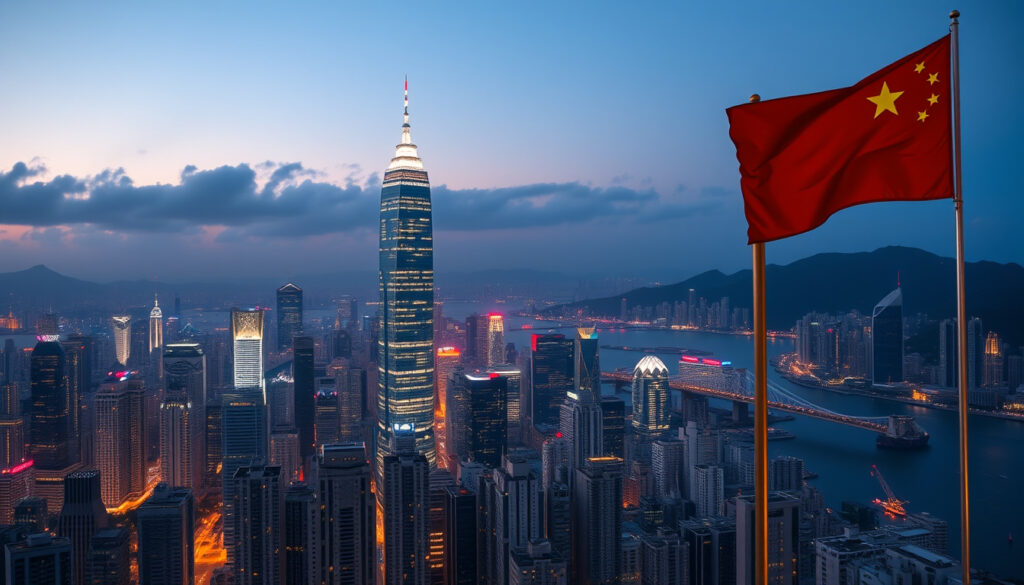
Is Hong Kong a Country? Status, History & Facts Explained
Many people see Hong Kong’s own passport, currency, and Olympic team and wonder whether it qualifies as its own country. The answer is straightforward once you distinguish between autonomy and sovereignty. Hong Kong operates with significant domestic independence, but international law recognizes only one sovereign state: the People’s Republic of China.
Official Status: Special Administrative Region of China ·
Sovereignty: People’s Republic of China ·
Governance Principle: One Country, Two Systems ·
Handover Year: 1997 ·
Location: Southern coast of China, south of Shenzhen
Quick snapshot
- Hong Kong is not a sovereign country or independent state (Study.com educational resource)
- Governed under One Country, Two Systems principle (Wikipedia overview of governance framework)
- HKSAR established July 1, 1997, when China resumed sovereignty (WorldJPN official document archive)
- Future extent of autonomy after the 50-year guarantee expires in 2047 (Wikipedia comprehensive overview)
- How the national security law will shape civil liberties long-term (Wikipedia comprehensive overview)
- 1841: British colony begins (WorldJPN official document archive)
- December 19, 1984: Sino-British Joint Declaration signed (WorldJPN official document archive)
- July 1, 1997: Handover and HKSAR established (HKSAR government legal portal)
- 2047 marks the end of the guaranteed autonomy period under the Basic Law
- International observers continue tracking how Hong Kong’s distinct systems are maintained
These key facts reflect Hong Kong’s constitutional status as defined by the Basic Law and international agreements.
| Label | Value |
|---|---|
| Status | Special Administrative Region (SAR) |
| Parent State | People’s Republic of China |
| Autonomy Principle | One Country, Two Systems |
| Handover Date | July 1, 1997 |
| Components | Hong Kong Island, Kowloon, New Territories |
| Area | 1,114 km² |
| Population | 7.5 million |
| Currency | Hong Kong Dollar (HKD) |
| Legal System | British common law tradition |
| UN Membership | None |
Is Hong Kong a country, yes or no?
No. Hong Kong is officially the Hong Kong Special Administrative Region (HKSAR) of the People’s Republic of China. It is not a sovereign country or independent state. The legal and constitutional foundation for this arrangement is the Basic Law, which was passed on April 4, 1990, by the National People’s Congress and came into effect on July 1, 1997 (WorldJPN official document archive, HKSAR government legal portal).
Official Definition
The Basic Law is Hong Kong’s constitutional document implementing the One Country, Two Systems principle. It explicitly states that Hong Kong’s political system and way of life remain unchanged for 50 years from 1997, guaranteeing a high degree of autonomy in domestic affairs while defense and diplomacy remain under Beijing’s authority (GovHK official facts page). This means Hong Kong manages its own economy, legal system, immigration, and trade agreements, but it cannot conduct independent foreign policy or maintain its own military.
Criteria for Country Status
Under international law, a sovereign state typically possesses four attributes: a defined territory, a permanent population, a government, and the capacity to enter into relations with other states. Hong Kong meets the first three criteria comfortably. However, it lacks the fourth: the ability to conduct independent diplomacy or defense. Beijing handles foreign relations on behalf of the HKSAR, though Hong Kong does participate as a separate member of the WTO and APEC under its own name (HKSAR trade office introduction).
The distinction matters practically: Hong Kong residents hold HKSAR passports, which grant visa-free or on-arrival access to more countries than mainland Chinese passports, but these travel documents are issued by the Chinese government, not an independent Hong Kong state. Travelers who check the nationality field on immigration forms will find “Hong Kong, China” rather than a standalone country designation.
Is Hong Kong a city in China or a country?
Hong Kong is neither a city nor a country in the conventional sense. It is a special administrative region with city-like characteristics—it has no official capital, though its administrative seat is in the Central and Western District—and a population exceeding 7.5 million people spread across just 1,114 km² (Wikipedia comprehensive overview). This makes it one of the most densely populated places on earth.
Geographic and Administrative Boundaries
Hong Kong consists of three main geographic areas: Hong Kong Island, Kowloon, and the New Territories. The New Territories were leased to Britain for 99 years in 1898, and when that lease was approaching expiration in the 1980s, Britain recognized it could not realistically retain Hong Kong without the New Territories. The Sino-British Joint Declaration, signed on December 19, 1984, confirmed China’s resumption of sovereignty over all of Hong Kong on July 1, 1997 (WorldJPN official document archive).
Hong Kong is located on China’s southern coast, south of Guangdong Province and Shenzhen. Despite this proximity, the border between Hong Kong and mainland China functions like an international boundary—visitors need passports and visas to cross it, and each side maintains distinct customs and immigration procedures.
Comparison to Cities vs Regions
If you compare Hong Kong to a city, it behaves like one in some respects: it has a unified government, a single metropolitan economy, and a concentrated population. But if you compare it to a region within a country, it differs markedly: it does not use mainland China’s legal system, currency, or trade policies. The One Country, Two Systems principle deliberately preserves these differences, treating Hong Kong as a distinct administrative entity with its own domestic governance (Wikipedia overview of governance framework).
Hong Kong has its own immigration controls, currency, and common law legal system—features that make it function in some ways like a city-state. Yet it cannot sign treaties, join the United Nations, or field its own military. The gap between its domestic autonomy and its international standing creates the confusion that drives so many search queries.
Is Hong Kong technically a country?
Technically, no. Hong Kong lacks full sovereignty, which is the defining legal characteristic of a country under international law. It is recognized internationally as a SAR, not a sovereign state, and it does not hold a seat in the United Nations (Study.com educational resource).
Legal and International Recognition
The international community treats Hong Kong as part of China in diplomatic contexts. When Hong Kong participates in international organizations, it does so as “Hong Kong, China” rather than as an independent entity. The WTO lists it as a separate member, and the IOC allows it to compete under its own flag at the Olympics—but these exceptions exist under specific rules that accommodate non-sovereign territories, not because Hong Kong is a country.
UN Membership and Diplomatic Status
Hong Kong cannot participate in the UN as a member state because the organization admits only sovereign nations. It has no embassies, no independent military alliances, and no bilateral treaties signed without Beijing’s involvement. The People’s Republic of China represents Hong Kong in international forums, though it consults with HKSAR officials on matters affecting Hong Kong’s specific interests.
The One Country, Two Systems arrangement gives Hong Kong meaningful domestic autonomy in exchange for Beijing’s control over defense and foreign policy. Critics argue this arrangement has eroded since 1997, particularly with the imposition of a national security law in 2020. Supporters point to the continued separation of Hong Kong’s legal and economic systems as evidence that the principle remains intact.
When did Hong Kong stop being a country?
Hong Kong was never a country. It transitioned from a British colony to a Chinese SAR in 1997, but it was never an independent sovereign state. The notion that it “stopped being” a country reflects a common misunderstanding: some people assume that because Hong Kong had its own government under British rule, it must have been self-governing in the sense that sovereign states are.
Pre-1997 Status as British Colony
Hong Kong became a British colony in 1841 when China ceded Hong Kong Island to Britain following the First Opium War. The treaty was formalized in the 1842 Treaty of Nanking. In 1898, Britain leased the New Territories for 99 years. Throughout this period, Hong Kong was administered as a British colony, governed from London with significant local administrative autonomy. Britain made the key decisions on defense and foreign affairs; Hong Kong did not have that capability and never sought it (Study.com educational resource).
1997 Handover Implications
The handover on July 1, 1997, transferred sovereignty from the United Kingdom to the People’s Republic of China. The ceremony occurred at midnight, with flags raised as the British administration ended and the Chinese administration began. The Sino-British Joint Declaration had laid the groundwork nearly 13 years earlier, after 22 rounds of negotiations between the two governments (PRC Ministry of Foreign Affairs historical record). Deng Xiaoping, who proposed the One Country, Two Systems framework, described sovereignty as non-negotiable: “Sovereignty is not a question open to discussion.” Margaret Thatcher, the UK Prime Minister during the negotiations, called the arrangement “the most ingenious vision” (PRC Ministry of Foreign Affairs historical record).
“One country, two systems” is the most ingenious vision.
Is Hong Kong a country in the Olympics?
Hong Kong competes in the Olympics under the name “Hong Kong, China.” It fields its own team, uses its own flag (which differs from China’s), and has its own national Olympic committee. This might seem to contradict the claim that Hong Kong is not a country, but the International Olympic Committee has specific rules that allow territories with distinct identities—even non-sovereign ones—to compete separately. This might seem to contradict the claim that Hong Kong is not a country, but the International Olympic Committee has specific rules that allow territories with distinct identities—even non-sovereign ones—to compete separately, as detailed in this Kiribati Urlaub Reiseführer.
Olympic Participation Rules
The IOC permits separate representation for territories that have historical Olympic traditions, distinct sporting identities, or autonomous status within larger nations. This is why regions like Puerto Rico, Bermuda, and Hong Kong compete independently despite not being sovereign states. Hong Kong’s Olympic Committee was established in 1950, long before the 1997 handover, giving it an established sporting identity (HKSAR trade office introduction).
Other International Contexts
Beyond the Olympics, Hong Kong participates independently in several international organizations and events. It is a member of the WTO and APEC in its own right, maintains separate travel arrangements with dozens of countries, and issues its own passports. These arrangements exist because the international community recognizes the practical value of Hong Kong’s distinct systems, even while acknowledging Beijing’s ultimate sovereignty.
The gap between Hong Kong’s domestic autonomy and its international non-sovereignty creates real complexity for residents, businesses, and governments. Travelers filling out forms, companies establishing contracts, and athletes competing internationally all navigate this ambiguity daily. The 2047 deadline—when the 50-year Basic Law guarantee expires—will likely intensify these questions.
Timeline
Two centuries of colonial rule and international diplomacy shaped Hong Kong’s status. Key milestones trace the path from British colony to Chinese SAR.
| Date/Period | Event |
|---|---|
| 1839-1842 | Opium Wars lead to cession of Hong Kong Island to Britain |
| 1898 | New Territories leased to Britain for 99 years |
| 1941-1945 | Japanese occupation during World War II |
| 1980 | Deng Xiaoping proposes One Country, Two Systems |
| December 19, 1984 | Sino-British Joint Declaration signed |
| April 4, 1990 | Basic Law passed by National People’s Congress |
| July 1, 1997 | Handover from UK to China; HKSAR formally established |
| December 20, 1999 | Macau SAR established under same principle |
| 2047 | End of guaranteed 50-year autonomy period |
The implication: the 1997 handover marked a transfer of sovereignty from one colonial power to the People’s Republic of China, not a move toward independence.
Clarity on what we know
The key facts about Hong Kong’s status are well-established and widely documented across official and academic sources.
Confirmed
- Hong Kong is not a sovereign country or independent state
- Governed under One Country, Two Systems principle
- British colony from 1841 until 1997; never independent
- Handover occurred July 1, 1997, per Sino-British Joint Declaration
- Basic Law guarantees autonomy until 2047
- Hong Kong retains British common law tradition, own currency, separate WTO membership
Uncertain
- Future extent of autonomy after 2047 remains undefined
- Long-term trajectory of civil liberties under current legal framework
- How international partners will respond to any erosion of the “two systems” element
What experts and officials say
Sovereignty is not a question open to discussion.
Hong Kong is a special administrative region of China. Under the principle of “one country, two systems,” Hong Kong retains its own economic, administrative, legal, and financial systems separate from mainland China.
Bottom line
Hong Kong is not a country. It is a Special Administrative Region of the People’s Republic of China, governed under the One Country, Two Systems principle that preserves its distinct domestic systems while placing sovereignty, defense, and foreign policy under Beijing. The arrangement was formalized in the 1984 Sino-British Joint Declaration, cemented in the Basic Law passed in 1990, and took effect on July 1, 1997. For travelers filling out forms, investors assessing risk, or anyone tracking East Asian geopolitics, the classification is clear: Hong Kong is an autonomous region under Chinese sovereignty, not a sovereign state.
Related reading: New Zealand Residency Restrictions: Rules, Limits & Visas · Student Visa Fee NZ: Costs, Funds & Requirements
While Hong Kong remains a special region of China, Singapores country statusSingapore’s country status highlights a contrasting path to full sovereignty in Asia.
Frequently asked questions
Does Hong Kong have its own passport?
Yes, Hong Kong residents hold HKSAR passports, which are issued by the Hong Kong government but under the authority of the central People’s Republic of China government. These passports are distinct from mainland Chinese passports and offer broader visa-free access internationally.
Is Hong Kong part of mainland China?
Hong Kong is part of China geographically and sovereignty-wise, but it operates under a separate administrative system. The border between Hong Kong and mainland China functions like an international boundary—passports, visas, and customs controls apply to crossings.
What currency does Hong Kong use?
Hong Kong uses the Hong Kong Dollar (HKD), which is issued by three commercial banks under government authorization. It is a fully convertible currency with its own exchange rate regime, separate from the Chinese Yuan (CNY) used on the mainland.
Does Hong Kong have its own flag?
Yes. The flag of the Hong Kong Special Administrative Region features a stylized version of the Bauhinia blakeana flower in red on a white background. It differs from the flag of the People’s Republic of China and is used officially by the HKSAR government.
Can Hong Kong make foreign policy?
No. Foreign policy and defense are handled by Beijing. However, Hong Kong can negotiate and sign certain bilateral agreements in specific areas—such as trade, aviation, and cultural exchange—when authorized by the central government. It participates independently in international organizations like the WTO and APEC.
Why does Hong Kong compete separately in sports?
Hong Kong competes independently in the Olympics and many other international sporting events under its own name and flag because it had established national sports federations before the 1997 handover. The IOC and other bodies have rules allowing non-sovereign territories with distinct sporting traditions to compete separately.
What happens to Hong Kong’s status after 2047?
The Basic Law guarantees Hong Kong’s existing systems for 50 years from 1997, meaning until 2047. What happens after that date is not specified in the Basic Law. Some analysts expect renegotiation or extension of the autonomy arrangement; others note the ambiguity and its implications for the region’s future.
More related posts
 Lakers vs Mavericks Player Stats: Game Data & Analysis
 Dunedin Houses for Sale: Find Your Next Home in New Zealand
 Arsenal vs Nottingham Forest Timeline: History & Results
 Are Eggs Good for You? Benefits, Risks, and How Many to Eat
 Convert kg to pounds: exact formula & quick examples
 Noel Leeming New Lynn: Store Guide, Hours, Phone & Products
 New Zealand Residency Restrictions: Rules, Limits & Visas
 What to Eat When You Have Diarrhoea: BRAT Diet & More